
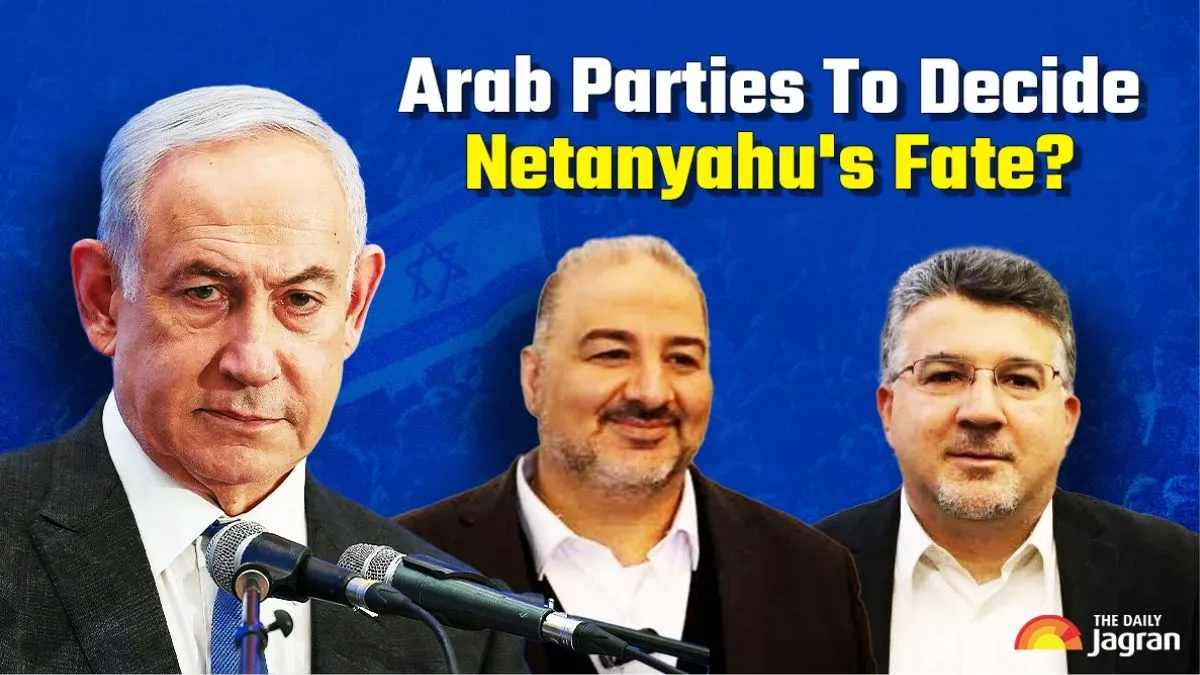
- Arab parties projected to win record 19 seats in 2026.
- Neither major bloc seems to achieve majority.
- Ra'am and Joint List emerge as major power brokers.
Israel Elections 2026: Israel's Arab-led political parties are projected to win a record 19 seats in the October 27 parliamentary election. This has put them in a key position to influence the formation of the next Israeli government. Preliminary figures from the Central Elections Committee (CEC) show Prime Minister Benjamin Netanyahu’s right-wing bloc winning 53 seats, while the opposition bloc led by Gadi Eisenkot is projected to secure 48 seats in the 120-member Knesset. As neither bloc has reached the 61 seats needed for a majority, it has made support of Arab lawmakers quite important for formation of the government.
About Israel's Arab Parties
Arab-led parties mainly represent Israel’s Palestinian-Arab citizens, who account for around 20 per cent of the country’s population. However, they do not come under one united political group as they differ in their ideologies and approaches to government. Ra’am, also known as the United Arab List, is an Islamist-conservative party led by Mansour Abbas, while Joint List is an alliance of Arab-led political groups with left-wing and nationalist views, led by Yousef Jabareen.
🇮🇱 ARAB PARTIES MAY HAVE JUST BECOME THE BIGGEST POWER BROKERS IN ISRAEL’S ELECTION. Exit polls put the two Arab lists at a historic 17 seats combined, the strongest result ever for Arab parties. Ra’am alone is projected at 7 seats, also a record for the party. At Ra’am headquarters, supporters erupted when the numbers came in and started chanting for Ben-Gvir to go home. Neither Netanyahu’s bloc nor Gadi Eisenkot’s opposition bloc has a clear majority on its own. What do the Arab parties decide to do with those 17 seats? Writer: Sol https://t.co/EsdvK6ITog
— Mario Nawfal (@MarioNawfal) October 27, 2026
Ra’am focuses on improng the daily lives of Arab citizens through government funding, better public services and action against local problems. It had become the first independent Arab party to join an Israeli governing coalition in 2021. On the other hand, the Joint List supports equal rights, social justice, workers’ rights and an end to Israel’s occupation of Palestinian territories. The Joint List includes Hadash (a joint Jewish-Arab leftist and communist party), Ta'al (a secular Arab nationalist party), and Balad (a Palestinian nationalist party).
Recommended For You
What Do The Arab Parties Want?
While the Arab-led parties may differ in their ideologies, they share several common important demands. They demand equal treatment for Arab citizens and action against discrimination. Their priorities include better schools, housing, roads and public infrastructure, and more funding for Arab towns. The parties are also vocal for stronger action against organised crime and violence in Arab communities. These parties also support Palestinian rights and statehood, while opposing the occupation of the West Bank.
Performance In Past Elections
The performance of Arab parties has fluctuated across past elections, including both notable gains and losses. In April 2019, they won a combined 10 seats. Their previous record came in March 2020, when the united Joint List won 15 seats. In the 2021 election, Arab-led parties secured a combined 10 seats, but Ra’am made history by joining the governing coalition.
However, their combined representation fell to 10 seats again in the November 2022 election. The current projected 19 seats would exceed their previous high and mark a major change in their parliamentary representation.
Why Do They Matter In This Election?
The projected gains in 2026 parliamentary elections come amid a reported rise in Arab voter turnout to around 80 per cent. Their win comes at a time when no major bloc has enough seats to govern alone. In such a situation, the opposition may need Arab lawmakers’ support to form a government and replace Netanyahu. However, the coalition seems difficult as some opposition figures oppose relying on Arab parties. At the same time, Netanyahu has argued against a government that is dependent on parties which he describes as “anti-Zionist.”
While the final outcome will depend on the confirmed election results and coalition negotiations, the project gains have indeed placed Arab-led parties at the centre of the debate over Israel’s next government.
ALSO READ: Israel Elections: Can Netanyahu Stage Another Comeback Amid Mounting Anger From October 7 Victims?
You May Also Like To Watch: