
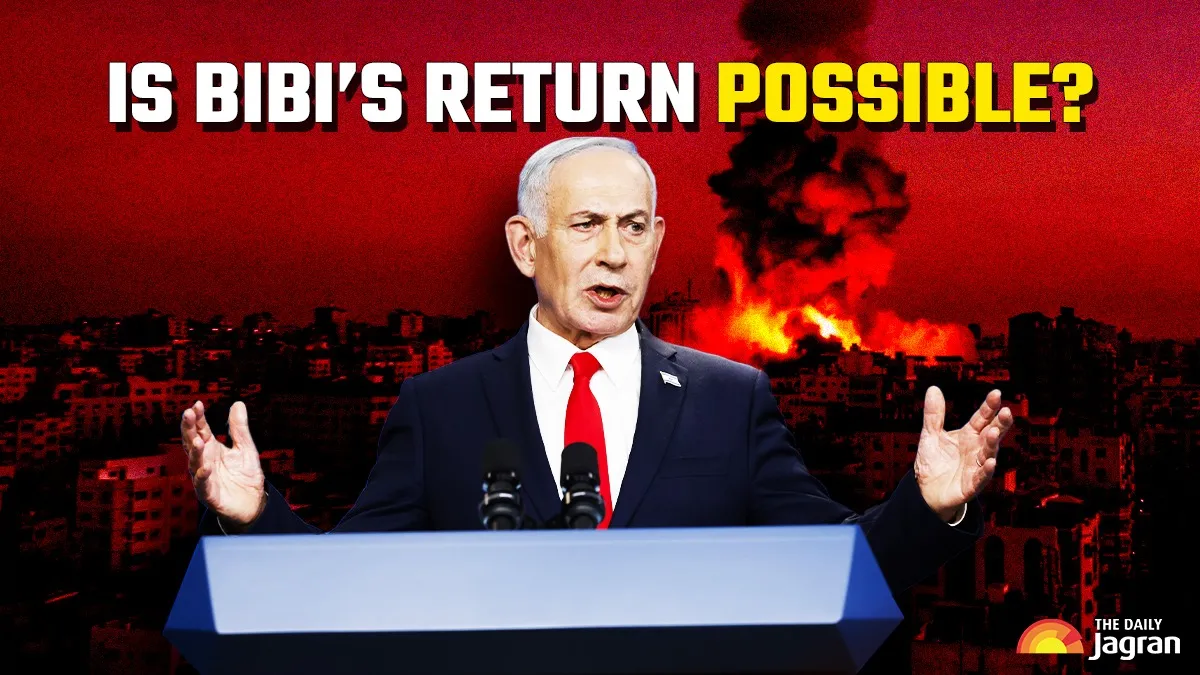
- Netanyahu faces tough challenge in 2026 Israel elections.
- Public anger over security failures and regional conflicts.
- Voters question Israel's future direction and leadership.
Israel Elections 2026: Israeli Prime Minister Benjamin Netanyahu, the country’s longest-serving prime minister, has often been described as a political genius with nine political lives. But as Israelis head to the polls on October 27, his political resilience faces another major test.
Netanyahu is up against a tough challenge from his chief rival, former IDF chief Gadi Eisenkot, amid mounting public anger over security failures, prolonged regional conflicts.
Voter turnout in Israel’s parliamentary elections stood at 16.68 per cent by 10 am on Tuesday, the highest recorded at that hour since 1981. More than 1.2 million eligible voters had cast their ballots by then.
But much has changed since the last election in 2022. Netanyahu has overcome political crises before. He has lost power, faced public anger and struggled to hold his government together. Yet, time and again, he has found a way back. Now, as Israel faces another crucial election, the question is whether its longest-serving prime minister can pull off yet another political comeback.
Why Are Israelis Upset With Bibi?
Netanyahu’s political future has come under growing pressure following the October 7, 2023, Hamas attacks on Israel and the wars that followed in Gaza and Lebanon, as well as the conflict with Iran that began on February 28.
Recommended For You
The middle east conflict has emerged as a major issue in the election. The latest war began following the killing of late Iran’s Supreme Leader, Ayatollah Ali Khamenei, in joint US-Israeli military strikes. Iran retaliated by targeting Israeli and US assets in several Gulf countries and Israel, disrupting regional security and shipping routes and affecting international energy markets and global economic stability.
Moreover, Netanyahu’s government has faced criticism over security failures, military decisions and domestic policies. For many Israelis, the election is not merely about choosing a leader, it is also about deciding what kind of country they want Israel to become in the years ahead.
For years, Netanyahu has portrayed himself as the leader best equipped to safeguard Israel’s security and manage its relationships with powerful countries. However, the October 7 attacks raised serious questions about his government’s ability to protect the country and prevent such a devastating security failure.
Why Does Netanyahu Still Have Strong Support?
Despite all of this, Netanyahu continues to enjoy significant political support, according to The Times of Israel. His political strength comes partly from his ability to maintain alliances with groups whose interests align with his government's policies.
The Israeli news outlet laid down three important sections supporting him.
Ultra-Orthodox parties have backed Netanyahu’s coalition partly because it protects their religious and community interests. Far-right parties have supported him as his government has pursued policies concerning Israeli settlements and control over the West Bank.
Then there are Netanyahu’s personal supporters, many of whom continue to view him as the leader best suited to govern Israel. Some believe the political establishment has treated him unfairly and reject attempts to hold him responsible for the country’s security failures.
Political analysts say this loyalty has helped Netanyahu remain a central figure in Israeli politics, even during periods when his leadership appeared vulnerable.
ALSO READ: Netanyahu vs Eisenkot: Why Israel's Election Is More Than A Leadership Contest
Are Israelis Having Doubts?
For many Israelis, the election is not just about choosing a prime minister but also about determining the country’s political and social direction.
Israeli votersfear that another Netanyahu-led government could deepen existing problems. Their concerns include changes to the judicial system that critics believe could weaken democratic checks on government power.
- Continuing exemptions from military service for ultra-Orthodox men.
- Greater influence of far-right politicians.
- Growing divisions within Israeli society.
- The costs of prolonged conflict, economic uncertainty and the possibility of international sanctions have added to public concern
- Some people are so worried about the country's future that they have considered leaving Israel.
Final Verdict
Netanyahu has built a reputation as a politician who can recover from setbacks. He has previously lost office and later returned to power, demonstrating his ability to navigate complicated coalition negotiations.
US President Donald Trump has publicly backed Netanyahu, offering support from one of Israel's most influential international allies. Such backing could strengthen Netanyahu’s diplomatic position, but it does not necessarily address voters’ concerns about security, military service, the economy or domestic politics.
At the same time, Israeli voters dissatisfaction with Netanyahu does not automatically mean support for his rivals. The opposition must still convince voters that it can provide stable leadership, manage Israel’s security challenges and address the country’s domestic problems.
Whether Netanyahu remains prime minister will depend not only on his party’s electoral performance but also on whether other parties are willing to support him or join an alternative coalition.
If the opposition gains sufficient support, Eisenkot and other opposition leaders could seek to form an alternative coalition, potentially bringing together parties with differing political priorities.
You May Also Like To Watch
If no political bloc can secure enough support to form a government, Israel could face another election, potentially in early 2027.
Either outcome could reshape Netanyahu’s political future, giving him another opportunity to retain power or forcing him to rebuild his support from outside government.
Lastly, Israelis vote for parties, rather than directly electing their prime minister which then form alliances to create a majority coalition. No single party has ever won a majority in parliament.