
- By Shivangi Sharma
- Thu, 08 Jan 2026 09:03 PM (IST)
- Source:JND
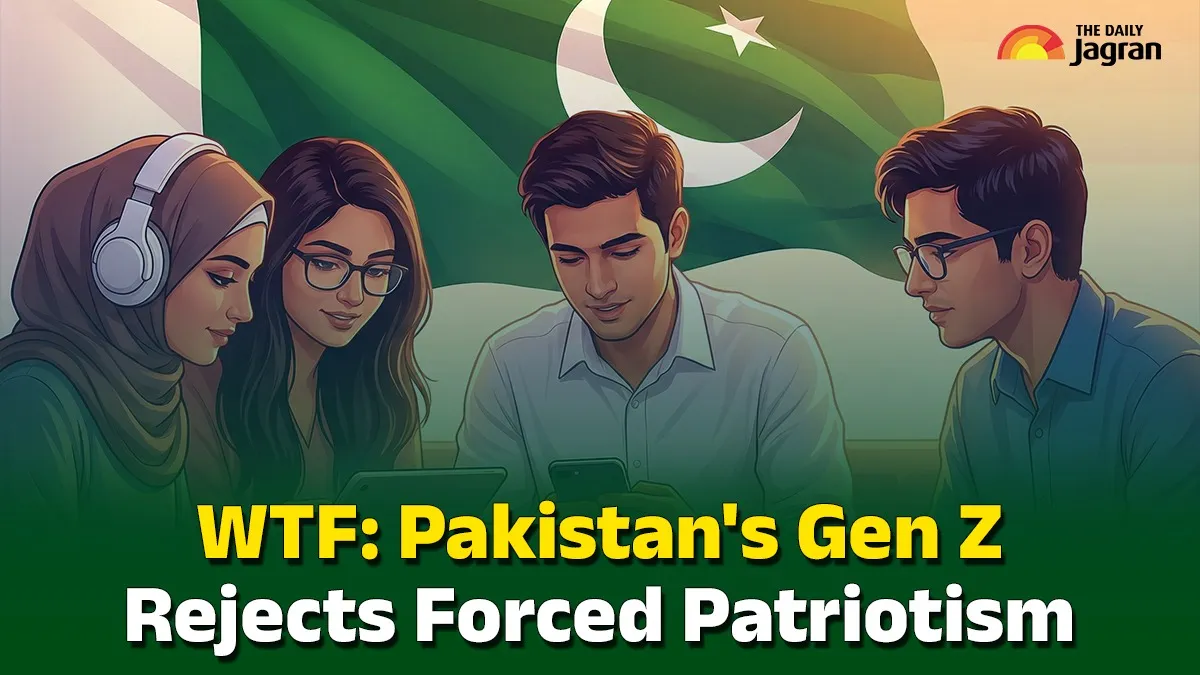
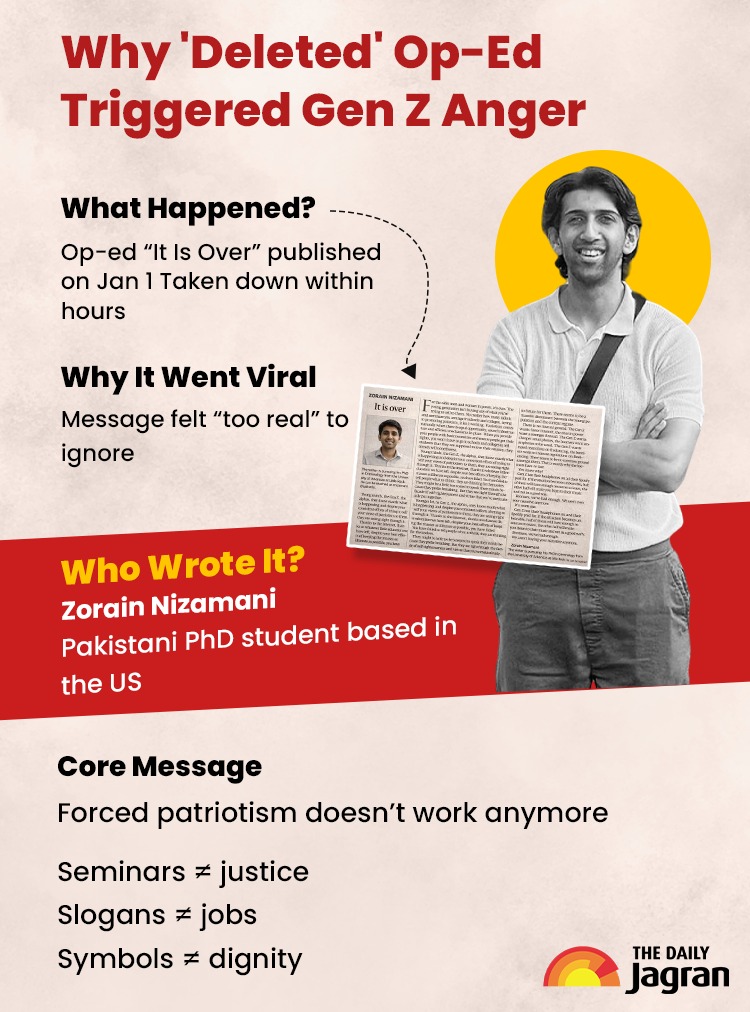
What The Fact: It began as a newspaper opinion piece. It turned into a generational flashpoint. Zorain Nizamani’s op-ed, “It Is Over,” was published on January 1 in The Express Tribune. Within hours, it disappeared. No explanation. No clarification. Just a digital erasure that sparked national outrage.
The deletion only amplified its impact. Screenshots spread rapidly across X, Instagram, and WhatsApp, transforming a removed column into one of Pakistan’s most talked-about political texts.
'Forced Patriotism Is Dead'
Nizamani’s message was blunt and unsettling for those in power. He argued that Pakistan’s youth no longer respond to scripted patriotism, official seminars, or symbolic gestures. According to him, slogans cannot replace justice, opportunity, or dignity.
“For the older men and women in power, it’s over,” he wrote, adding that Gen Z simply isn’t buying what the system is trying to sell. His words resonated with a generation raised amid inflation, censorship, and shrinking freedoms.
Gen Z Sees Through System
Writing from the perspective of Gen Z and Gen Alpha, Nizamani said young Pakistanis clearly understand what is happening around them. Access to the internet, exposure to global realities, and lived experiences have weakened traditional methods of controlling public thought.
Recommended For You


He noted that many young people stay silent not out of agreement, but fear. They think independently, he argued, but choose survival over speaking out.
Why Op-Ed Was Pulled
The article’s sudden removal is widely believed to have happened under pressure from Pakistan’s military establishment, though no official confirmation has been given. That silence became part of the controversy.
Instead of fading away, the op-ed’s deletion turned Nizamani into a symbol of resistance. Online users accused the state of proving his argument in real time.
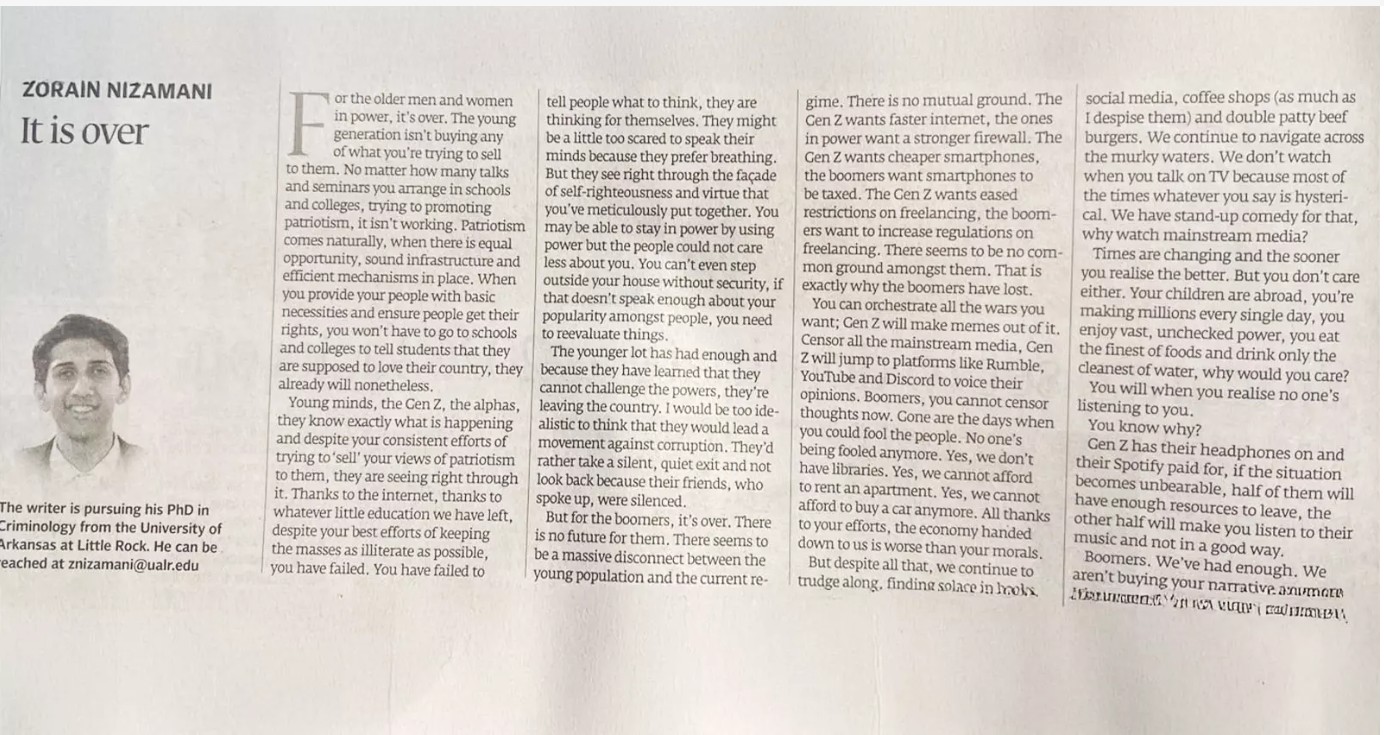
The viral op-ed (Image credits: X)
Political parties and activists quickly weighed in. The Canadian wing of Imran Khan’s PTI said the takedown showed that forced patriotism no longer works. Rights activists called the censorship predictable and revealing. Activist Mehlaqa Samdani pointed out that the article’s disappearance mirrored the very repression it described.
A Growing Disconnect
After the backlash, Nizamani said the piece was removed for “reasons unknown” to him and urged people to think critically. He highlighted a widening gap between Pakistan’s rulers and its youth.
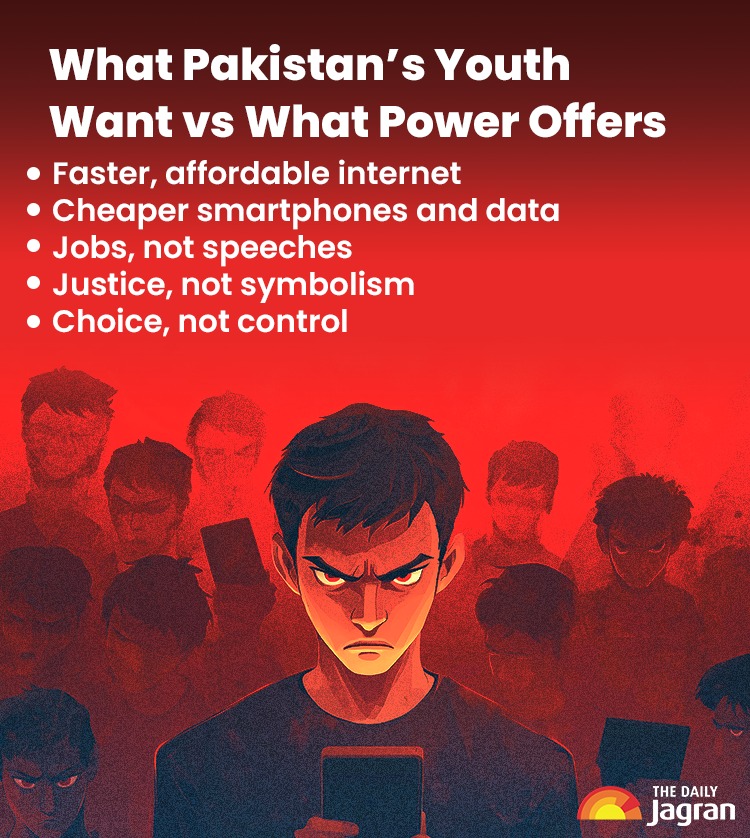
For many young Pakistanis, the message is clear. If change feels impossible, exit becomes the plan. And that quiet departure may be the loudest protest yet. The rapid spread of screenshots and social media discussions proves that ideas cannot be erased, even when authorities try.
For Pakistan’s youth, the takeaway is clear: awareness, critical thinking, and cautious dissent are shaping a generation that sees through rhetoric, values justice and opportunity, and is quietly redefining what resistance looks like in the 21st century.
(NOTE: This article is part of the series 'WTF'. To read more articles in the series, click here)