
- By Alex David
- Mon, 05 Jan 2026 11:59 AM (IST)
- Source:JND
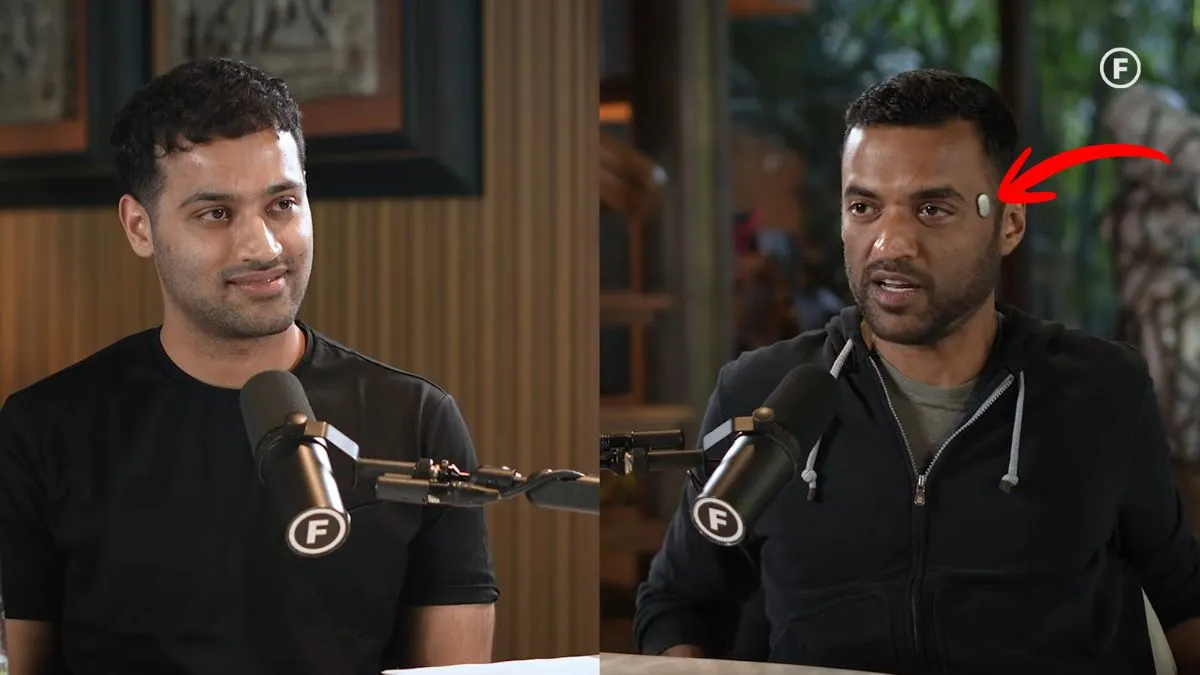
Deepinder Goyal wearable gadget: Zomato CEO Deepinder Goyal has put an end to the mystery regarding a small silver device he has been spotted wearing on the side of his head. In an interview on entrepreneur Raj Shamani’s podcast, Goyal talked about his slog to stardom, bet on rapid-delivery models and increased attention towards health, ageing and longevity. He also explained to the discussion about the experimental health-tech device Temple.
What Is the Temple Device?
Temple is meant to assess blood flow in the brain, says Goyal. He said it worked a bit like “a miniaturised MRI”, although not in any clinical way. The key is to monitor blood flow to the brain, which he views as the most important signal of general brain health.
ALSO READ: AI Watermark Spotted In Jana Nayagan Trailer Triggers Debate On Tech In Tamil Cinema
One of the aetiologies by which sex — and whatever cultural contributions that might accompany it — might have a role in neurodegenerative disease is via brain blood flow, Goyal said, noting that activities that improve or maintain good brain blood flow may help you feel better and think more clearly, and perhaps stay healthier over time. It's tiny and wearable, but it's only a research prototype at this point -- not a finished consumer product.
Recommended For You


Brain flow, aging and Gravity Aging hypothesis
Goyal has previously connected the Temple device to his Gravity Ageing Hypothesis (GAH), which proposes that as gravity pulls blood away from the brain in a lifetime, this may contribute to ageing. In previous posts, he has noted that Temple was created to look more closely at this relationship by measuring blood flow in the brain on a beat-by-beat basis.
He also noted that brain blood flow is already known as a vital biomarker for ageing, cognition and longevity in scientific literature. Even if the Gravity Ageing Hypothesis doesn’t pan out, Goyal thinks that underlying data collected by Temple could still be a boon to studying long-term brain health.
“I’ve been using Temple for over a year,” Goyal said in an earlier interview, referring to it as a “potentially significant wearable” of the future.
Still a Research Prototype
Temple doesn't exist on the market as of right now. Goyal said that the device is still only in its research stage, and there isn’t any public timeline for a consumer product. In December, he posted a short teaser to his Instagram account that the project was “getting there” without actually announcing any product plans.
The project is one of Goyal’s forays into the subject of longevity science. In November, he unveiled a $25 million fund to spur research into human ageing and biological health. He added that why humans age and what could be done to slow or even understand the process has also been a focus of his self-funded effort, Continue Research.
Addressing the Gravity Aging Controversy
Goyal has also accepted criticism over the way in which the Gravity Ageing Hypothesis was first introduced. He posted an apology, saying he had garbled the idea by attempting to condense years of research into a headline-grabbing social media reveal. And that, he says, made the hypothesis sound more definitive and commercial than it actually is.
ALSO READ: DIGIPIN Explained: What It Is, Benefits, And How To Find Your Digital Address In India?
“I attempted to condense years of research and contemplation into a dramatic social media revelation,” Goyal said. “That made the theory seem conclusive. I apologise.”
For now, Temple is an experimental view of what intersecting trends in wearable technology, neuroscience and longevity research might look like. Whether it ultimately becomes a consumer health device or remains in the realm of research, it illustrates how technology giants are investing more deeply over time in long-term health science beyond their core businesses.