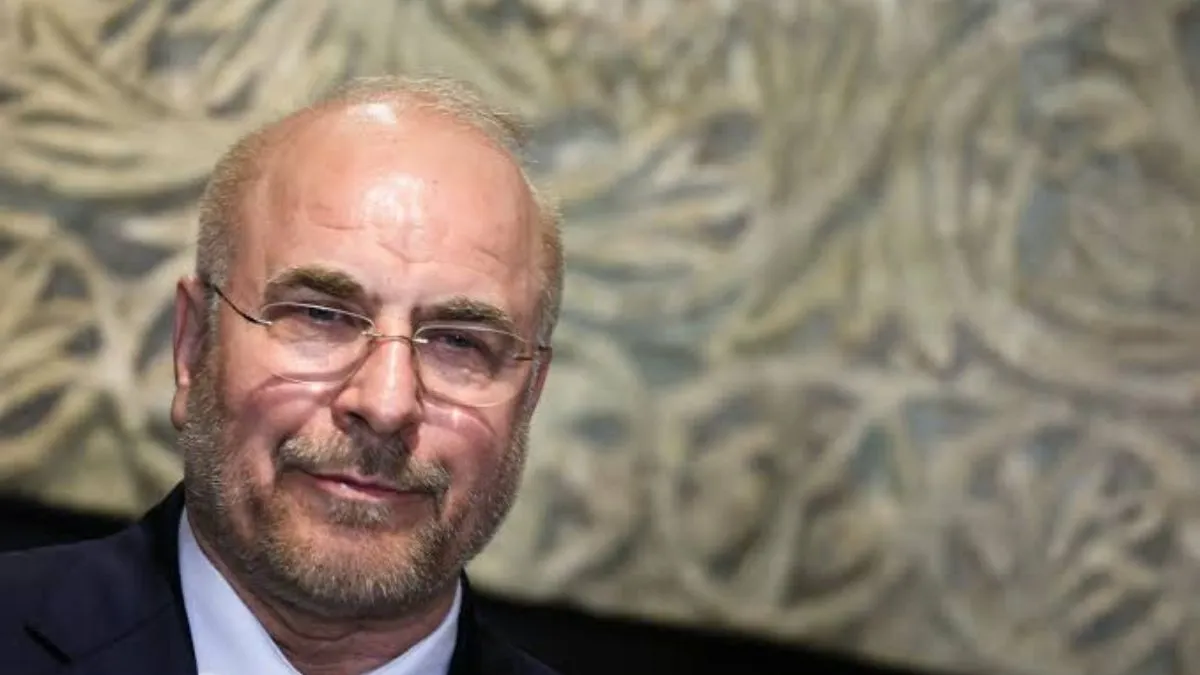
- Ghalibaf mocked Vance's blame for Republican midterm defeat.
- Criticized Trump's 'Israel-first' policy and war consequences.
- Trump defended Iran war despite political and economic costs.
Iranian Parliament Speaker Mohammad Bagher Ghalibaf has taken a swipe at US Vice President JD Vance after he blamed the Iran war for the Republican Party's defeat in the November 3 midterm elections. Ghalibaf accused the Donald Trump administration of refusing to acknowledge the political consequences of its military campaign against Tehran.
Responding to Vance's lengthy post on X (formerly Twitter), in which the US vice president acknowledged that the war had contributed to the Republican setback, Ghalibaf compared the administration's approach to that of a gambler unwilling to accept defeat.
Losing gambler energy, can't walk away from the table. Boss is prepping the next war phase while America teeters on an Israel-First cliff. Skip the TED talk. Why not say this to your boss?
— محمدباقر قالیباف | MB Ghalibaf (@mb_ghalibaf) November 5, 2026
“Losing gambler energy, can't walk away from the table," he wrote.
Ghalibaf also questioned Vance's position within the Trump administration, suggesting that the US was preparing for another phase of the conflict despite the domestic political fallout.
“Boss is prepping the next war phase while America teeters on an Israel-first cliff. Skip the TED talk. Why not say this to your boss?” he added, in an apparent reference to Trump.
The remarks came amid a political blame game in Washington following major Democratic gains in the midterm elections, which dealt a setback to the Republican administration.
The Iranian leader's remarks also appeared to target Washington's close relationship with Israel, suggesting that the administration's foreign policy was putting American interests at risk.
Why Did JD Vance Blame The Iran War For Republican Losses?
In his post, Vance argued that the Republican Party's defeat was not primarily due to low voter turnout. Instead, he said several voters who had supported Donald Trump and him in the 2024 presidential election had switched their allegiance to Democratic candidates.
Recommended For You
One of the things the data analysts on our side obsessed over was "composition"—whether the electorate looked close enough to 2024 for Republicans to win. And despite polls that showed a Democrat blowout, the data kept on telling us the same story: in some states turnout was merely OK, in other states it was downright amazing, and in no state was it catastrophic. There was a genuine sense of optimism on our team: our people were showing up. So, I asked the smartest data guy I know, does that mean we're going to shock the world? "No," he told me. "We might do better than the polls suggest. But the data is telling us that a lot of Trump/Vance 2024 voters are pissed and planning to vote for the other guys. Our voters are turning out, but they may not vote for us." Well, that looks prophetic now. Our voters did show up. In Florida, for example, the electorate was 9 points more Republican than Democrat, just a couple points worse than 2024. Undoubtedly there were places we could have done better on turnout. But the main problem is not turnout. The main problem is that many people who voted for Trump/Vance in 2024 voted for Democrats in 2026. There will be a lot of infighting and arguing over what happened and why that is. One of the pollsters I really respect told me that our economic messaging wasn’t sharp enough down the stretch. I’m sure that’s true. But the real reason we lost is obvious to almost everyone. Another pollster—one of the smartest people I know in politics, told me yesterday we’d lose the generic ballot by 13 points. I felt negative going into Tuesday, but even I was shocked by this. In his polling, he saw that a lot of Trump 2024 voters were angry and planning to vote for Democrats. He asked those voters who had abandoned us what would cause them to come back on our team. The top four answers, accounting for nearly all of the responses were: 1) End the war 2) Focus on cost of living/inflation 3) Put America First 4) Change our relationship to Israel Our voters showed up. And the above four reasons are why many of them voted for Democrats. This is according to a pollster who nailed the results. While many spent Monday attacking Rachel Campos Duffy for calling for a diplomatic resolution to the conflict, it turns out her political advice was sound. (She’s also a great person.) In the next few months, there's going to be a lot of gaslighting. Expect to hear any number of establishment politicians say the solution to our woes is amnesty. I'm open to the idea that we should change enforcement—by focusing more on businesses that hire illegal labor, for instance. But anyone pushing amnesty is lying to you. The reason we lost is the war. The president himself said so last night. If you'd like to argue it was worth it, that losing the Senate for the next 6 years was worth it, then do so. Argue it was a worthwhile cost to pay. Agree or disagree, that's at least honest. But everyone knows why we lost. And any honest conversation about where we go from here must start there. I remain hopeful about our country. To the people who are pissed off and want to say, “I told you so”: you’re right, you did tell us so. Take that energy into electing Republicans who share your worldview. To the people who are just pissed at the results, you should be. Let’s take that anger and get back to the work of saving our country.
— JD Vance (@JDVance) November 4, 2026
Citing feedback from a pollster who had accurately predicted the scale of the Republican setback, Vance identified four major concerns behind the shift:
- Opposition to the ongoing war with Iran.
- Rising living costs and inflation.
- A demand to return to the 'America First' agenda.
- Dissatisfaction with Washington's relationship with Israel.
“The reason we lost is the war. The president himself said so last night,” Vance wrote.
He also questioned whether the military campaign was worth the political consequences, pointing out that Republicans had lost control of the Senate.
“If you'd like to argue it was worth it, that losing the Senate for the next 6 years was worth it, then do so. Argue it was a worthwhile cost to pay. Agree or disagree, that's at least honest,” he added.
What Did Donald Trump Say About The Republican Defeat?
Trump acknowledged that the Iran conflict had contributed to the Republican Party's poor performance, but maintained that launching military action against Tehran was necessary.
Responding to Vance's assessment, the US president said the war had pushed up petrol prices in the short term, affecting voters.
“I think it's largely true because it drove the gasoline up a little bit for a short term,” Trump said.
However, he defended his decision to attack Iran, arguing that preventing Tehran from developing nuclear weapons remained a priority.
“You can't let Iran have a nuclear weapon. You have no choice,” he added.
How Has Iran Responded To The Midterm Results?
Ghalibaf had also welcomed the election outcome in a separate post, linking the Republican setback to public opposition to the war and rising living costs.
“Conscience or the cost of living, Americans said NO TO WAR, and we endorse this message,” he wrote.
Iran's Supreme Leader Mojtaba Khamenei also weighed in, warning that a change in political leadership in Washington would not necessarily alter America's approach towards Tehran.
He cautioned that any renewed aggression against Iran could trigger a much wider conflict.
The exchange comes as the US-Israeli conflict with Iran continues to carry political and economic consequences, with rising energy prices and opposition to the military campaign emerging as key issues in the American election debate.
You May Also Like To Watch: