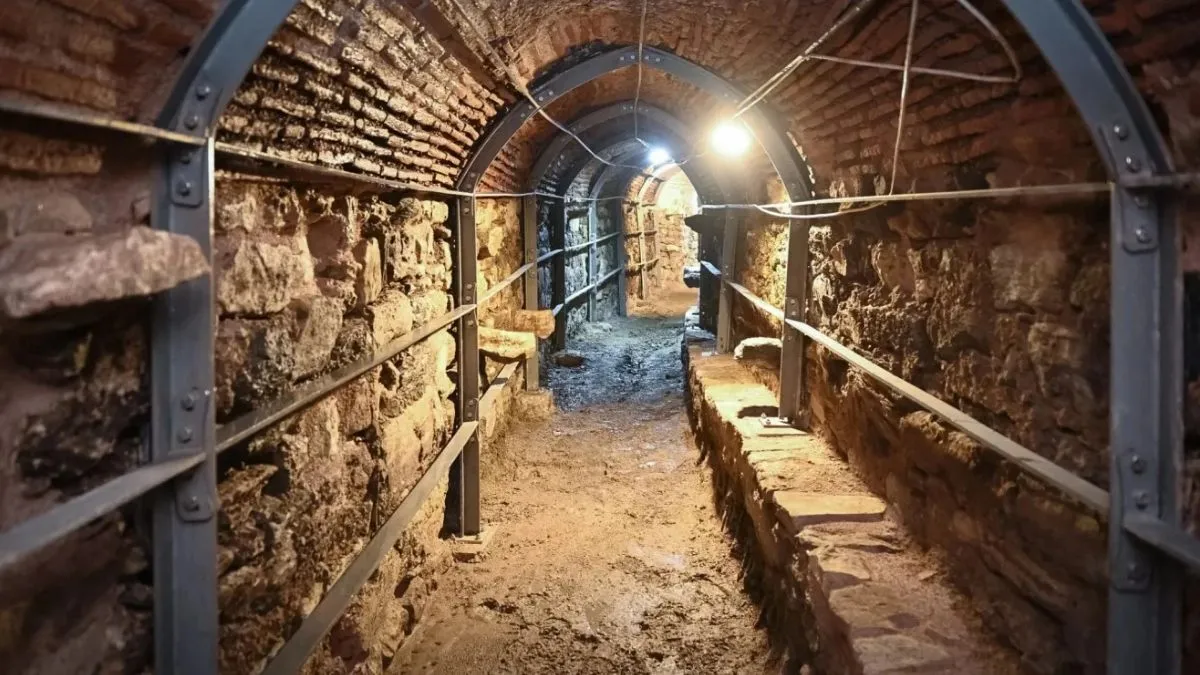
- Underground tunnels and chambers found beneath Hagia Sophia.
- Discovery includes ancient water systems, Roman passages, burial structures.
- Restoration work uncovers 1,500-year-old monument's hidden secrets.
A network of underground tunnels and chambers, hidden beneath Istanbul’s iconic Hagia Sophia for centuries, is finally coming to light. The discovery has revealed a previously unexplored part of the 1,500-year-old monument’s history, including ancient water systems, burial structures and passages that may date back to the Roman period.
The discovery was made during an extensive restoration and conservation project at Hagia Sophia, one of the world's most famous UNESCO World Heritage sites in Turkey. The present structure was built in 537 AD under Byzantine Emperor Justinian I. It was originally a Christian church, later converted into a mosque, then a museum and once again a mosque in 2020.
Restoration work began in early 2025, when workers discovered previously unknown underground structures while cleaning the vaulted cellars beneath the building's former atrium courtyard.
Six underground chambers
Since then, nearly 3,000 tonnes of soil, mud and debris have been removed. So far, researchers have identified six underground chambers connected by nine tunnels. Around 420 metres of underground passages have already been cleared, although experts believe more may remain undiscovered.
Recommended For You
According to Turkey's Culture and Tourism Minister Mehmet Nuri Ersoy, the underground network played an important role in the historical management of water. The passages were used for distributing water and draining rainwater, helping protect the massive architectural complex.
One of the most interesting discoveries is a 180-metre-long tunnel running parallel to Hagia Sophia's entrance facade. Researchers are investigating whether it could be connected to an ancient Roman road in Constantinople, the historic name of Istanbul. However, its original purpose has not yet been established.
Underground burial structure
Another significant discovery was made beneath an area known as the Vizier's Garden. Archaeologists uncovered an underground burial structure, known as a hypogeum, along with architectural remains around 1.5 metres below the previously known floor level. Experts believe some of these remains may predate the present Hagia Sophia, although their exact age is yet to be confirmed.
The restoration teams are also repairing damaged structures, strengthening tunnel walls and documenting the underground network using modern scanning technology.
Turkish authorities are now considering opening selected sections of the tunnels to visitors. However, no official opening date has been announced, as safety and conservation measures must first be completed.
The discovery could provide valuable insights into the engineering skills, water management systems and architectural history of ancient Constantinople. It also shows that even after nearly 1,500 years, Hagia Sophia continues to reveal secrets hidden beneath its historic structure.