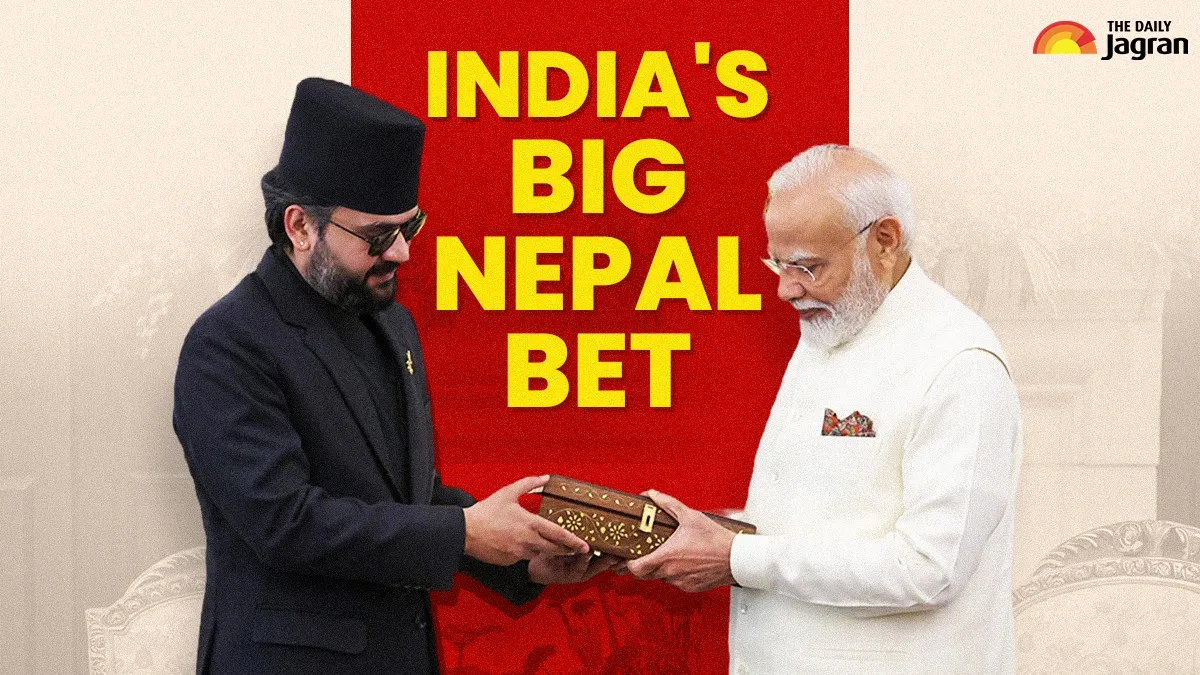
- PM Modi announced ₹24,000 crore development package for Nepal.
- India to establish IIT campus and new rail link.
- Aid driven by disaster relief and strategic geopolitical interests.
New Delhi: Prime Minister Narendra Modi on Monday announced a development package of 24,000 crore Nepalese rupees for Nepal after holding wide-ranging talks with his Nepalese counterpart, Balendra Shah, which produced many key outcomes to solidify the bilateral ties further. Besides the big relief package, India has announced an offshore campus of the Indian Institute of Technology (IIT) in Nepal and flagged off a train that will connect Uttar Pradesh’s Ayodhya Dham to Nepal’s Janakpur.
Both regions have major religious significance. "As a dependable and trusted neighbour, India consistently stood as the first responder in times of natural disasters and difficult times in Nepal," Shah said, adding that mutual respect, steadfast trust and unbroken goodwill are the bedrock of the relations.
But why is New Delhi betting so big on its Himalayan neighbour nation?
The major development came months after the relations between both nations nosedived following Shah's remarks seeking involvement of China and the United Kingdom to address the long-standing border dispute between India and Nepal.
More accurately, the financial assistance is about much more than disaster relief. It reflects India's broader geopolitical calculations, economic interests and commitment to its Neighbourhood First policy.
Disaster Relief And Strategic Diplomacy
The immediate reason behind India's generous financial package is Nepal's devastating August floods, which caused massive destruction of infrastructure, homes and agricultural land. The disaster reportedly killed around 1,500 people, while more than 5,200 remain missing and are presumed dead. Nepal faces an enormous reconstruction challenge, with estimated losses running into billions of dollars.
Recommended For You
भारतको औपचारिक भ्रमणमा रहनुभएका सम्माननीय प्रधानमन्त्री वालेन्द्र शाहज्यू र भारतका प्रधानमन्त्री महामहिम नरेन्द्र मोदीज्यूबीच आज नयाँ दिल्लीमा उच्चस्तरीय द्विपक्षीय वार्ता सम्पन्न भएको छ। नेपाली प्रतिनिधिमण्डलमा अर्थमन्त्री डा. स्वर्णिम वाग्ले, परराष्ट्रमन्त्री शिशिर खनाल, प्रधानमन्त्रीका मुख्य सल्लाहकार कुमार ब्यञ्जनकार, राजनीतिक सल्लाहकार असिम शाह, परराष्ट्र सचिव अमृत बहादुर राई, भारतका लागि नेपाली राजदूत डा. निश्चल नाथ पाण्डे लगायत सहभागी हुनुभएको थियो। त्यसैगरी, भारतका तर्फबाट विदेशमन्त्री माननीय डा. एस. जयशंकर, राष्ट्रिय सुरक्षा सल्लाहकार अजित डोभाल, राज्यमन्त्री जितिन प्रसाद, प्रधानमन्त्री मोदीज्यूका प्रधान सचिवद्वय डा. पी. के. मिश्रा र शक्तिकान्त दास, विदेश सचिव विक्रम मिस्री, नेपालका लागि भारतीय राजदूत सुधाकर दलेला र अतिरिक्त सचिव मनु महावर लगायत सहभागी हुनुभएको थियो।
— PMO (@PM_nepal_) November 23, 2026
India's assistance, amounting to 24,000 crore Nepalese rupees, is expected to support reconstruction and long-term development. By stepping forward at a critical moment, New Delhi is reinforcing its image as Nepal's dependable development and humanitarian partner.
Rail Connectivity: The Bigger Game
Perhaps the most significant announcement is the renewed push for cross-border connectivity. PM Modi and Shah virtually flagged off the Saryu-Kamla Express connecting Ayodhya in Uttar Pradesh with Janakpur Dham in Nepal.
ALSO READ: India-Nepal Direct Train Service Begins: Check Route, Timings, Coach Compositions And More
The railway connection carries economic, cultural and strategic importance. Janakpur is closely associated with the Ramayana tradition, while Ayodhya holds immense religious significance for Hindus. Improved connectivity can boost tourism, trade and people-to-people relations.
India is also pursuing broader railway, road and border infrastructure projects to integrate Nepal more closely with regional economic networks.
Countering China's Growing Influence
India's outreach also has an unmistakable geopolitical dimension. Nepal occupies a strategically sensitive position between India and China. Beijing has expanded its economic and infrastructure engagement with Kathmandu, making Nepal an important arena of regional competition.
For New Delhi, stronger financial assistance, infrastructure partnerships and energy cooperation offer an opportunity to maintain strategic trust and prevent bilateral relations from drifting.
Beyond Money: Securing Long-Term Partnership
The two countries also signed eight agreements covering areas such as health, education, space research, civil service training and traditional medicine. Energy cooperation remains another crucial pillar, with India continuing to supply essential commodities while importing electricity generated in Nepal.
Ultimately, India's Rs 15,000 crore package is both an act of neighbourhood solidarity and a strategic investment. New Delhi understands that Nepal's stability, prosperity and connectivity are closely linked to India's own economic and security interests.
(With inputs from agency)