
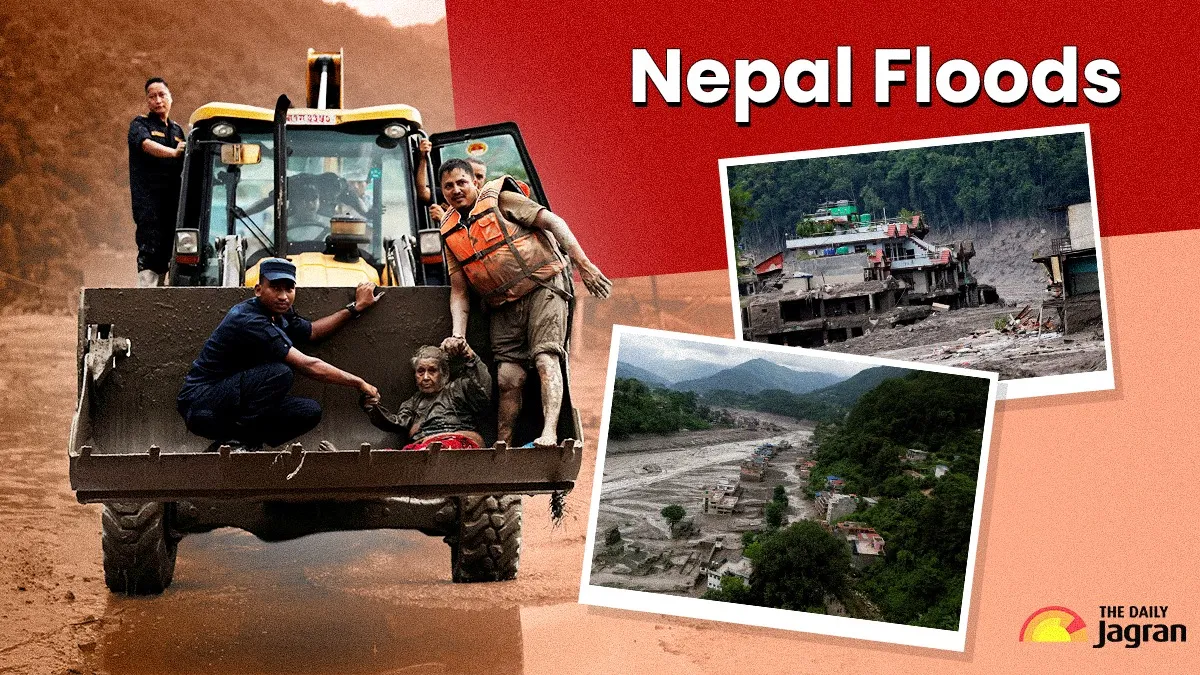
- Nepal floods death toll reaches 1,356, nearly 5,000 missing.
- 121 people feared trapped in hydropower project tunnels.
- International aid sought; climate change impact highlighted.
Nepal Floods: The death toll from the devastating floods and landslides in Nepal has climbed to 1,356, with 4,994 people still missing, 12 days after the disaster. With each passing day, hopes of finding them alive are fading.
Rescue teams continue to search for the missing, including at least 589 foreign nationals, while 13,396 people have been rescued so far, according to Nepal’s National Disaster Risk Reduction and Management Authority (NDRRMA).
Bodies have been recovered from Rasuwa, Nuwakot, Dhading, Gorkha, Tanahun, Chitwan, Nawalparasi East and Nawalparasi West, along with various unidentified human remains.
Relief and rescue operations are continuing, but the biggest challenge now is reaching people believed to be trapped inside underground tunnels at hydropower projects.
121 Feared Trapped Inside Tunnels
According to Reuters, around 121 of the 900 people reported missing from hydroelectric projects may be trapped inside tunnels, army rescuers said. Others may have been working elsewhere at the power plants rather than inside the extensive tunnel network.
The tunnels have ventilation systems, rooms where workers can rest and, in some places, kitchens. These facilities have raised hopes that some of those trapped may still be alive.
According to PTI, a team of Indian tunnel experts is involved in the rescue operation. Australian tunnel expert Arnold Dix is also assisting the teams.
Dix played a key role in the 2023 rescue operation to evacuate 41 workers trapped inside the Silkyara tunnel in Uttarakhand.
Meanwhile, in Dhading district, a 252-metre-long temporary track has been constructed to restore a section of the flood-damaged Prithvi Highway, which connects Kathmandu with western Nepal.
Mourning Observed on 13th Day
Nepal observed the 13th day of mourning on Monday in honour of those who lost their lives in the disaster. In Hindu tradition, the 13th day after death marks the end of the mourning period.
Mourning was observed at Nepalese embassies in Nepal and abroad, while the national flag was flown at half-mast.
Nepal’s Ministry of Foreign Affairs has appealed to the international community for immediate relief supplies, including large drones, Bailey bridges, DNA testing kits, tunnel rescue suits and equipment to help prevent the spread of epidemics.
Around 3,500 people affected by the disaster are being housed at shelter centres in Rasuwa, Nuwakot and Dhading.
President Ram Chandra Paudel visited the disaster-hit districts of Rasuwa and Nuwakot and said Nepal was being forced to pay the price for climate change. He called for “climate justice” for vulnerable countries such as Nepal and demanded compensation from countries responsible for climate change.
Recommended For You
ALSO READ: Nepal Floods: Chinese Man Rescued After Being Trapped Inside Hydropower Tunnel For 11 Days
Amid the crisis, Nepal has also launched the “Nepal Calling” campaign to encourage tourists to visit the country. Tourism Minister Khadak Raj Paudel said Nepal was ready to welcome visitors.
Tourism accounts for around 6.7 per cent of Nepal’s economy, meaning a decline in tourist arrivals could further worsen the country’s economic crisis.
Nepal’s Cyber Bureau has formed a 10-member team to investigate abusive and hateful comments posted on social media against disaster victims. Prime Minister Balen Shah has warned that action will be taken against those who mock or harass people affected by the crisis.
Offensive comments were also reportedly posted on social media appeals by families seeking help to locate missing relatives.
You May Also Like To Watch
According to IANS, the Indian Embassy in Beijing has appealed to the relatives of Indians missing in Tibet to provide DNA samples.
The embassy said Chinese authorities had confirmed that DNA testing had begun and that the families would be informed once the samples were matched.