
- By Dr Sadhana Kala
- Sun, 05 Apr 2026 01:22 PM (IST)
- Source:JND
In a world increasingly defined by rapid technological advancement, political polarization, and social fragmentation, the quiet voice within us—our conscience—often gets drowned out. Yet, it is this very inner compass that has guided humanity through its darkest and brightest moments.
Observed annually on April 5, the International Day of Conscience serves as a powerful reminder of the importance of ethical reflection, empathy, and moral responsibility in shaping a more peaceful and just world.
What Is Conscience?
The concept of conscience is as old as human civilization itself. Across cultures and philosophies, it has been described as the inner sense that helps distinguish right from wrong. Conscience serves as a moral compass, shaping decisions of varying significance, whether derived from spiritual traditions, philosophical inquiry, or humanistic principles. From everyday choices—like being honest in our dealings—to larger societal actions such as standing up against injustice, conscience plays a central role in defining who we are as individuals and as a collective.
In 2019, the United Nations officially established the International Day of Conscience to highlight the importance of promoting a culture of peace grounded in moral awareness. The initiative underscores that sustainable peace cannot be achieved merely through political agreements or economic development; it must be cultivated within individuals. Personal accountability is the starting point for peace, and conscience serves as its foundation.
Recommended For You






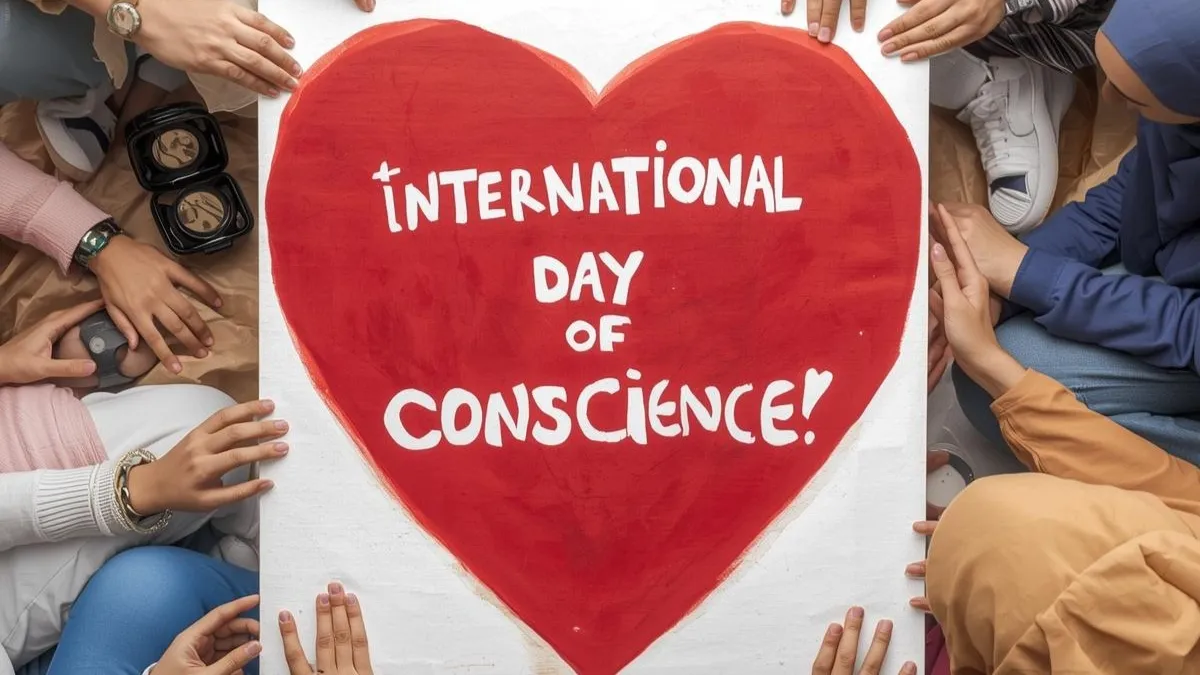
International Day Of Conscience (Image: File Image)
Role Of Conscience
In today's hyperconnected world, information, opinions, and distractions constantly bombard us. Social media platforms amplify voices, but they also create echo chambers that reinforce biases and reduce opportunities for meaningful reflection. In such an environment, pausing to listen to one’s conscience can feel almost countercultural. Nevertheless, it is precisely this pause that allows for critical thinking, empathy, and ethical clarity.
Consider the role of conscience in times of crisis. During global challenges such as pandemics, climate change, or conflicts, individual actions can have far-reaching consequences. People who follow public health guidelines, lower their carbon footprint, and speak out for peace are not just making practical choices; they are also making moral choices. Public health guidelines, reducing one’s carbon footprint, and advocating for peace are not merely practical decisions; individuals choosing these actions make moral choices. They reflect an awareness of our interconnectedness and a willingness to act in the interest of the greater good.
History provides numerous instances of individuals who adhered to their conscience despite facing immense pressure. The actions of civil rights leaders and whistleblowers often came at enormous personal cost, yet they contributed significantly to societal progress. These stories remind us that conscience is not always comfortable; it can challenge norms, disrupt complacency, and demand courage. However, it is also a powerful force for transformation.
Shaping Conscience
Education plays a crucial role in nurturing conscience. Beyond academic knowledge, schools and institutions must emphasize values such as empathy, integrity, and critical thinking. Encouraging open dialogue, ethical debates, and community engagement can help young people develop a strong moral foundation. In a rapidly changing world, the ability to make ethical decisions is as important as technical skills.
Families, too, are instrumental in shaping conscience. Early experiences of kindness, fairness, and accountability can last a lifetime. Conversations about right and wrong, exposure to diverse perspectives, and modeling ethical behavior all contribute to the development of a well-rounded moral compass. In this sense, building a conscientious society begins at home.
The workplace is another arena where conscience plays a vital role. Ethical business practices, transparency, and corporate social responsibility are increasingly becoming benchmarks for success. Employees are more likely to feel fulfilled and motivated when they believe their work aligns with their values. Organizations that prioritize ethical conduct not only build trust but also contribute to a more equitable economy by fostering a culture of accountability and encouraging sustainable practices that benefit both society and the environment.
Challenges To Conscience
However, the journey of conscience is not without challenges. It requires introspection, humility, and the willingness to confront uncomfortable truths. Cognitive biases, societal pressures, and fear of consequences can all cloud judgment, making it difficult for individuals to make ethical decisions and act in accordance with their conscience. Therefore, cultivating conscience is an ongoing process—one that involves continuous learning and self-reflection.
One way to strengthen this inner voice is through mindfulness and reflection. Taking time to step back from daily routines, question our actions, and consider their impact can lead to greater clarity. Practices such as journaling, meditation, or simply engaging in meaningful conversations can help reconnect with our core values.
The International Day of Conscience also invites us to think beyond individual actions and consider collective responsibility. Shared values shape societies, and fostering a culture of conscience necessitates collaboration across sectors—governments, educational institutions, businesses, and civil society. A citizenry that values ethical conduct must support policies that promote justice, equality, and sustainability.
The Indian Context Of Conscience
In the Indian context, the idea of conscience resonates deeply with the country’s philosophical and cultural heritage. Concepts like “dharma” emphasize duty, righteousness, and moral order. Leaders such as Mahatma Gandhi exemplified the power of conscience in action, demonstrating how nonviolent resistance rooted in ethical conviction can bring about profound change. Today, as India navigates complex social and economic challenges, revisiting these principles can offer valuable guidance, particularly in fostering a sense of responsibility and ethical leadership among the youth.
Youth have a pivotal role to play. Young people, equipped with information and platforms for expression, hold a unique position to drive change. By aligning their actions with their values, they can challenge injustices, promote inclusivity, and inspire others to do the same. The International Day of Conscience serves as a call to action for this generation to lead with integrity and compassion.
Conclusion
In the end, conscience is not just a personal trait; it is also a benefit to society. A world where individuals consistently act with integrity, empathy, and responsibility is more peaceful, equitable, and sustainable. While laws and regulations are necessary, they cannot replace the intrinsic motivation that comes from within.
As we observe the International Day of Conscience, let it not be a symbolic gesture but a meaningful commitment. Let it be a day to pause, reflect, and realign with our values. Whether it is choosing kindness over indifference, truth over convenience, or courage over silence, every action counts.
Ultimately, the voice of conscience may be subtle, but its influence is significant. Listening to and acting on it may be the best way to make a better world.
(Note: Dr (Prof) Sadhana Kala is a USA-trained robotic & laparoscopic surgeon, Uppsala University, Sweden, trained fertility specialist, Icon Endoscopic Surgeon of North India, and National Icon Endoscopic Surgeon of India. She is rated as India's Best Gynecologist by Google.)
(Disclaimer: The views expressed in this article are the personal opinions of the author.)