
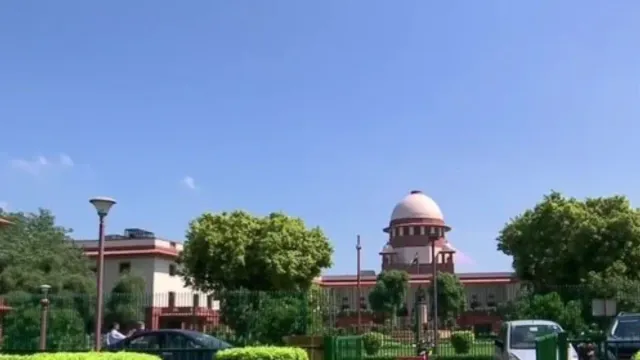
The Supreme Court in a recent judgement noted that the right to use and access the internet is a fundamental right under Articles 21 and 19(1)(a) of the Constitution. It added that denying the right would be restricting the minors from the same protection.
A bench comprising Justice JB Pardiwala and Justice K Vinod Chandran said that denying children access to the internet altogether would be as absurd as advising that they had no conscience worth protecting or freedom of speech worth expressing.
“The safety of our children and their freedom are not at odds with each other. Our children are entitled to both," the apex court noted.The observations came as the Court issued directions to tighten laws for monitoring and removing child sexual exploitation and abuse material (CSEAM) from social media platforms and other online services.
'A platform for creative expression'
The bench weighed whether children should be entirely blanketed from the internet and social media in the interest of their safety. It observed that the right to freedom of speech and expression under Article 19(1)(a) includes the right to know and to receive and impart information and ideas. Describing the internet as a marketplace of ideas, creative expression and information, the Court said its value lay not only in the content it carried but also in the access it provided to adults and children alike.
Recommended For You
“For many children, particularly in remote areas, it is often the only source of learning and information," the Court observed. It added that the internet could be significant for children with special needs, for whom online spaces may provide chances to find companionship and connect with others in similar circumstances.
Meanwhile, the bench also noted that the internet in today's time is far from being "save for children". However, it noted that children should not be kept away from the internet because intermediaries had failed to detect and remove harmful material. The Court said such an approach would amount to mistaking the victim for the problem.
Blanket Resriction Rejected
The apex court observed that children do not necessarily stop using the internet just because laws prohibit them from doing so. Instead, they may migrate to unregulated platforms and websites that could expose them to even greater risks. It also noted that blanket restrictions could discourage children who are being enticed, threatened or abused online from reporting such incidents to parents, guardians or other trusted adults, for fear of being reprimanded for accessing the internet.