
- By Vaidika Thapa
- Fri, 10 Jul 2026 07:30 PM (IST)
- Source:JND
- Government has released FAQs addressing E20 fuel concerns.
- Some vehicles may experience 3-5% mileage reduction.
- E20 extensively tested, safe for most engines.
E20 Fuel FAQs: Amid growing concerns over E20 petrol, the Ministry of Environment and the Ministry of New and Renewable Energy on Friday released a detailed FAQ explaining issues related to ethanol blending, vehicle safety, mileage, fuel prices, and environmental benefits. The government said the Ethanol Blended Petrol (EBP) Programme aims to reduce dependence on imported crude oil, support farmers, and promote cleaner fuel.
In a detailed press release, the government clarified that ethanol is not a new fuel and has been used globally for many years. Countries like the United States and Brazil have been blending ethanol with petrol for decades. In the same statement, the Ministry addressed several major concerns through these key questions and answers:
Will E20 Reduce Mileage Or Affect Vehicle Performance?
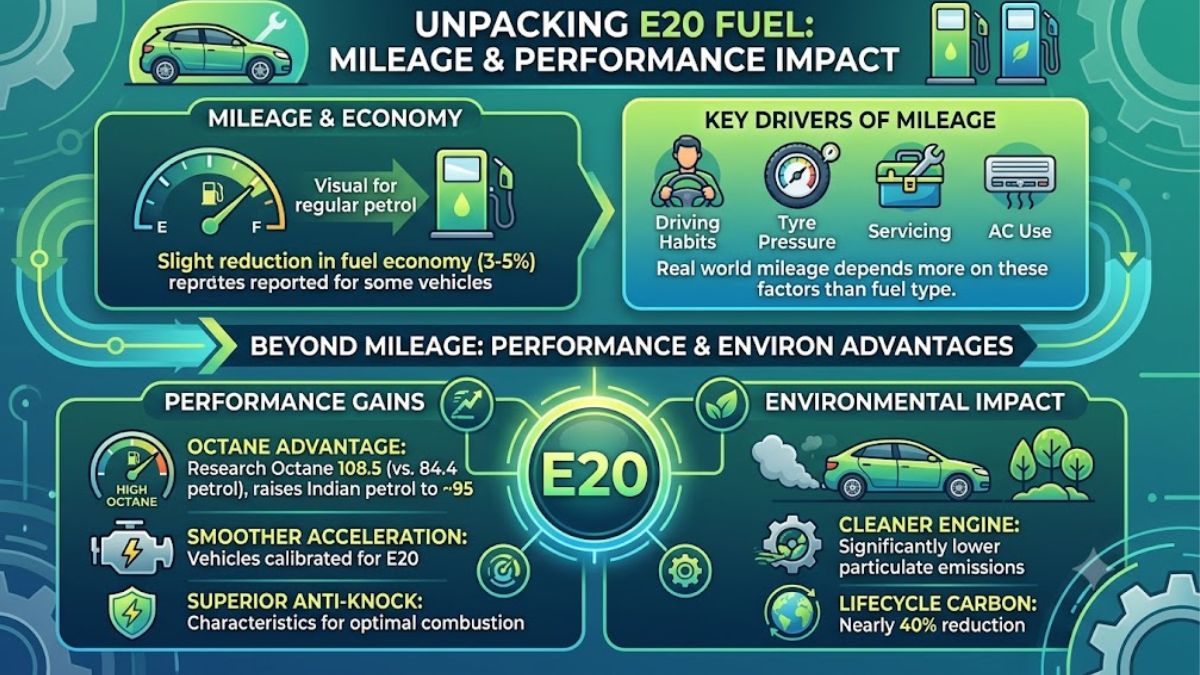
The government said some vehicles may see a 3 to 5 per cent drop in fuel efficiency after using E20 petrol. However, it noted that mileage also depends on factors such as driving habits, tyre pressure, vehicle maintenance, and air conditioner usage. The government added that E20 fuel has several benefits, including a higher-octane rating, smoother engine performance, better anti-knock quality, lower emissions, and the potential to reduce carbon emissions by nearly 40 per cent.
ALSO READ: E20 Fuel Row: Do Other Countries Really Use Ethanol-Blend Petrol Like India? Check Details
Is E20 Safe For Older Vehicles?
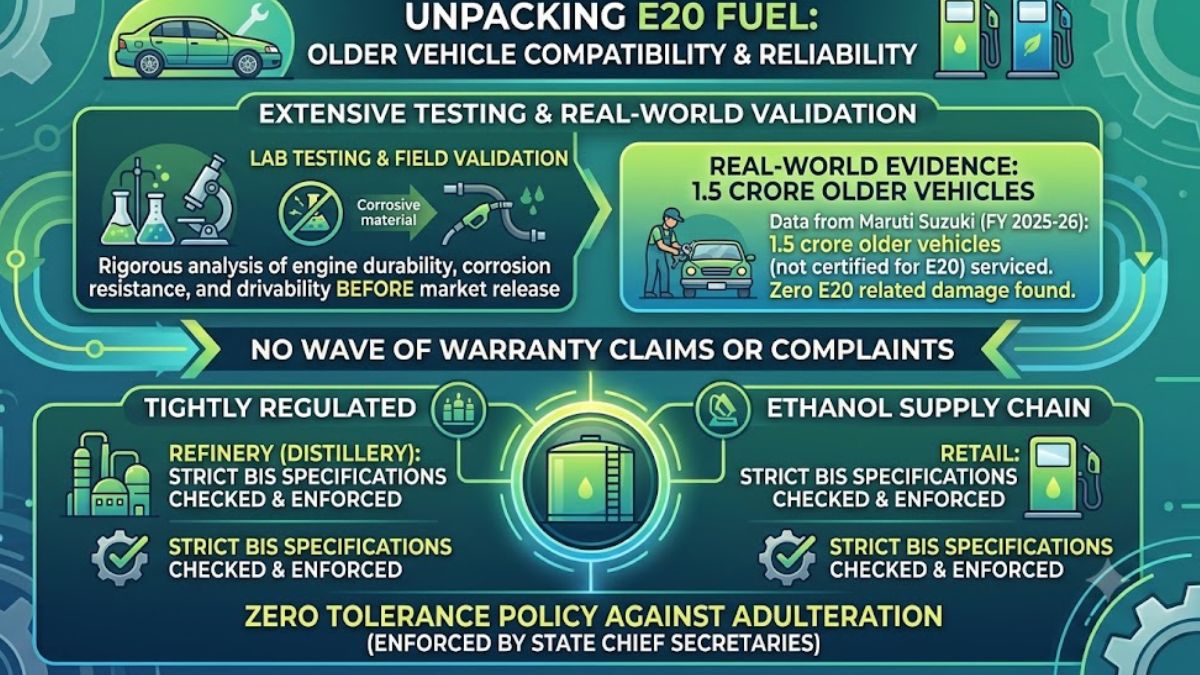
Addressing concerns over vehicle compatibility, especially since many vehicle manuals mention only E10 fuel, the government clarified that this does not mean vehicles become unsafe when using E20 fuel. The statement read: “A vehicle manual reflects the fuel standard that existed when the vehicle was certified. It does not mean the vehicle becomes unsafe the moment fuel standards move forward, after extensive testing and regulatory approval.”
Can E20 Damage Engines?
The government stressed that E20 has undergone extensive testing for engine durability, corrosion resistance, and performance before being introduced. It added that millions of older vehicles have been serviced without reports of major E20-related damage to engines, fuel lines, or rubber parts.
Why Is E20 Not Cheaper Than Petrol?
The government also explained why ethanol is not always cheaper than petrol. It stated that it is due to production involving costs such as procurement, transportation, storage, and taxes. The government noted that farmers are paid a fair price for ethanol supplied under the programme. For instance, maize-based ethanol is purchased at around Rs 71.86 per litre, before adding costs such as GST, transportation, and storage.
It further explained that when global crude oil prices are around USD 70 per barrel, producing E20 can cost the same as or even more than regular petrol. Ethanol becomes a cheaper alternative mainly when crude oil prices rise significantly, usually reaching USD 120-130 per barrel or higher.
However, the government said E20 still provides benefits because around 20 per cent of petrol sold in India now comes from domestically produced ethanol, reducing dependence on imported crude oil. Additionally, the government believes that ethanol blending will strengthen India’s energy security while promoting the use of renewable fuels.