
- By Raju Kumar
- Wed, 20 May 2026 05:21 PM (IST)
- Source:JND
Putin's China Visit: Beijing has been at the focal point in the last couple of days in geopolitics after hosting two of the most powerful men on the land - US President Donald Trump and his Russian counterpart, Vladimir Putin. Five days after Trump concluded his historic China visit, Putin also travelled to an East Asian Country. Both leaders, who engaged in armed conflict against Iran and Ukraine, respectively, caused a huge energy trade trouble for the rest of the world.
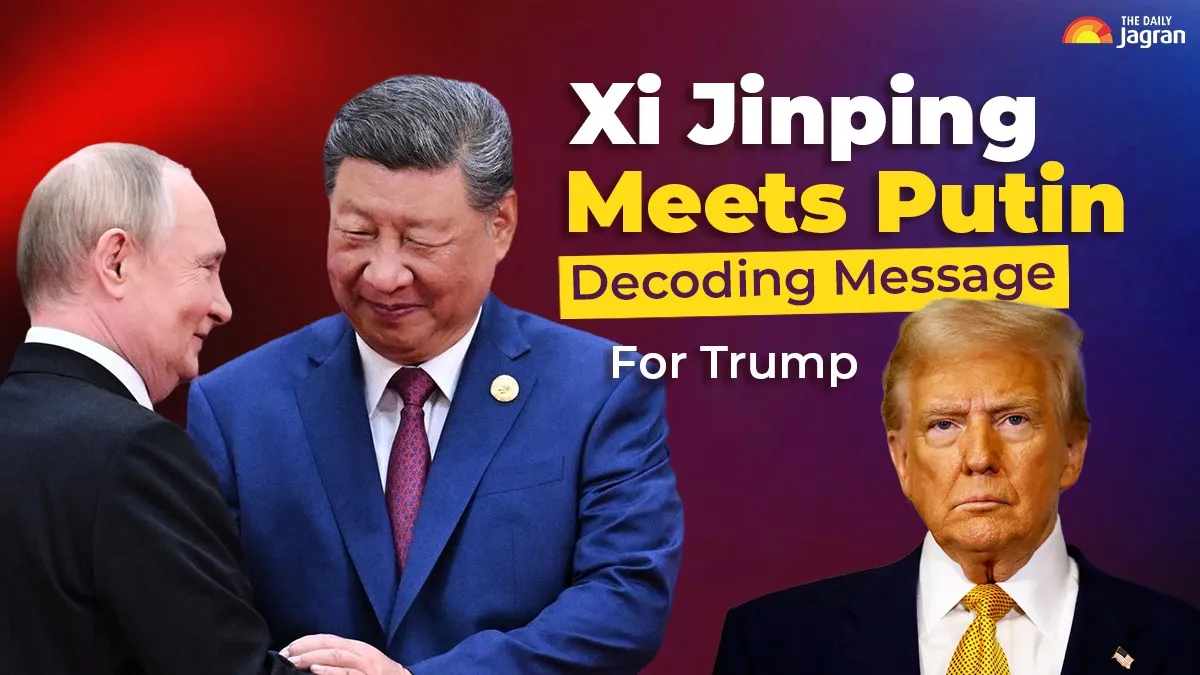
President Xi Jinping welcomed President Vladimir Putin with an honour guard and a gun salute at the Great Hall of the People, as children waved Chinese and Russian flags. Alongside formal talks, the pair are expected to cap the day with an intimate meeting over tea.
Quiz
ALSO READ: Putin To Visit India For BRICS Summit 2026 In September; Why Russia Remains Crucial For New Delhi
Focus On A Reasonable Global Governance System: Xi
Xi said the countries should focus on a long-term strategy and promote a "more just and reasonable" global governance system. Xi and Putin, for a long time, have alleged that the US-led Western-influenced global system does an injustice to the rest of the world.
"China-Russia relations have reached this level because we have been able to deepen political mutual trust and strategic cooperation," Xi said at the start of his meeting with Putin.
What Putin Said On Oil Supply Amid US Pressure
Putin said after the talks that Russian-Chinese ties had "reached a truly unprecedented level and continue to develop." The Russian President said the two countries were actively cooperating in energy and that his nation remained a reliable energy supplier amid Middle East disruption. Putin also invited Xi to visit Russia next year.
ALSO READ: Is Putin Staying In Bunkers? Report Says Russian President’s Security Tightened Amid Drone Threats
Russia Emerges As Key Energy Supplier Amid Middle East Crisis
Russia has emerged as a key oil supplier to its allies, including China and India amid disruption in the Middle East energy supply, following the US-Iran conflict. Moscow had signalled ahead of the visit that it was seeking further energy agreements with China, the largest buyer of Russian oil, including pipeline supplies and sea-borne shipments.
China, Russia Advocate For Multi-Polarity
The "no limits" partnership between China and Russia has strengthened since the West imposed sanctions to punish Russia for the war in Ukraine. Xi and Putin witnessed the signing of 20 cooperation documents and about 20 more were expected to be signed, according to the Kremlin. Both sides jointly signed a statement on strengthening comprehensive strategic coordination and a declaration advocating multi-polarity in the world order.
China And Russia's 'Law Of The Jungle' Jibe At The West
"The global agenda of peace and development is facing new risks and challenges, with the danger of fragmentation of the international community and a drift back toward the 'law of the jungle'," a joint declaration said, according to the Kremlin.
Ready To Work With US: Putin
Putin said Russia was ready for cooperation with partners, including with the United States, and that he had discussed this with Chinese President Xi Jinping during his visit to Beijing.
Here Are The Five Hidden Messages Emerged From Putin-Xi's Meeting For The US:
1. Putin's visit five days after Trump's pomp and show trip is a clear signal from China that Beijing and Moscow are not dependent on the US. They are strengthening their strategic bloc with Russia, Iran, and other countries on their side.
2. Putin and Xi emphasised a multipolar world amid a fragile world order after Trump intervened in the International rule. China-Russia-led "multipolar world order" challenges America's unipolar dominance. They want to reduce the dollar's dominance.
3. The meeting of the duo gives an indirect warning on Ukraine and Taiwan. Putin gets full support from China, which sends a message to Trump that if pressure is increased on Taiwan and Ukraine, Russia-China military-economic cooperation could deepen.
4. Despite US-led Western sanctions, Moscow and Beijing trade continued and reached over $200 billion, displaying their strong economic resilience:
5. Both leaders are reiterating a "friendship without borders", asserting that China-Russia military coordination could increase in the Asia-Pacific, posing a challenge to the US.
(With Agencies inputs)