
- By Vaidika Thapa
- Thu, 19 Mar 2026 12:18 PM (IST)
- Source:JND
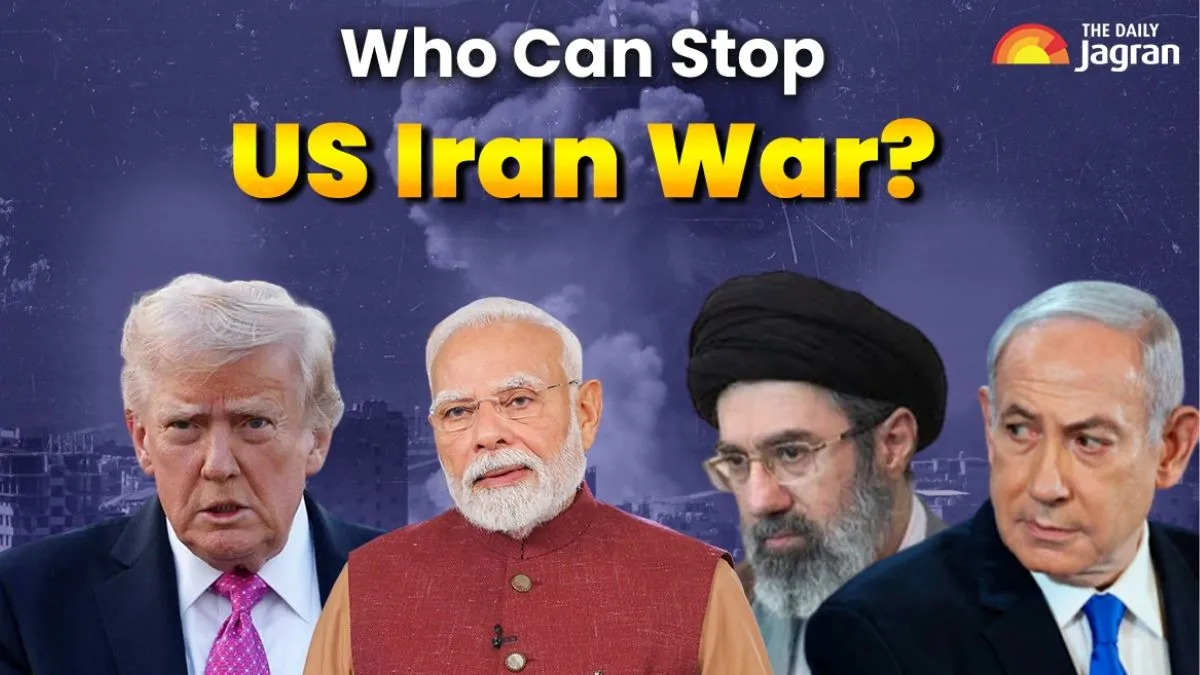
The conflict in the Middle East involving the United States, Israel and Iran has entered its 19th day with a series of strikes and counterstrikes. The crisis that began on February 28, has already triggered regional security responses, halted gas operations, damaged critical infrastructure, and widened conflict across the Gulf region. In such a situation, many believe that India can help reduce tensions and support peace. This comes after Finland's President Alexander Stubb recently urged Prime Minister Narendra Modi to leverage India’s position to broker a ceasefire in the escalating Middle East conflict.
During an interview with Bloomberg Television, Stubb said, “We need a ceasefire...I'm just wondering whether the Europeans or actually India could get involved. We saw foreign minister Jaishankar calling for a ceasefire and negotiations just to calm down the temperature and freeze the situation. He noted that Israel, the US, and Iran, all with different interests, are difficult to align in a peace kind of a situation. Therefore, India is often considered as a country that can talk to both sides in global conflicts amid calls of mediation.
Why India Stands Out As The Best Hope?
What places India as a favourable mediator is its bilateral and “friendly” relationships with all of them. On many occasions, PM Modi has himself stated that relations with Iran are based on a shared history, civilization, and mutual trust. He has described Israel as a "trusted partner” of India and the United States as “close friends.” India’s balanced position, role as a trusted partner and call for dialogue instead of conflict makes many think that it can broker peace.
India has always extended support to Israel and Iran at times of crisis. During his recent visit to Israel, PM Modi condemned the October 7 Hamas attack, calling it barbaric and unjustifiable. Similarly, India formally condoled the death of Iranian Supreme Leader Ayatollah Ali Khamenei on March 5, following his killing in a US-Israel strike. PM Modi also expressed "deep concern" regarding the escalating conflict in West Asia. India’s position on this conflict can be further underscored through PM Modi’s telephonic conversation with UAE President, Saudi Crown Prince, Crown Prince of Kuwait, all addressing the conflict in the Middle East.
Spoke with HH Sheikh Sabah Al-Khaled Al-Hamad Al-Mubarak Al-Sabah, Crown Prince of Kuwait and conveyed greetings on the upcoming festival of Eid.
— Narendra Modi (@narendramodi) March 18, 2026
We exchanged views on the evolving situation in West Asia and shared concerns over recent developments. Reiterated India’s…
Can India Mediate?
Another reason which naturally gives India reasons to mediate is its dependence on the Middle East for oil and trade. All of this can happen only when there is peace in the region. Colonel Douglas MacGregor, an influential voice in American political circles, stated in an interview with Tucker Carlson that an “intermediary” is needed to stop the raging war. He stated "PM Modi has good relations with Iran and Israel. India is not involved in this war in any way. India is a neutral state and the only neutral state that is growing in stature, power, and influence."
The UAE's first ambassador to India, Hussain Hassan Mirza, also argued that PM Modi can resolve the conflict with a single call. "One phone call from Mr Modi to the counterparts in Iran and Israel can solve this issue, can end this issue. One phone call," he told India Today.
Apart from this, India’s rising economic power, good relations with Iran, Israel and the US, no expansionist ambitions or military aggression, and its position as a leading founding member of the Non-Aligned Movement (NAM) places it as an effective mediator. While India can’t stop the war alone, it can play an important role in encouraging talks between the three countries.