
- By Ajeet Kumar
- Wed, 27 May 2026 09:11 AM (IST)
- Source:JND
- Undocumented Bangladeshi migrants surge at India's eastern borders.
- India intensifies 'detect, delete, deport' policy against immigrants.
- Bangladesh objects to 'push-ins', increases border vigilance.
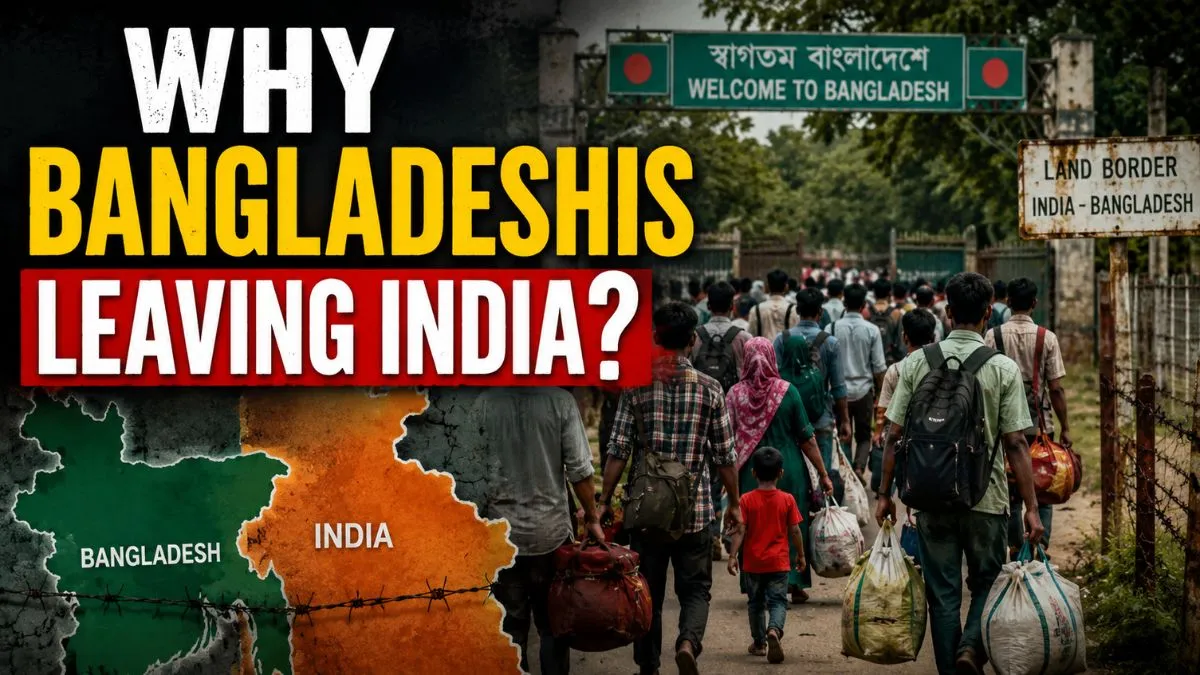
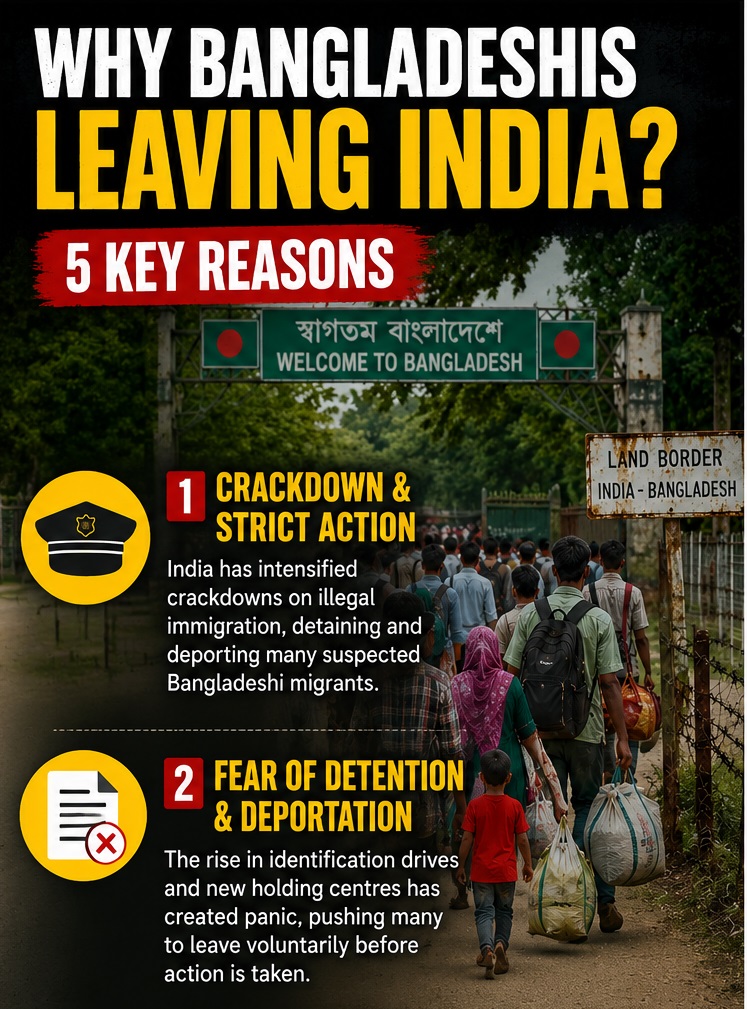
A visible movement of suspected undocumented Bangladeshi migrants towards India's eastern land borders has emerged in recent days, particularly in border districts of West Bengal, amid an intensified crackdown on illegal immigration and deportation drives. Reports indicate that hundreds have gathered near border checkpoints, fearing detention or deportation following tougher administrative measures.
The latest movement comes after authorities in West Bengal and Assam intensified efforts to identify undocumented immigrants. According to a report by the Economic Times, new “holding centres” for suspected illegal migrants have been established in border districts such as Malda and Murshidabad, while officials have promoted a “detect, delete and deport” policy aimed at identifying foreigners staying without valid documentation.
Why is this happening now?
The recent migration outflow appears linked to heightened enforcement against illegal immigration. According to a report by news agency Reuters, Assamese authorities have reportedly deported hundreds declared foreigners by tribunals since 2025, while the Centre has sought nationality verification of thousands of suspected undocumented Bangladeshi nationals.
How Bangladesh Reacted
Bangladesh has objected to what it describes as unilateral “push-ins” and insisted that repatriation must happen through formal bilateral mechanisms.
Bangladesh has simultaneously increased vigilance along its border, stepping up patrols and awareness campaigns in frontier districts to prevent unauthorised crossings. Officials in Dhaka say they are monitoring attempts by migrants to enter Bangladeshi territory outside legal channels.
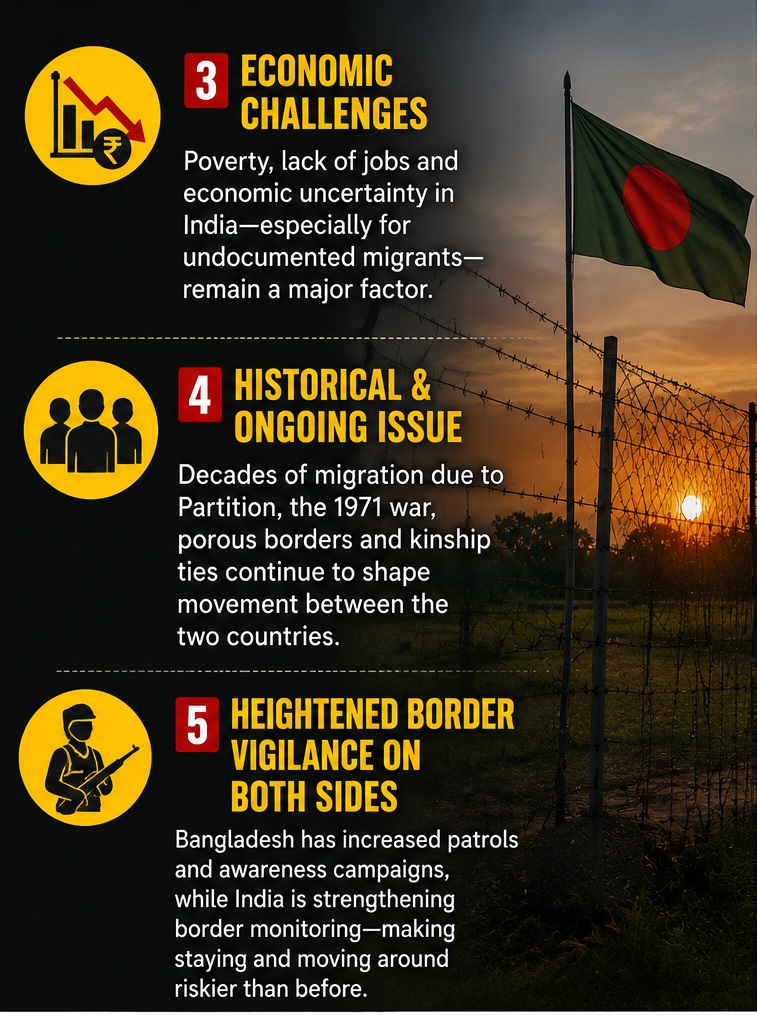
The 60th Battalion of Border Guard Bangladesh began campaigns on Sunday in border areas of the Brahmanbaria district, using loud speakers to warn residents and urging them to remain alert to attempts to push people across the border.
"We have started miking in border villages to raise awareness among residents and ask them to stay vigilant against any illegal crossings or push-in attempts," Lieutenant Colonel SM Shariful Islam, commander of the battalion, told Reuters.
"Our patrols and surveillance have been strengthened across the border areas. Intelligence operations are also continuing to prevent illegal push-ins, human trafficking, and the smuggling of drugs and other goods,” he said.
North 24 Parganas, West Bengal: A Bangladeshi infiltrator says, "I have been living here in Dum Dum for the past one or two years. If the administration does not keep us here, then what can we do? Tell me. If the government does not support us, we cannot stay here, so what else… pic.twitter.com/oSXhErC326
— IANS (@ians_india) May 26, 2026
The historic issue: A long and sensitive migration story
Illegal migration from Bangladesh into India has remained one of the most politically sensitive issues in eastern and northeastern India for decades. The roots of migration trace back to the 1947 Partition, when population movement between the two Bengals accelerated. Another major wave came during the 1971 Bangladesh Liberation War, when millions crossed into India to escape violence and instability.
Over the decades, economic migration, porous borders, kinship ties, and employment opportunities in states like West Bengal, Assam, Tripura, and Delhi contributed to continued cross-border movement. India and Bangladesh share a land border stretching over 4,000 kilometres, one of the longest in the world, making border management a persistent challenge.
What lies ahead?
The situation remains fluid. While India has reiterated its focus on identifying undocumented migrants, Bangladesh continues to insist that repatriation should follow verification and bilateral procedures. With political rhetoric rising and border monitoring intensifying on both sides, migration along the India-Bangladesh frontier is once again at the centre of regional tensions.
(With inputs from Reuters)
You may also like to watch