
- By Akansha Pandey
- Thu, 19 Mar 2026 09:21 PM (IST)
- Source:JND
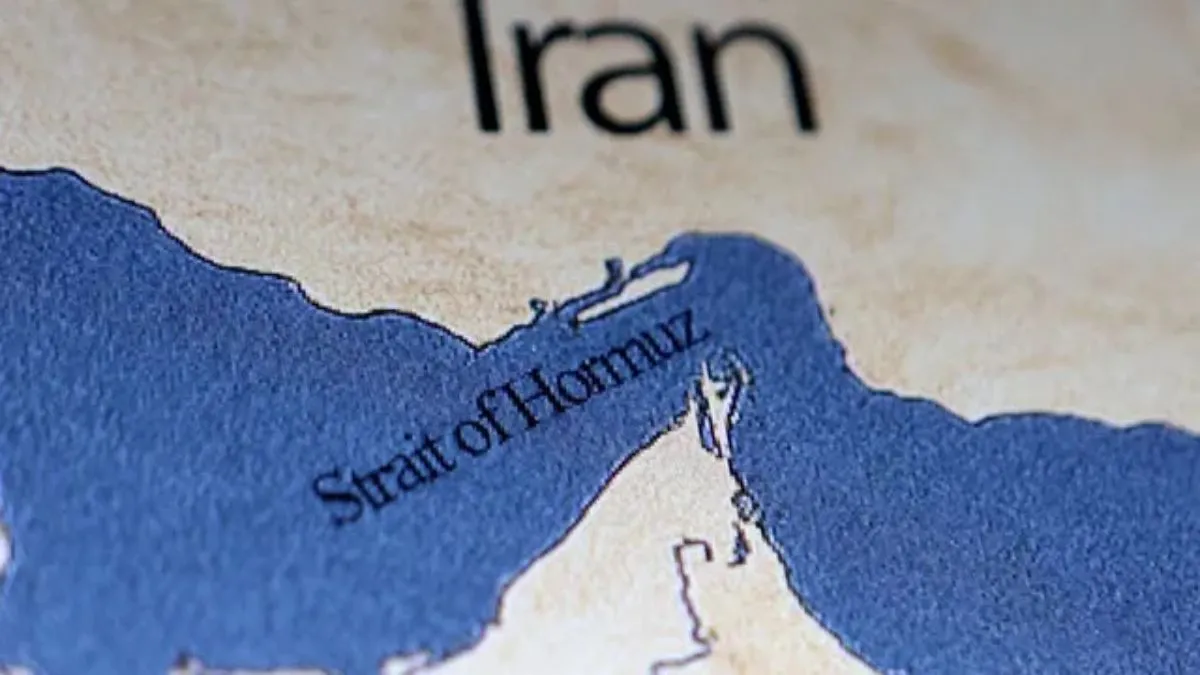
The Strait of Hormuz has once again emerged as a critical flashpoint for global politics,energy stability and trade as the military tenstions escalate in Middle East. With Iran potentially restricting movement in Strait of Hormuz, significant questions arises: Does international law permit such a blockade? And can naval escorts from powers like the US truly guarantee safety?
In the current scenerio of this Middle East war, it is confirmed that this Strait of Hormuz is no longer just a shipping lane, it is a symbol of collision between legal framework and military strategy.
Why Strait Of Hormuz Matters
The Strait of Hormuz also known as "Lifeline of global energy", is among the world's most strategic maritime chokepoints as it connects the Persian Gulf to the Gulf of Oman. A massive portion of oil and gas supplies passes through its water in the world. At its narrowest point, the strait is only about 39 kilometers wide, meaning any disruption here instantly impacts the global economy.
Transit Rules During Peacetime
Strait of Hormuz is classified as an international strait under internationa law. Vessesls from all nations can enjoy the right of "transit passage", even though its water fall within the territorial jurisdictions of Iran and Oman.
The Condition: Ships must pass through continuously and expeditiously without stopping.
The Restriction: Under normal circumstances, coastal states like Iran cannot legally obstruct this flow of traffic.
How Conflict Changes The Rules
When armed conflict breaks out, the "Law of Naval Warfare" takes precedence. This framework divides nations into two categories:
Belligerents: Those actively involved in the fight (eg, Iran, Israel or the US).
Neutrals: Nations not participating in the hostilities.
According to the 1994 San Remo Manual, neutral ships technically retain the right to use the strait, and belligerent states are prohibited from targeting them. However, in practice, these legal protections often fail, leading many commercial operators to reroute their vessels to avoid the risk.
Can Iran Legally Close The Strait?
The legal reality is complex. While international law generally mandates that straits remain open if controlled by a neutral party, the rules shift when a belligerent nation, like Iran in this scenario, exerts control. While Iran might claim the right to close the passage for security reasons, such a move would likely trigger a massive international backlash and direct military confrontation.
The Risk Of Military Escorts
To protect commercial trade, countries like the United States often deploy warships to escort merchant vessels. However, this "safety" measure is a double-edged sword:
Targeting: If a commercial ship travels within a military convoy, it may be viewed as part of a military operation, making it a legitimate target for opposing forces.
Escalation: Rather than deterring attacks, these escorts can sometimes increase the likelihood of a direct military engagement.
The Dilemma Of Neutrality
Remaining neutral is becoming increasingly difficult. If a country indirectly assists one side, it risks being reclassified as a participant in the war. Once that happens, its ships and naval assets lose their protected status and become fair game for strikes.
Law Vs Reality
While international law provides a roadmap for the Strait of Hormuz, the ground reality remains volatile. In a war zone, legal rights often succumb to military necessity. As neutral vessels face growing threats, the strait has become the ultimate test for global power dynamics, energy security, and the efficacy of international maritime law.