
- By Shibra Arshad
- Sun, 15 Mar 2026 04:52 PM (IST)
- Source:JND
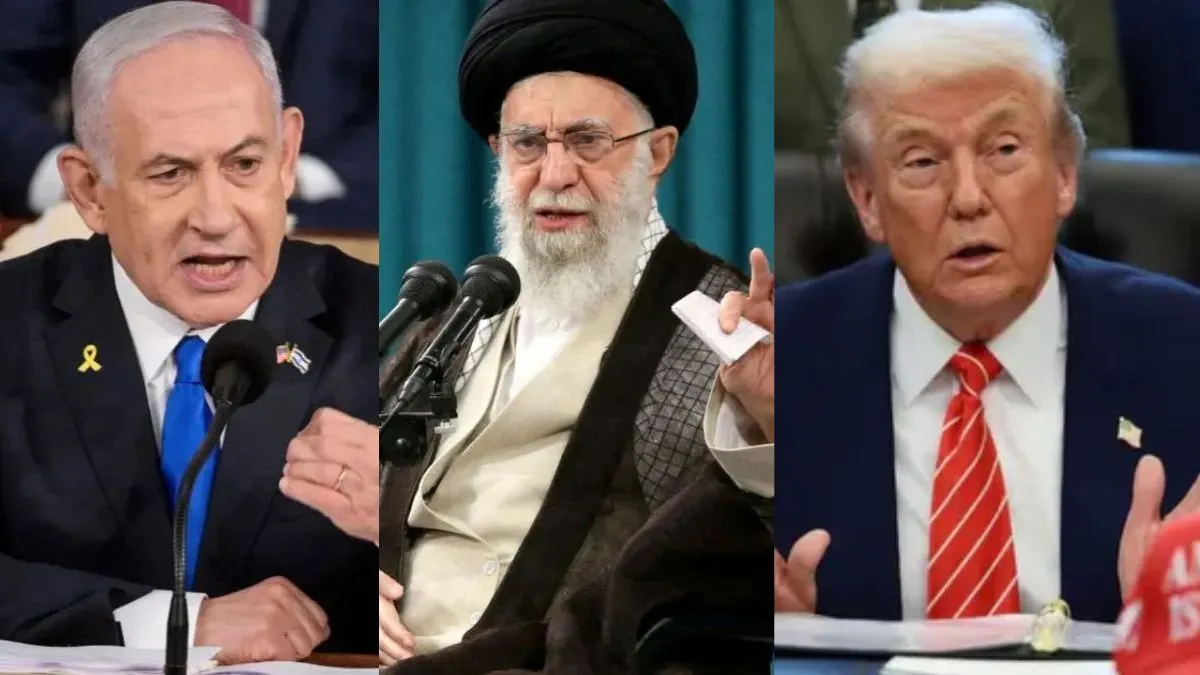
The tensions in West Asia continue to grow larger even after 15 days of war between Iran and the joint forces of the US and Israel, with the US aiming to destroy Iran's missile stockpiles, launchers, and the defence industrial base to eliminate their capability to produce more missiles and Iran plegding to avenge the killing the Supreme Leader Ayatollah Ali Khamenei and other killed in US-Israel attack on Tehran under operation Epic Fury.
As Tehran’s retaliatory attacks targeted US bases in Gulf countries and oil vessels in the ocean carrying Iraqi oil, the US targeted Kharg Island in Iran, known as the lifeline of Iran, contributing 25 per cent of total GDP.
The IRGC had reportedly suspended the passage of ships through the crucial Strait of Hormuz as a response measure against attacks on Tehran. However, recently Iran’s Minister announced that the Strait of Hormuz was open for all vessels except those belonging to the US, Israel and their allies.
As the war has been ongoing for two weeks with no hope of relief anytime soon, here’s key developments and takeaways from the war.
ALSO READ: Trump Shuns Zelensky Over Offer To Counter Iranian Drones; 'Last Person We Need Help From'
Iran Isn’t At Risk, At Least For Now
As the war has stretched for more than two weeks, several experts have pointed out that the US miscalculated Iran’s retaliatory power and its strength to continue the war. The IRGC appeared more aggressive in recent days, diversifying its retaliatory measures from targeting US assets in neighbouring countries to hitting the economy by stopping oil vessels at the Strait of Hormuz.
Iran’s ballistic missiles and drones have struck 11 countries: Israel, Saudi Arabia, the UAE, Oman, Bahrain, Kuwait, Qatar, Iraq, Turkey, Azerbaijan and Cyprus as it expanded the battlefield.
According to an assessment by US intelligence, quoted by Reuters, although the US and Israel have killed the Supreme Leader, the regime in Iran is not at imminent risk.
“The are several stages to the escalation trap,” Robert Pape, a US historian who has studied the limitation of air power, told the British newspaper, The Guardian. “The attacker still has escalation dominance, so there is a doubling down, which then moves up the escalation ladder and that still does not lead to strategic success. Then you reach stage three, which is the real crisis, where you are contemplating far riskier options. I would say we are stage two, and on the cusp of stage three,” Pape added.
A War That Has No End Goal
The US attacked Iran when nuclear talks between the two were taking place and were reportedly moving in the right direction. Days before the attack on Tehran, Trump suggested that regime change would be the best thing to happen in Iran, which was later interpreted as the US’s main goal behind the attack on Tehran. After it launched an attack at the Middle Eastern country, the US’s goal contracted, and Trump said that the US would destroy Iran’s missile stockpiles, launchers and defence infrastructure to prevent Tehran from producing more missiles.
Weeks into the war, none of these goals appear to have been achieved, as the US President continued changing his statements on what he wants to achieve through this war.
Trump has given varied remarks on how long the war would continue. After repeatedly saying in recent days that there is “nothing left” to target, he said in an interview on Friday (March 13) that the fighting would cease when he feels it “in my bones.”
Where India Stands
The recent unrest in West Asia has also sparked questions on where India stands diplomatically, as New Delhi took days to express condolences on the killing of the Supreme Leader of its historic ally. India had criticised Iran’s attacks on Gulf countries and held a conversation with its Israeli counterpart, but remained unreactive to the US and Israel’s arbitrary attack on Tehran for days, before criticising it.
India cannot afford to taint its ties with West Asia, as about one crore Indians live and work across the Gulf. India also relies on West Asia for around 60 per cent of its energy imports. The region generates 38 per cent of its remittances.
India is still in a diplomatic dilemma as New Delhi is yet to condole the death of Khamenei at the highest level. Foreign Secretary Vikram Misri went to sign the condolence book at the Iranian embassy.
Recently, PM Modi held a conversation with Iranian President Masoud Pezeshkian.