
- By Chetna Shree
- Thu, 19 Mar 2026 08:45 PM (IST)
- Source:JND
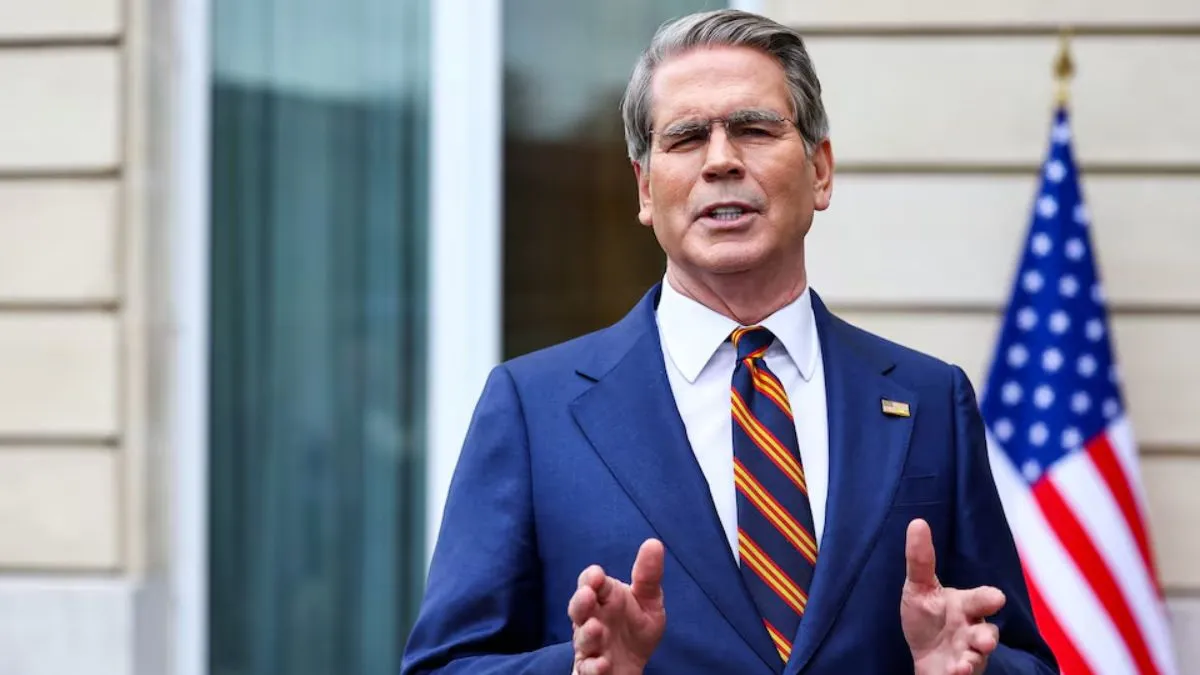
US-Iran War: The United States is considering removing sanctions on Iranian oil currently stranded on tankers at sea to boost oil supply and reduce prices, said US Treasury Secretary Scott Bessent on Thursday.
Bessent said that around 140 million barrels of Iranian oil, equivalent to about 10 days to two weeks of global oil supply, are "on the water".
"In the coming days, we may unsanction the Iranian oil that’s on the water. It’s about 140 million barrels. So, depending on how you count it, that’s 10 days to two weeks of supply that the Iranians had been pushing out," Bessent told Fox Business Network's "Mornings with Maria" program.
Oil Prices Soar Above $100 Per Barrel
Oil prices have recently been above $100 per barrel after Iran closed the Strait of Hormuz and attacked tankers, according to Reuters. This closure has created a shortage of 10 to 14 million barrels per day in global supply.
Bessent said that allowing the Iranian oil, currently stranded on tankers at sea, to be sold will reduce prices over the next 10-14 days. The US took a similar step recently by allowing sanctioned Russian oil stuck on ships to be sold, which added around 130 million barrels to global supply.
Plans To Release More Oil From SPR
The United States is also planning to release more oil from its Strategic Petroleum Reserve (SPR), adding to the earlier G7 joint release of 400 million barrels. Bessent emphasised that the government will not intervene in oil futures or financial markets, with a focus on adding real physical oil supply to the market.
"We are not touching financial markets; we are supplying the physical market," Bessent said, adding that the United States is coordinating with other countries to handle the situation.
ALSO READ: Dawood Ibrahim Dead Or Alive? Dhurandhar 2 Puts Spotlight Back On 'Pakistan's Missing Man'
Trump tO Meet Japan's PM To Discuss Protecting Ships Through Strait Of Hormuz
US President Donald Trump is scheduled to meet Japan's Prime Minister Sanae Takaichi, according to Reuters, with discussions expected to focus on protecting ships passing through the Strait of Hormuz. This is critical for Japan as it gets most of its oil supplies from the region.
Japan may also consider releasing additional oil from its own reserves. The US Treasury Secretary said Tokyo is likely to support broader efforts to stabilise global oil supply.