
- By Ajeet Kumar
- Wed, 29 Apr 2026 02:45 PM (IST)
- Source:JND
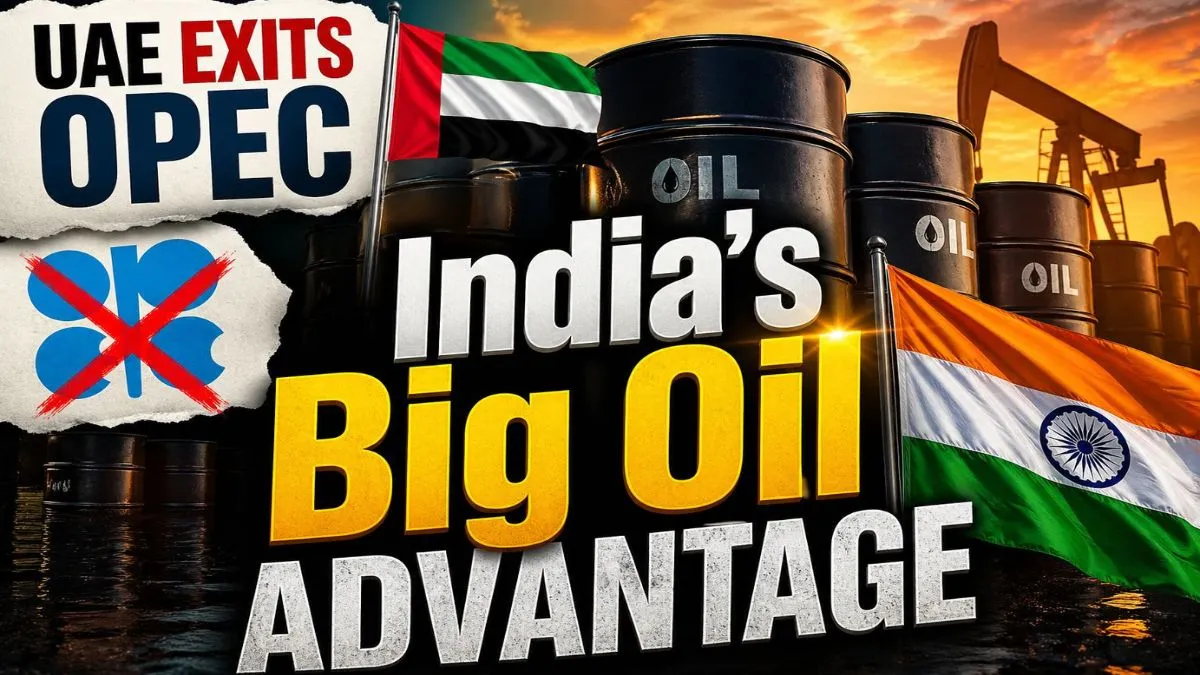
- UAE exits OPEC, impacting global oil supply dynamics.
- India benefits from potential lower oil prices and supply.
- Pakistan faces economic challenges amid dwindling forex reserves.
The United Arab Emirates (UAE) on Tuesday said it was quitting the Organisation of the Petroleum Exporting Countries (OPEC) from May 1, amid uncertainty over security following the Iran-US war. The group, which is often dubbed the “oil cartel”, has a strong influence over global oil supply and thus has a strong say in deciding the energy prices.
ALSO READ: UAE Exits OPEC, OPEC+: What Are Two Oil Alliances And Why Abu Dhabi Walked Out
However, for India, the latest development could pump a fresh push to its energy needs as the Middle Eastern country is now able to make independent decisions on its oil production. But, for Pakistan, it would act as a major blow to Pakistan as it may fail to capitalise on the opportunity amid dwindling forex reserves.
What is OPEC?
OPEC is an intergovernmental group and cartel enabling the co-operation of leading oil-producing and oil-dependent countries in order to collectively influence the global oil market and maximise profit. The bloc was founded in the 1960s and consists of 12 member nations, including Algeria, Congo, Equatorial Guinea, Gabon, Iran, Iraq, Kuwait, Libya, Nigeria, Saudi Arabia, the UAE, and Venezuela.
Why does it take an exit from the bloc?
The Iran war has exposed the vulnerability of the region. For decades, the country has relied mostly on America for its security; however, the recent attacks on Saudi Arabia and the UAE have exposed hollow guarantees of the US.
UAE’s economy is mainly dependent on energy export. The recent attacks and the consequent blockade of the Strait of Hormuz have put massive pressure on its economy, prompting the country to exit OPEC.
In his first public comments since the announcement, UAE Energy Minister Suhail Mohamed al-Mazrouei told Reuters in a telephone interview that the decision was taken after examining the country's energy strategies. He said the UAE had not discussed the issue with any other country. "This is a policy decision, it has been made after a careful look at current and future policies related to the level of production," Mazrouei said.
How does the UAE’s withdrawal from OPEC give a boost to India’s energy security?
1. Supply shock vs market control
If the United Arab Emirates exits OPEC and OPEC+, it weakens the cartel’s ability to control oil output. UAE could pump more oil independently, increasing global supply and potentially stabilising or lowering prices.
2. India’s strategic advantage
For India, a major oil importer, a higher global supply means better bargaining power and lower import bills. This could ease inflation, reduce fuel prices, and support economic growth.
3. Pakistan’s economic vulnerability
In contrast, Pakistan may struggle to capitalise. Its weak currency, low forex reserves, and dependence on IMF conditions limit its ability to negotiate or stockpile cheaper crude effectively.
4. Refining and infrastructure gap
India’s advanced refining capacity and diversified suppliers allow it to quickly adapt to supply shifts. Pakistan lacks similar infrastructure flexibility, meaning it cannot fully benefit even if oil becomes cheaper.
5. Geopolitical realignment
A UAE exit would signal cracks within OPEC+, reshaping global energy alliances. India, with strong ties to Gulf producers, could deepen energy partnerships, while Pakistan risks being sidelined due to limited diplomatic leverage and financial constraints.
(With inputs from agencies)
You may also like to watch