
- By Shubham Bajpai
- Mon, 25 May 2026 08:27 PM (IST)
- Source:JND
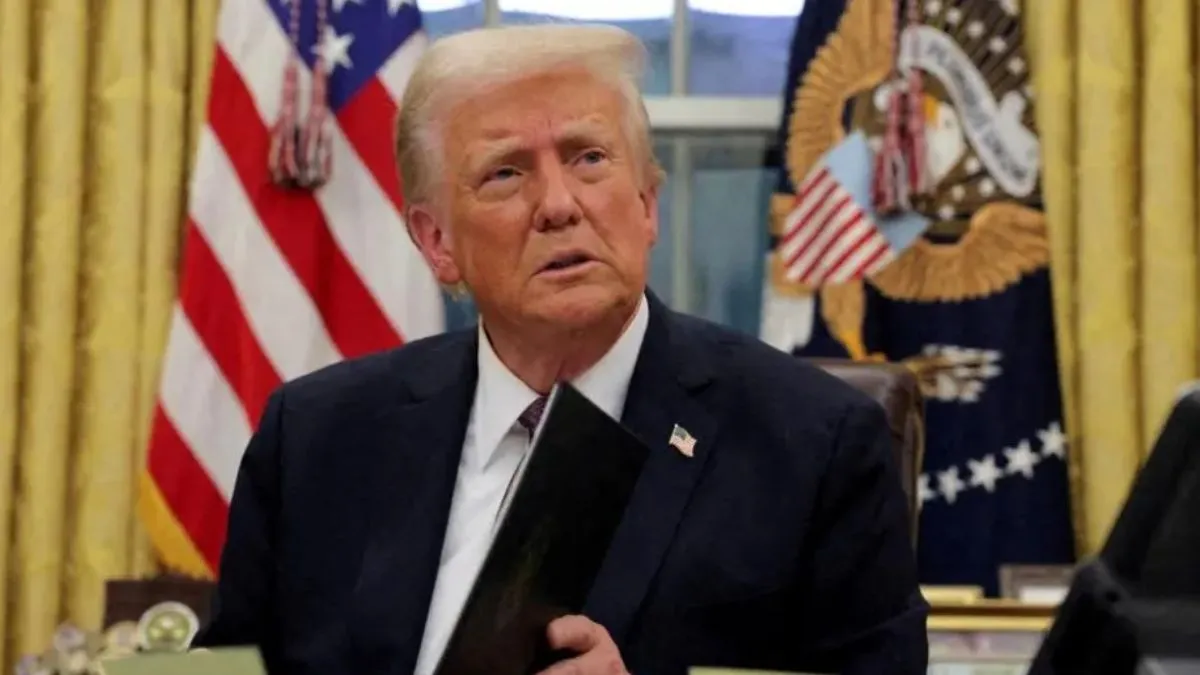
It has been nearly three months since the war in West Asia broke out, but the US, Israel, and Iran have yet to find a way to end the conflict. Amid intense deliberations, US President Donald Trump on Monday said that negotiations were proceeding nicely but put a rider of a mandatory signing of the Abraham Accords by Islamic countries, including Pakistan, after "all the work is done."
The Abraham Accords are key deals that establish formal diplomatic, economic, and security terms between the state of Israel and the Arab world. Most Islamic countries have been against it.
In a Truth Social post, Trump said, "Those Countries discussed are Saudi Arabia, the United Arab Emirates (already a Member!), Qatar, Pakistan, Türkiye, Egypt, Jordan, and Bahrain (already a Member!). It may be possible that one or two have a reason for not doing so, and that will be accepted, but most should be ready, willing."
The war began with the US-Israeli attack on February 28 over Iran's nuclear programme, but pushed it to an even more contentious issue of the Strait of Hormuz.
Currently, both the US and Iran have imposed a blockade on the Strait, disrupting the global supply chain of crude oil and gas.
Despite the global outcry caused by this war, the prospect of a final agreement between the US, Israel, and Iran appears near.
ALSO READ: 'No Delegation To Pakistan, No Hormuz Toll': Iran Pushes Back On Trump's 'Deal Done' Claims
What's obstructing peace deal?
Enriched uranium: The biggest reason for the failure of a US-Iran deal is Iran's possession of highly enriched uranium. Reports suggest Iran possesses approximately 2,000 kilograms of enriched uranium, of which approximately 450 kilograms are considered "near weapons grade."
The US wants Iran to eliminate this stockpile or hand it over to a third country, a condition which is key to relief from global sanctions.
Although Iran is ready to give up its nuclear dreams but not ready to give up its right to enriched uranium. Iranian President Masoud Pezeshkian said, "We are ready to assure the world that we do not want nuclear weapons, but we will not compromise on our honour and rights."
Strait of Hormuz: The US-Iranian agreement on the Strait of Hormuz is ongoing, under which several provisions have been made. But Iran is unwilling to relinquish its rights over the key waterways despite its softer tone on collecting tolls.
"We are not seeking to collect tolls, services are provided; navigation services plus necessary measures to protect the environment of the Strait of Hormuz," Iran's Foreign Ministry spokesperson Esmail Baghaei said Monday.
Frozen assets: Iran is demanding an immediate unfreezing of its billion dollars of assets held in overseas banks. "At the very beginning of this process, the status of releasing the blocked assets must be clarified," Baghaei had said Saturday.
ALSO READ: WATCH: Journalist Grills Rubio Over Trump's 'Hellhole' Remark On India; Here's His Reply
Iran's Tasnim news agency, citing sources, reported that "without the release of a specific portion of Iran’s blocked assets in this very first step – along with a clear mechanism for the guaranteed, continued release of all blocked assets – there will be no agreement."
The US, on the other hand, has asserted that unfreezing would be done only after the Strait is reopened.
Lebanon: Inclusion of a clause regarding the cessation of attacks against Hezbollah by Israel is also a contentious issue. On Monday, Baghaei said, "Stopping the war on all fronts, including Lebanon, will be one of the elements of the possible understanding".
Israel is reportedly opposed to including Lebanon and Hezbollah in the agreement. According to a report by CNN, an Israeli official said that Trump has told Israeli Prime Minister Benjamin Netanyahu he supports the country's wish to "maintain freedom of action against threats on all fronts, including Lebanon."