

- By Ajeet Kumar
- Tue, 15 Sep 2026 12:42 PM (IST)
- Source:JND
- Saudi East-West pipeline closure impacts global oil supply.
- India faces higher crude import costs due to pipeline disruption.
- Houthi rebels threaten Red Sea shipping, exacerbating energy crisis.
Saudi Arabia’s closure of a major oil pipeline after a recent attack is raising fears that global energy markets in crisis because of the war with Iran could face even starker shortages, pushing prices higher for fuel and other essentials. The largest oil producer in the Middle East closed its East-West pipeline on Friday after the attack, which it blamed on drones from Iranian-backed militias in Iraq. Two regional officials told The Associated Press that repairs could take three to five weeks.
The pipeline is crucial to getting some crude out of the Middle East by shipping it to the Red Sea rather than through the Strait of Hormuz, the narrow waterway through which roughly a fifth of the world’s oil supply passed before the US and Israel attacked Iran in February.
Yemen's Iran-backed Houthi rebels have seized islands along key Red Sea shipping routes, further threatening Saudi exports.
Here's what we know:
What is the East-West pipeline?
Saudi Arabia's East-West pipeline stretches some 1,200 kilometres across the desert nation, carrying oil from a processing facility near the Persian Gulf westward to the Red Sea. There, crude is typically loaded onto tankers that head north towards Europe via the Suez Canal or south through the Bab el-Mandeb Strait, on the way to Asia. Now, this is the biggest concern for India as it has been getting oil from this route sincce the US-Iran war blocked the traditional sea route.
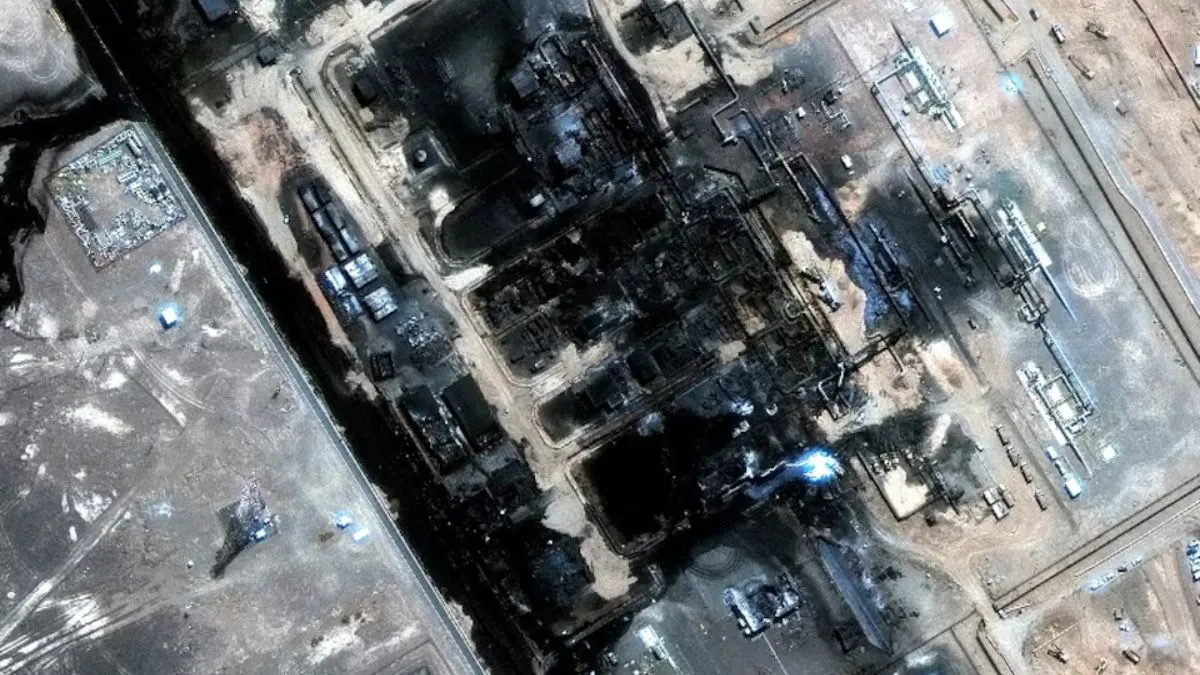
(A satellite image shows a closer view of the damage at the Saudi Arabia East-West pipeline, located across the Arabian Peninsula, after a strike that hit it on September 11, 2026, in Saudi Arabia | CREDIT: REUTERS)
The pipeline was built in the 1980s amid fears that Tehran would disrupt shipping through Hormuz during the Iran-Iraq war. And for the first six months of the current war, it was crucial to keeping at least some oil flowing out of the Middle East while most tanker traffic in Hormuz remained at a standstill.
Rystad Energy said on Monday that an average 2.6 million to 4 million barrels of oil a day moved through the pipeline and out of the Red Sea port of Yanbu since late August – a volume it said is now at risk of “disappearing from the market.”
Four million barrels per day is about 4 per cent of the global oil supply, according to the International Energy Agency. Saudi Arabia produced nearly 10 million barrels of oil a day in September 2025, but was down to 6 million barrels per day in August, the IEA sai
Where oil flows from the Middle East stand now
The Strait of Hormuz is still top of mind. Before the war, about 20 million barrels passed through Hormuz each day. Some tankers are again traversing the strait, but traffic is well below what it once was. Maritime data company Lloyd’s List Intelligence counted 90 transits in the first week of September. Before the war, about 130 ships passed through daily.
The Houthis have also tightened their hold on the Bab el-Mandeb Strait, a vital passage for the southern Red Sea. Analysts at Melius Research estimated that about 3 million barrels of oil a day were moving through Bab el-Mandeb in early September, but noted on Monday that "it’s likely zero now."
Because of Houthi attacks, most Saudi traffic from Yanbu went north to the Mediterranean, either via the Suez Canal or Egypt‘s SUMED pipeline. But the Houthis have also begun targeting Saudi shipping in the north.
India faces higher crude costs if Saudi pipeline outage prolongs
India could see a rise in its crude oil import bill if Saudi Arabia’s East-West pipeline remains shut for more than a few days. Refiners would then have to compete for alternative supplies in an already tight global market. The main concern for India is not the direct loss of Saudi crude, but the higher cost of securing replacement barrels. A prolonged disruption would force Asian refiners to bid for available supplies, pushing up crude differentials and freight rates.
For Indian refiners the impact would be mixed. Stronger fuel prices could support refining margins, yet these gains risk being offset by elevated crude costs.
ALSO READ: Crude Oil Prices Cross $100 Again: What's Driving The Spike And Why It Is Concerning For India
What market data suggests
India’s direct dependence on Saudi crude remains limited. In August, Saudi supplies averaged about 315,000 barrels per day (b/d) against India’s total crude imports of roughly 4.7 million b/d. This volume had already fallen from around 600,000 b/d during the peak of the crisis in March-April.
Saudi Arabia’s share of India's LPG imports has also dropped sharply. It supplied about 140,000 b/d of India’s 845,000 b/d LPG imports in February, but shipments ceased entirely from July onward.Physical supply disruptions are unlikely to be severe.
However, replacement crude from the US, Africa or Latin America could become more expensive because of higher freight costs and differences in crude quality.
Analysts note that the ultimate price effect will depend on how long the pipeline stays offline, how much crude Saudi Arabia can reroute through other channels, and whether spare production capacity elsewhere or emergency stock releases can ease the tightness.
(With inputs from PTI)