
- By Raju Kumar
- Thu, 23 Apr 2026 06:33 PM (IST)
- Source:JND
Fuel Crisis: Russia has emerged as a top fuel destination for the Asian nations, India and China, as both neighbouring countries have faced fuel shortages due to ongoing hostility in the Strait of Hormuz, following tensions between the US and Iran. India and China both depend on imports to meet their energy needs. India, the world's third-largest oil consumer, imports nearly 80% to 90% of its crude oil requirements. On the other hand, China is the world’s second-largest oil consumer, which is dependent on 74% imported oil for its domestic consumption.
Muyu Xu, a senior analyst at Kpler, has said India and China have been in intense competition for Russian crude, and it is likely to continue to be so for June-loading cargoes, reported CNBC.
ALSO READ: 34 Iran-Linked Tankers Slip Past US Blockade With $910 Million Oil; How Did They Escape?
Who Are The Top Russian Oil Importers?
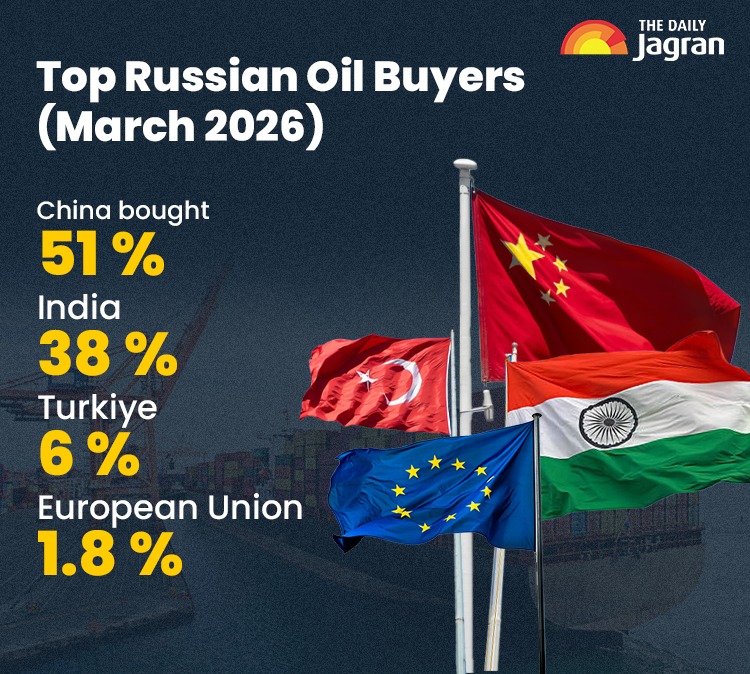
In March, China bought 51 per cent of Russia's crude exports, followed by India (38 per cent), Turkiye (6 per cent), and the European Union (1.8 per cent). In February, India was the third-largest importer of Russian oil behind China and Turkiye.
Quiz
"While India's Russian crude imports recorded a 19 per cent reduction in February, total imports saw a more modest 9 per cent reduction. Russia was still India's biggest crude oil supplier in February, with imports constituting 20 per cent of the total share," the think tank said.
Russia Is Heavily Reliant On Asian Markets
According to CREA, Russia is heavily reliant on Asian markets to sell its oil, with 90 per cent of its total exports of crude delivered to China and India in the first quarter of 2026. Despite the EU's ban on imports of oil products made from Russian crude on January 21, 2026, 14 shipments of oil products from refineries using Russian crude - and identified as high risk according to EU guidance - have unloaded at EU ports in March.
How Has The US Fuelled India-China Race For Russian Oil?
Recently, the United States extended by a month a waiver from sanctions to allow countries to buy petroleum products from Russia, triggering a race between India and China. The US Department of the Treasury issued an order extending the waiver from sanctions on Russian oil that is already at sea on or before April 17 through May 16. Earlier, the US had granted an exemption from sanctions to India for buying Russian oil for a month beginning March 5. A few days later, a similar waiver was extended to several other countries, which ended on April 11.
The previous waiver of sanctions had made available 140 million barrels of Russian oil already loaded on ships to global markets as prices soared against the backdrop of the US war with Iran.
India's Russian Oil Imports More Than Triple To 5.3 Bn Euro In Mar
Meanwhile, India's crude oil purchases from Russia more than tripled to 5.3 billion euro in March as volumes doubled and a surge in oil prices pushed up the import bill. European think tank Centre for Research on Energy and Clean Air (CREA), in a report, said after a drop in purchases in February, India was back to a buying binge in March.
"India was the second-highest buyer of Russian fossil fuels in March 2026, importing a total of EUR 5.8 billion of Russian hydrocarbons. Crude oil products constituted 91 per cent of India's purchases, totalling EUR 5.3 billion," it said. The state-owned Mangalore and Visakhapatnam refineries had stopped Russian imports at the end of November 2025, but purchases resumed in March 2026. "Private refineries, meanwhile, registered a more modest 66 per cent month-on-month increase, but remained lower than the same time last year," it said.
China's Dependency On Russia's Crude Oil Exports
Compared to India, China is better positioned in Asia. However, it still needs crude imports to support its massive export and petrochemical industries. The hostility in the Middle East hurt China as well. It's approximately 40–50% of crude oil needs are fulfilled through the Strait of Hormuz, which compelled Beijing to look up to Moscow.
(With Agencies inputs)