
- By Ajeet Kumar
- Thu, 30 Apr 2026 01:19 PM (IST)
- Source:JND
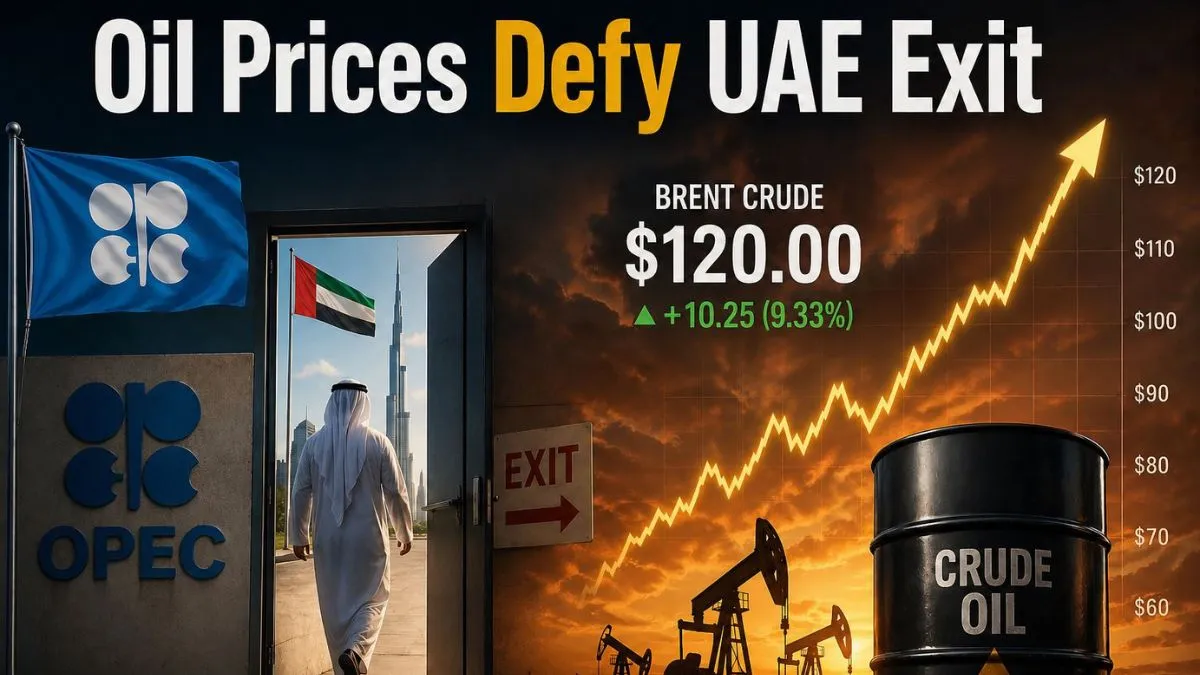
- Brent crude oil prices surged past $125 a barrel.
- UAE's OPEC exit didn't lower prices due to Iran war.
- Strait of Hormuz closure disrupts global oil supply.
The price of Brent crude oil surged past USD 125 a barrel early Thursday as stalled US-Iran talks raised doubts over the reopening of the Strait of Hormuz and a permanent end to the Iran war. The massive jump in the prices came two days after the UAE said on Tuesday it was quitting the Organisation of the Petroleum Exporting Countries (OPEC), a bloc which if often dubbed as "oil cartel". Earlier, it was anticipated that the UAE exit from the group would uplift the production capacity of the country. The traders had predicted this would eventually help in lowering crude prices amid disruption in supply due to robust blocade in the Strait of Hormuz.
UAE exit OPEC: Story so far
UAE on Tuesday, announced it will leave both OPEC and the larger OPEC+ group on May 1. This was viewed as a measure to to let the country independently decide how much oil it produces and sells. Notably, UAE is one of the world's top ten oil producers. The country also has the capacity to increase its output by about one million barrels per day.
ALSO READ: Crude Oil Trades Past $120 Level, Highest Since 2022: What It Means For Indian Markets And Rupee
So, if the UAE chooses to ramp up production, could it put downward pressure on the price of oil once shipments can resume through the Strait of Hormuz?
With severe geopolitical tensions still disrupting the market, the immediate question is less about when we can expect cheaper oil and more about how the uncertainty feeds into what comes next.
Why no relief was seen despite UAE's exit from OPEC
As expected, the UAE exist does not mean consumers should expect immediate relief. Oil prices are still being shaped by geopolitical disruptions due to the Iran war. The Strait of Hormuz, which normally carries about a fifth of the world's oil and gas, remains effectively closed to shipping traffic, which has already caused major disruption. Simply put, UAE can increase its production but it is still dependent on Hormuz for its oil supply.
This means that the UAE cannot simply increase its supply in the short term, and any price relief will take time to come. The UAE does have an export route that avoids the strait, via the Port of Fujairah on the country's east coast. But this cannot handle the country's total production and completely offset disruption in the strait.
The current oil prices jump could be seen as short-term effects. The oil price can move in response to news about future supply, even before production changes.
Looming uncertainty in Iran war
Uncertainty about future oil market conditions can lead firms to insure against future disruptions by changing how much oil they stockpile. At the same time, financial speculators may also place bets in futures markets about what the oil price will be.
ALSO READ: Middle East Crisis Impact: Oil Companies Sell Petrol At Rs 14 A Litre Loss, Diesel At Rs 18; Details
These forces can move prices even without an immediate supply shock. Still, experts believe it's still difficult to know what to expect amid high geopolitical tensions. If traders believe the UAE's exit from OPEC will eventually lead to higher production, this could put downward pressure on futures prices. But if they believe the exit increases geopolitical tension and raises the risk of a future price war, this could instead see more volatile oil prices rather than a clean fall.
(With inputs from agency)