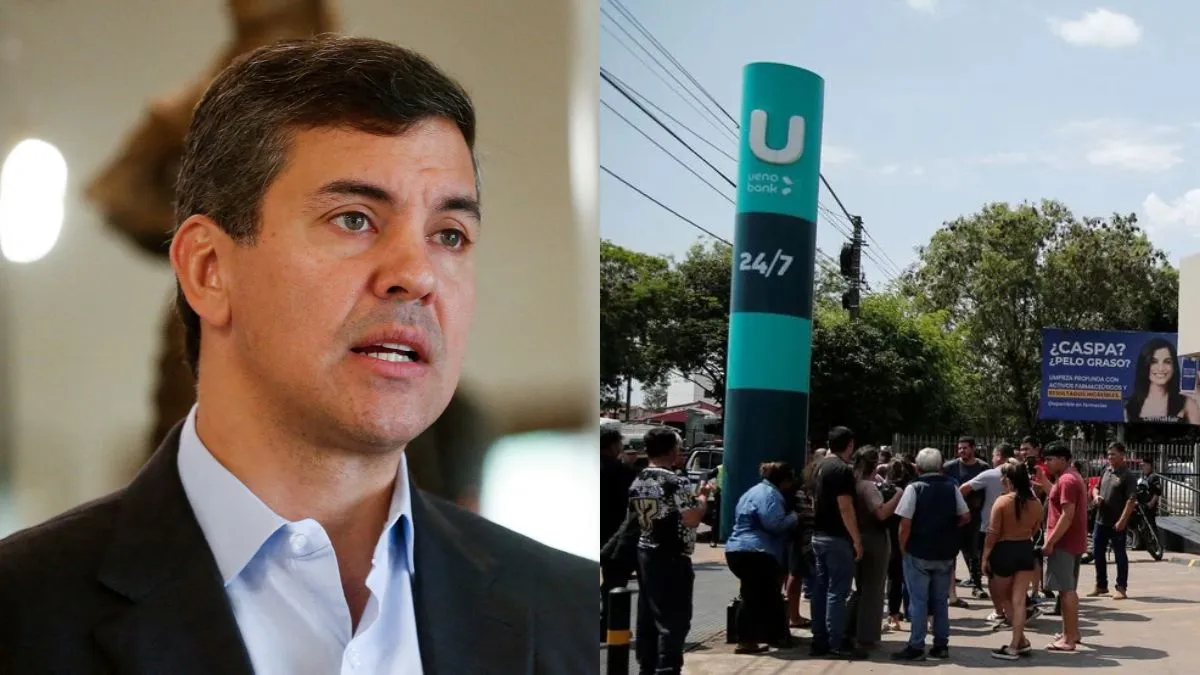
- Millions of depositors lost funds, sparking widespread protests.
- Ueno Bank's collapse triggered Paraguay's severe banking crisis.
- President Santiago Pena resigned, now faces impeachment proceedings.
Paraguay Banking Crisis: a banking crisis has erupted in Paraguay which turned political, triggering widespread protests after millions of depositors, including pensioners, reportedly lost access to their money on November 2. Ueno Bank, one of the country's largest and fastest-growing digital lenders, was reportedly taken over by the central bank amid a severe insolvency crisis.
Paraguayan President Santiago Pena announced his resignation on Thursday after the banking crisis reportedly left nearly half the country's population unable to access their money. However, Congress rejected his resignation, and the Chamber of Deputies voted 78-0 to impeach him, even as members of his own Colorado Party opposed the move.
( Reuters )
The political fallout has intensified the crisis, with Pena facing allegations of a conflict of interest over his past business links to the bank's parent company.
But how did the crisis unfold, and what led to the president's resignation and impeachment? Here's everything you need to know.
How The Paraguay Banking Crisis Unfolded
The crisis began when Paraguay's central bank intervened in Ueno Bank Sa, one of the country's largest and fastest-growing digital lenders. The bank reportedly has around three million customers, nearly half of Paraguay's population, and manages approximately 800 million dollars in public funds, including pension funds, health funds and money linked to hydroelectric dams.
Recommended For You
The central bank took action after the lender reportedly failed to maintain sufficient capital to continue operations and breached solvency requirements.
The Central Bank said it intervened in Ueno Bank due to a severe capital shortfall, with the move aimed at "protecting depositors and preserving the stability of the financial system".
The intervention sent shockwaves across Paraguay, leaving depositors struggling to access their savings and bank accounts. According to AFP, Ueno has more than three million customers, nearly half of Paraguay's population, and manages millions of dollars in pension funds and other state funds.
The bank's app, cards and transfer services stopped working, while its branches shut their doors, as a result, millions of customers were unable to access their savings, salaries and pensions.
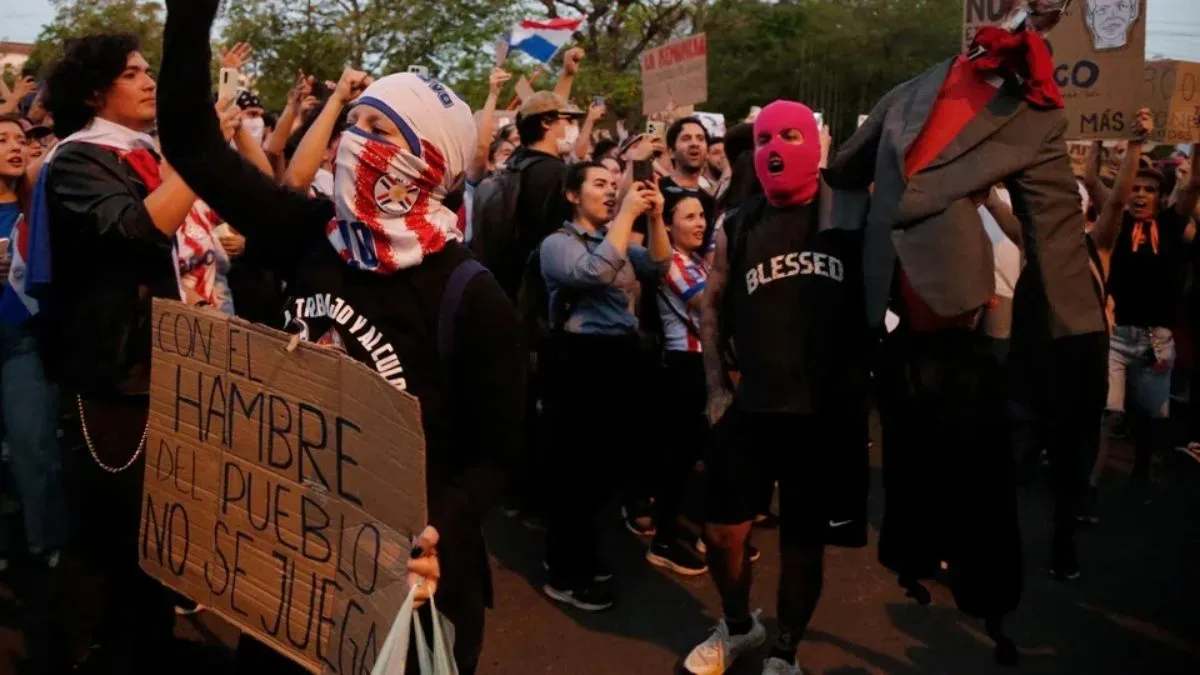
The banking crisis sparked protests in the capital, asuncion, where demonstrators took to the streets for three consecutive days and clashed with police.
Why Did Paraguay President Santiago Pena Resign?
As protests intensified, President Santiago Pena, who has been in office since 2023, announced his resignation on Thursday.
His decision came amid mounting allegations of misconduct and a conflict of interest linked to his previous business association with Grupo Vazquez, the parent company that owned Ueno Bank.
Pena reportedly remained a shareholder in Grupo Vazquez until March 2025. His past association with the group triggered accusations of a conflict of interest, misuse of public funds and an alleged institutional cover-up.
He announced his resignation in a video posted on X (formerly Twitter), saying he was stepping down to preserve the country's stability and democratic institutions as massive protests entered their third day in asuncion.
Mensaje del Presidente de la República, Santiago Peña, al pueblo paraguayo. https://t.co/RBz6IfFV9L
— Santiago Peña (@SantiPenap) November 5, 2026
“I have made the decision to submit my resignation as president of the republic. I do so thinking of the stability of our country, social peace and the need to preserve our democratic institutions," he said.
Pena also offered an apology but stopped short of accepting responsibility for the banking crisis.
“I also want to apologise to the people if I have failed them at any point,” he said. “It was never my intention to betray the trust they placed in me."
He further said that ensuring depositors recovered their savings remained his priority.
“Behind every deposit are years of hard work, sacrifice and family dreams,” he said.
Meanwhile, the Opposition has accused him of a conflict of interest, misuse of pension funds and shielding the bank from scrutiny. Pena has denied any wrongdoing, maintaining that the crisis is a regulatory issue.
Why Was The President's Resignation Rejected?
Despite Pena's resignation announcement, Paraguay's Congress did not accept his decision. a special session was convened on Thursday, during which lawmakers decided to proceed with the impeachment process instead of approving his resignation.
Minutes after his announcement, the Chamber of Deputies voted 78-0 to impeach him rather than accept his resignation.
Pena will now face an impeachment trial over the financial crisis and the allegations surrounding his links to Ueno Bank. Congress has put his resignation on hold while the impeachment proceedings move forward, meaning he will remain in office provisionally.
What's Next For Paraguay?
The collapse of Ueno Bank is country's a major setback which has spent years trying to establish itself as a politically and economically stable destination for foreign investors.
It has exposed internal divisions within the Colorado Party, which has maintained a dominant position in Paraguayan politics for most of the past seven decades.
With Pena's resignation rejected and impeachment proceedings underway, attention is now turning towards the country's political future and who could eventually succeed him.