
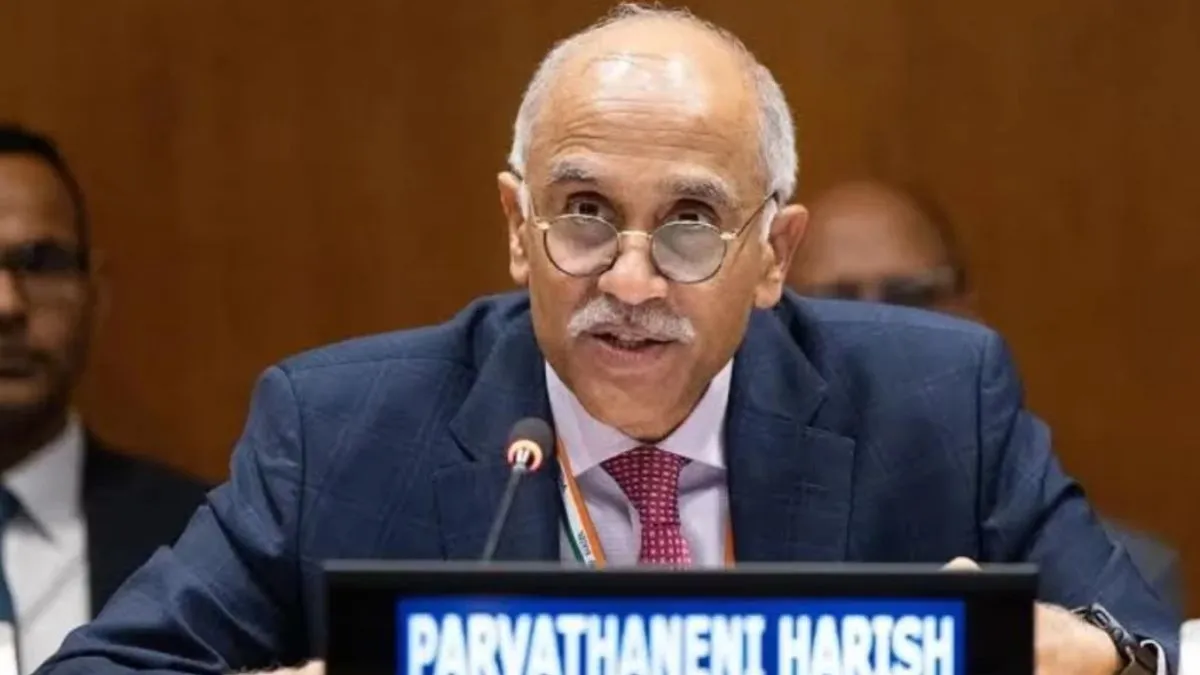
- India pushes for comprehensive reforms in UN Security Council.
- Veto power must be for all permanent members.
- Calls for text-based negotiations with clear timelines.
India has pushed for comprehensive reforms in the United Nations Security Council (UNSC), adding that the veto power held by the five permanent members must be used with restraint rather than narrow political goals. India’s Permanent Representative to the UN, Parvathaneni Harish, vouched for text-based negotiations on Security Council reforms, with clear timelines and milestones.
What Were The Key Points In India’s Stance
Text-Based Negotiations:India called for the immediate launch of negotiations with clear timelines and milestones covering all five reform clusters together (membership categories, regional representation, council size, working methods, and the veto).
Veto Power Statistics: Ambassador Harish noted that the veto has been cast 331 times across roughly 200 resolutions in the UN's history, with most vetoes or threats coming from only three of the five permanent members (P5). Harish also mentioned the Veto Initiative of 2022, which mandates a United Nations General Assembly debate whenever a veto is cast, with the stated objective of strengthening accountability. However, he said the number of vetoes exercised since the adoption of UN General Assembly Resolution 76/262 presented a contradictory picture.
Recommended For You
The "De Facto Veto":India highlighted hidden blocking mechanisms, pointing out that unwritten consensus rules allow any elected or non-elected member to act as a "de facto veto" over presidential statements, press releases, and sanctions committees. “The veto is not only what is cast in the open. There is also the ‘effective or de facto veto’ that every Council member, elected and non-elected, holds over presidential statements, press statements and the decisions of sanctions committees, where the unwritten rule of consensus allows a single member to hold or block a proposal, most often without explanation," Harish said.
Vouches for equal rights of all permanent members
Reiterating India’s position on the veto, Harish said it remained aligned with the Common African Position on Security Council reform. “We reiterate that as long as a veto exists, it must be held by all permanent members of a reformed Council. Fairness and justice demand that all permanent members enjoy the same rights and responsibilities," he said.