
- By Ajeet Kumar
- Fri, 13 Mar 2026 05:41 PM (IST)
- Source:JND
- India faces severe oil shock due to high import dependency.
- Prolonged conflict risks economic downturn, rupee fall, inflation.
- Safety of Indian diaspora and diplomatic ties are critical.
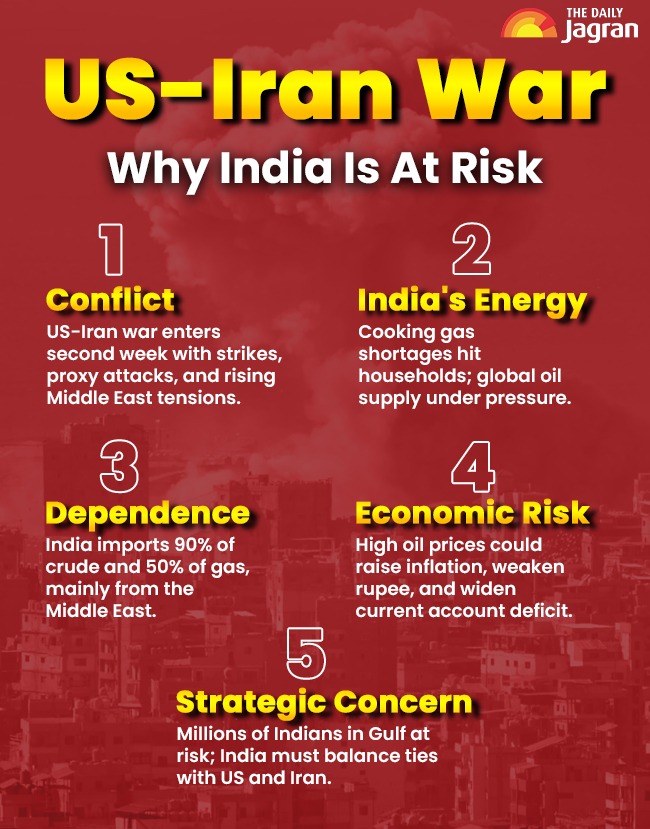
Two weeks into the escalating confrontation between the United States and Iran, the conflict shows little sign of immediate de-escalation. Instead, the situation appears to be settling into a volatile phase marked by limited strikes, proxy attacks, and rising geopolitical tension across the Middle East. Although the war is between Israel, the US and Iran, the fallout of the conflict has wider complications for India.
The affect can be felt in the energy sector as hundreds of people are waiting in long queue to get delivery of cooking gas-- a critical component of the kitchen that allows every human being to survive. The ongoing conflict has put the global oil supply in peril. The recent attack in the Iraqi waters on Wednesday has further made the situation worse for the Asian countries, which are mostly dependent on the Gulf countries for their energy needs.
Why a long war could be a major challange for India?
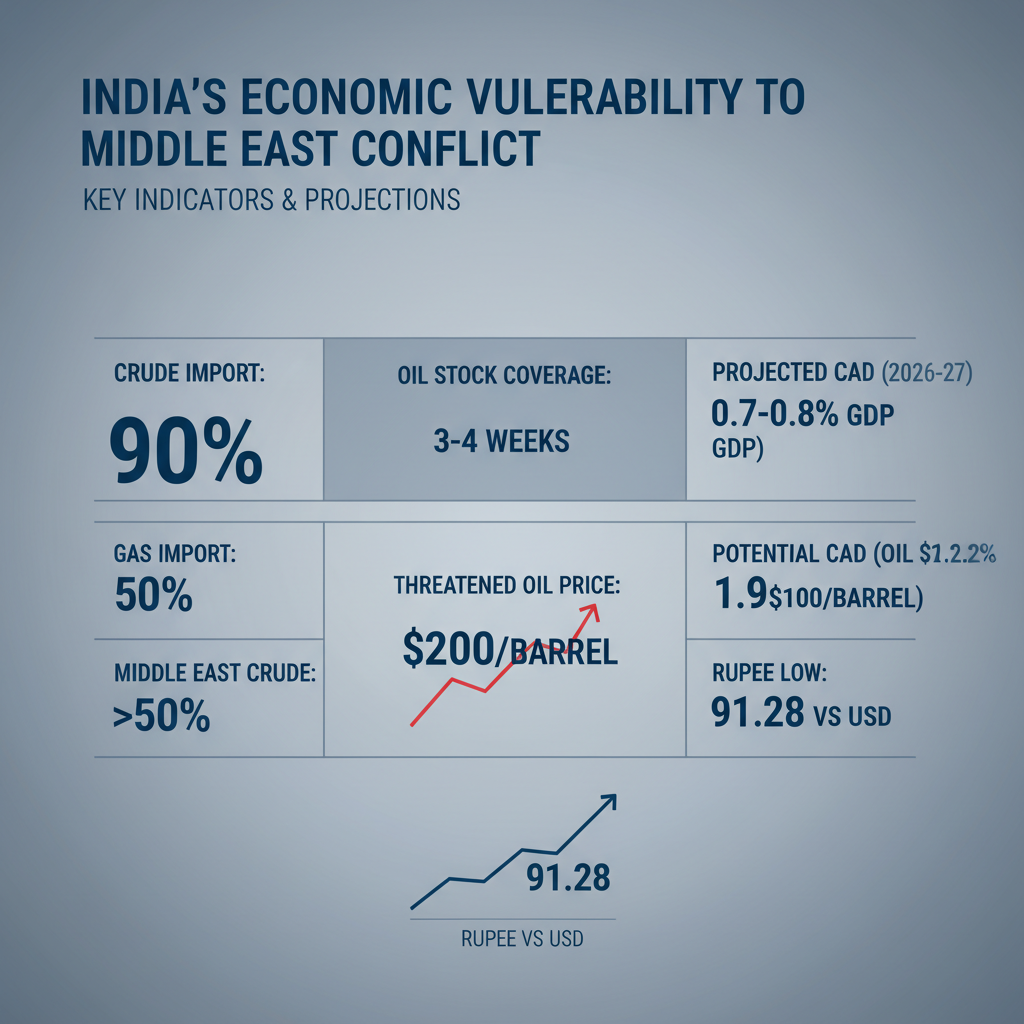
India is considered to be among the most vulnerable to a global oil shock as it imports nearly 90 per cent of its crude requirements and about 50 per cent of its gas requirements. Over half of its crude is from the Middle East, where export flows have been disrupted by the US-Israeli war on Iran, and India's current oil stocks are only enough to cover three to four weeks.
ALSO READ: India's Trade Deficit Widens As Imports Rise, Exports Fall Due To Trump Tariff Effect
Although the government has clarified there is no shortage of gas supply in the country, desperate people flocked at the gas stores to refill cylinders. Iran has threatened a protracted conflict and USD 200 per barrel for oil-- a historic high that could push the Indian market into an uncomfortable situation.
What are the consequences if the war lasts more than a year?
For India, the implications are significant. If oil prices average USD 100 a barrel for close to 12 months, the South Asian nation could also see growth fall sharply and inflation rise. A prolonged crisis could widen the country's current account deficit, weaken the rupee and stoke inflation, the government said in its monthly report last week.
ALSO READ: Lifetime Low Alert! Rupee Falls 31 Paise To All-Time Low Of 91.28 Against US Dollar; Key Reasons
The most immediate impact would be on India's current account deficit. This concern has pushed the rupee to a record low and forced the central bank to sell dollars from its reserves. An average price of USD 100 a barrel would widen the current account deficit to 1.9 per cent-2.2 per cent of GDP for the 2026-27 financial year, from a projected 0.7 per cent-0.8 per cent of GDP, rating agency ICRA said in a note.
What are other concerns for India?
Another major concern is the safety of the large Indian diaspora in the region. Millions of Indians live and work across Gulf countries, and prolonged instability could complicate evacuation planning or disrupt employment and remittance flows.
Strategically, India also faces a delicate diplomatic balancing act. New Delhi maintains partnerships with both Washington and Tehran, the US as a key strategic and defence partner, and Iran as an important regional player with links to connectivity projects such as Chabahar Port. A prolonged war could complicate these relationships and force difficult policy choices.
(With inputs from Reuters)