
- By Kamakshi Bishnoi
- Sun, 03 May 2026 03:10 PM (IST)
- Source:JND
- Iranian tanker "HUGE" evaded US Navy detection.
- Carried USD 220 million crude oil to Asia-Pacific.
- Highlights challenges to US blockade on Iran.
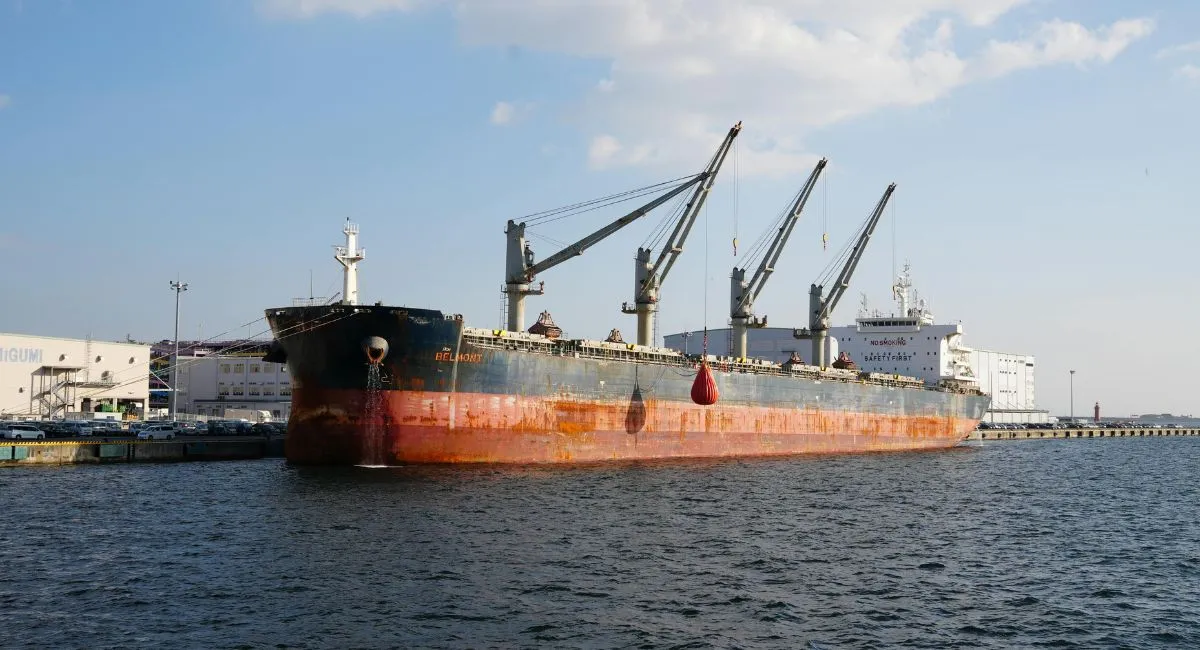
A very large crude carrier (VLCC) operated by Iran's National Iranian Tanker Company has reportedly evaded the US Navy and reached the Asia-Pacific, carrying more than 1.9 million barrels (roughly USD 220 million worth) of crude oil without being detected by US naval forces, according to TankerTrackers.com.
The "HUGE" was last detected approximately one week ago near Sri Lanka and is currently thought to be moving through Indonesia’s Lombok Strait towards the Riau archipelago. TankerTrackers noted that the ship has not been broadcasting AIS signals since March 20, when it was leaving the Strait of Malacca bound for Iran.
Amid rising tensions in the Gulf region, US President Donald Trump asserted that the country has "total control" over the Strait of Hormuz. He has also claimed that the ongoing naval blockade of Iranian vessels is a "tremendous success."
In a post on X, the tracking firm said, “A National Iranian Tanker Company (NITC) VLCC supertanker carrying over 1.9 million barrels (valued at nearly USD 220 million dollars) of crude oil has managed to evade the US Navy and reach the Far East.”
"Her name is HUGE (9357183), and we last sighted her off Sri Lanka over a week ago. She is currently traversing the Lombok Strait of Indonesia toward the Riau Archipelago. Until now, HUGE has not transmitted on AIS since 2026-03-20, when she departed the Strait of Malacca for Iran," it added.
A National Iranian Tanker Company (NITC) VLCC supertanker carrying over 1.9 million barrels (valued at nearly $220 million dollars) of crude oil has managed to evade the U.S. Navy and reach the Far East.
— TankerTrackers.com, Inc. (@TankerTrackers) May 3, 2026
Her name is HUGE (9357183), and we last sighted her off Sri Lanka over a… pic.twitter.com/dBf7QzPVkB
Iran Claims Dozen Of Ships Breached Blockade
This incident is part of a larger pattern of Iranian government claims that many vessels have violated the restrictions placed by the US. According to Fars news agency, 52 Iranian-flagged vessels have circumvented those restrictions in 72 hours, consisting of 31 oil tankers and 21 cargo ships.
However, additional US officials contend that the enforcement of those restrictions has been effective, citing dozens of vessel interceptions or turning around since the blockade started, despite certain vessels still avoiding detection and interception.
Although there are numerous breaches of that blockade, the Washington spokesman has assured the Iranian government that significant reductions in oil exports caused by that blockade have cost Iran billions of dollars in potential revenue and severely limited the quantity of oil available to export from Iran. Officials also warn that continued restrictions could eventually force Iran to store surplus oil, potentially affecting production levels.
Earlier tracking data had already suggested gaps in enforcement. At least 34 Iran-affiliated ships managed to operate despite restrictions, according to Vortexa, a maritime analytics company, and several tankers travelled in and out of the Gulf.
US Intensifies Enforcement Efforts
The United States has also increased its enforcement efforts throughout the greater Persian Gulf in the last few weeks by diverting many vessels and intensifying its enforcement actions against Iran’s maritime operations, specifically around the Strait of Hormuz.
"USS New Orleans (LPD 18) sails in the Arabian Sea during the US blockade of Iranian ports, April 28. Over the past 20 days, 48 vessels have been redirected to ensure compliance with the blockade,” a CENTCOM post read.
Washington has clarified that the blockade is directed toward Iranian ports/land-based activity and not the strait itself. At the same time, the US has warned global shipping companies that payments to Iran for safe passage could trigger sanctions.
An advisory issued by the US Office of Foreign Assets Control (OFAC) emphasised that such payments may include not only cash but also “digital assets, offsets, informal swaps, or other in-kind payments,” including donations or diplomatic transactions.
The tensions follow Iran’s earlier move to restrict movement through the strait after the conflict began on February 28, later offering alternate routes along its coastline in exchange for fees.
You May Also Like To Watch: