
- By Shibra Arshad
- Mon, 16 Mar 2026 12:13 PM (IST)
- Source:JND
After a sudden attack by the joint forces of the US and Israel on Iran on February 28, the ongoing unrest in the Middle East shows no signs of relief, with the US vowing to destroy Iran’s defence infrastructure and Tehran determined to avenge the killing of Supreme Leader Ayatollah Khamenei, key leaders and its people. The US, Israel and Iran are using the best of their weapons to establish their power.
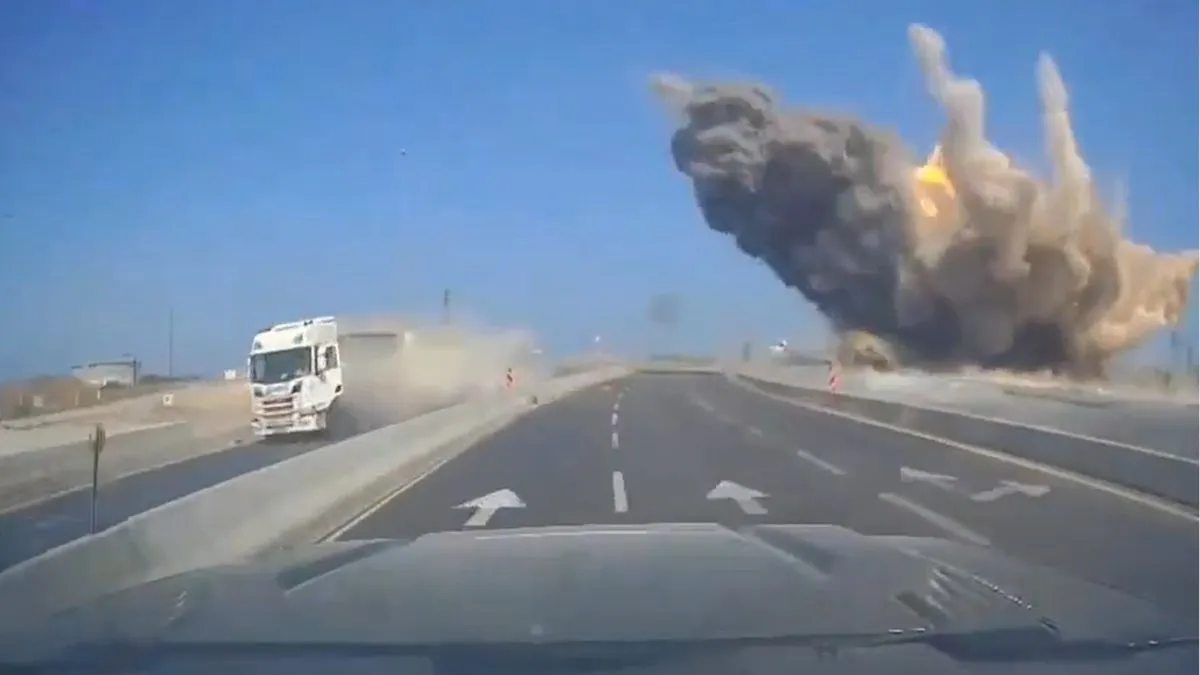
A massive blaze was witnessed near Dubai International Airport after Iran launched a drone attack on a fuel tanker on Monday. Tehran launched a wave of missiles aimed at Israel’s military and defence infrastructure, including “centres of administration and decision-making affecting the Israeli regime’s air operations”. Iran claimed to have made its first operational use of the Sejjil strategic ballistic missile in the war. Why did Iran take so long to use Sejjil? Here’s how dangerous Tehran’s domestically developed, medium-range ballistic missile, Sejjil-2, is.
What Is Iran’s ‘Dancing Missile’, Sejjil
Sejjil is Iran’s domestically built solid-fuel missile. It is a two-staged ballistic missile, which is also known as Ashoura or Ashura. Reports also suggest that it has been entirely built by China. As the missile operates on solid fuel, it becomes easier and faster to launch it as compared to liquid fuel missiles. It has a range of about 2,000 kilometres and was developed to replace the Shabab class of rockets in service since the late 1980s.
With the ability to carry 700 kg warheads, the missile can transport both normal explosives and nuclear warheads. As per the information provided by Tehran about the speed of the missile, it can reach Tel Aviv in around 7 minutes after being launched from the middle of Iran.
With anti-radar coating, it becomes significantly critical in war as it is very difficult for conventional air defence radars to detect them. The development of Sejjil began in the 1990s, as per CSIS. It was first tested in 2008 and reportedly flew 800 km.
Reports suggest that there are multiple versions of Sejjil, with Sejjil 2 being tested in 2009, and Sejjil 3 may also be under development. It is reported that Sejjil 3 would have 3 stag-sytem and might be able to cover 4,000 kilometres with a launch weight of 38,000 kg. While it is not clear which version of Sejjil was used against Israel on Sunday, media reports claim that Iran used Sejjil-2.
While this was the first use of Sejjil in the current war with the US and Israel, Iran has deployed this ‘dancing missile’ earlier as well. It was deployed during the 12-day war with Israel last year when Tehran targeted the two military targets in Be’er Sheva, 90 km from Tel Aviv.
Continued War Between Iran, And The US, Israel
The West Asia war has entered its third week, with the pace of attacks intensifying. Tehran’s barrage of missiles and drones has killed 12 people in Israel, while Joint attacks by the US and Israel have killed over 2,000 people in Iran, including its Supreme Leader and over 165 students at an elementary girls' school in Minab. Lebanon has been bearing the brunt of collateral damage, with nearly 1,000 people being killed by the Israeli missile directed at Lebanon. Israel targeted Beirut, killing hundreds and displacing a million after Iran-backed paramilitary group, Hezbollah, joined Tehran in the war.