
- By Shubham Bajpai
- Fri, 20 Mar 2026 12:08 AM (IST)
- Source:JND
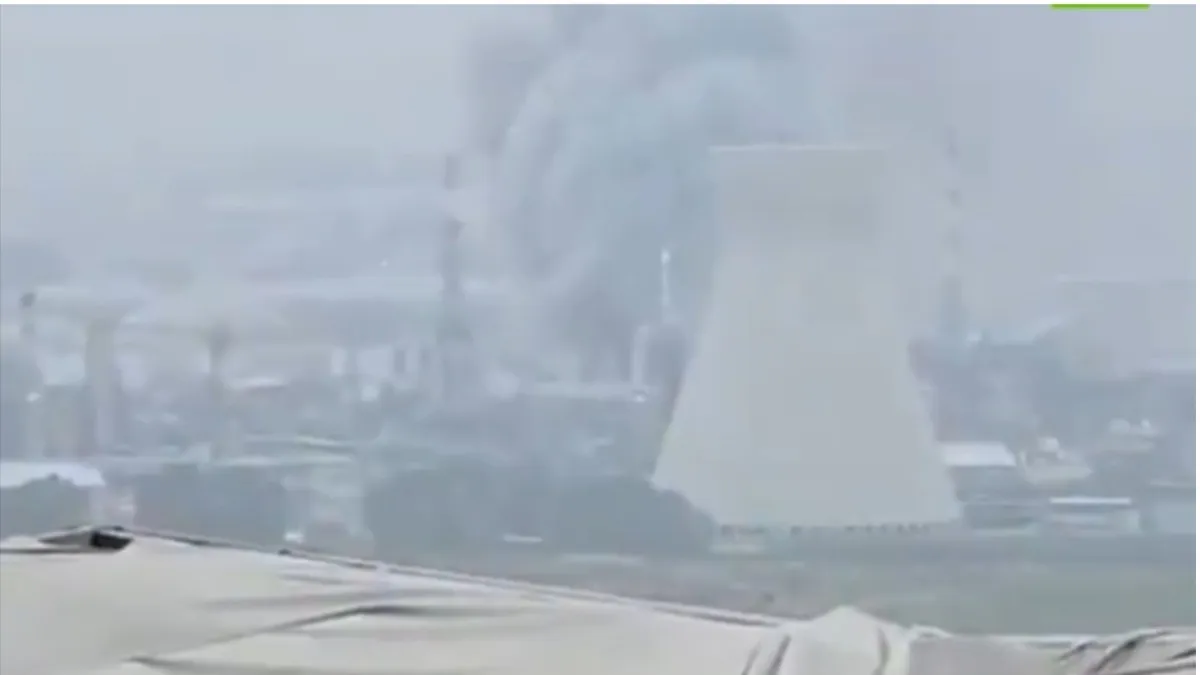
In major hits, Iran on Thursday targeted Israeli oil refineries in the northern port city of Haifa. Speaking about the attack, Israeli energy minister Eli Cohen said that power was disrupted due to the attack for a brief time.
"The damage to the power grid in the north is localised and not significant," Cohen said. "Also, in the barrage towards the north, there was no significant damage to Israeli infrastructure sites," he added.
According to a report by Tehran Times, Bazan in Haifa and Ashdod refineries, among the largest Israeli sites, were hit in the strikes. Providing details about the attack, the Islamic Revolutionary Guards Corps (IRGC) revealed that for the first time in the war, it used the new Nasrallah system.
"Wave 65 was carried out for the first time using the new "Nasrallah" systems — Upgraded Qadr ballistic missile," the IRGC said in a statement.
It is considered to be equipped with improved guidance for more precision. Qadr of Ghadr-110 is a medium-to-long range ballistic missile with an operation range of 1,500 to 2,000 km (some source suggest up to 2,500 km).
Qadr can carry a high-explosive payload weighing 640-650 kg with some versions reported to reach speeds of Mach 9 to Mach 14.
The missile system can be launched from mobile transporters, which improved its survivability and reduced reaction time. The Iranian attack came after Tek Aviv hit South Pars gas field.
The war has now escalated to attacks on key energy infrastructures, threatening regional and global economy and energy security.
After the attack, Israel's Ministry of Environmental Protection said that debris from a missile that was intercepted fell in Haifa and was being examined as a hazardous materials incident.