
- By Raju Kumar
- Wed, 18 Mar 2026 04:07 PM (IST)
- Source:JND
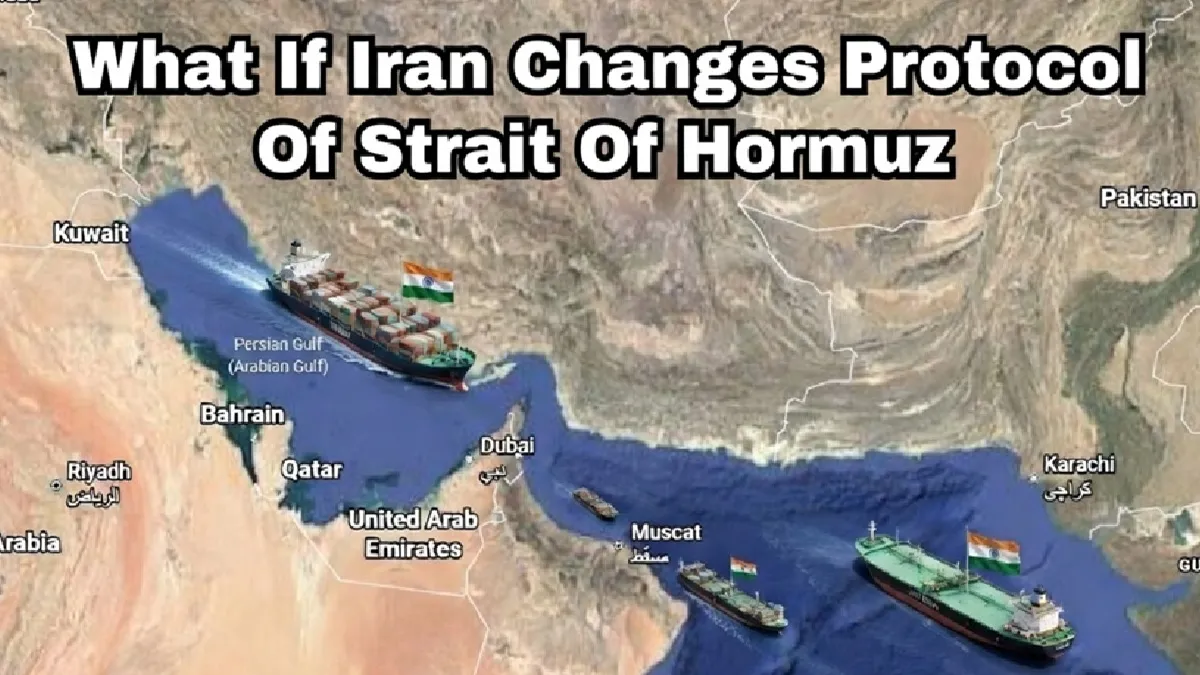
Iran-US War: On the 19th day of the US-Israel war with Iran, Tehran asserted that it would introduce new rules for ship traffic through the Strait of Hormuz once the ongoing war ends. Iranian Foreign Minister Abbas Araghchi, in an interview with Al Jazeera, hinted that the Iranian regime would change its policy on the Strait of Hormuz, a critical global energy chokepoint, with approximately 20 million barrels (20% to 25% of total global oil trade). Iran holds control over the key passage of the ship route in the Persian Gulf.
Defending Tehran’s decision to block vessels linked to countries allied with the US, Araghchi said the move was a wartime necessity to defend the country's interests.
New protocol will ensure the safe passage under the 'specific conditions' and based on the Iranian and the regional interests, he said, adding that the new protocol should be drafted by Littoral States, after the war. Littoral states are nations with land bordering a sea.
He asserted that Iran would not allow its enemies to use this waterway.
What Does New Protocol For The Passage Of Hormuz Strait Mean For India And Others?
Since the details of the new protocol will come after the end of the war, it is unclear how it would impact the global fuel trade, yet Araghchi made it clear that Iran would not allow enemies to use the narrow water lane in the Persian Gulf. This is bad news for other Gulf countries, whose economies depend on fuel export.
As far as India's fuel trade with Tehran is concerned, New Delhi's ties with Iran are on track. Recently, Iran allowed a safe passage of a few Indian-flag-bearing ships, highlighting the deep ties between the two nations. Two Indian-flag LPG carriers, Shivalik and Nanda Devi, carrying about 92,712 MT of LPG, which had crossed the Strait of Hormuz on 14 March 2026, reached Mundra Port on 16 March and Kandla Port on 17 March, respectively, marking a diplomatic victory amid conflict in the Gulf region.
At present, 22 Indian-flagged vessels with 611 seafarers remain west of the Persian Gulf region, but the Directorate General of Shipping said it continues to monitor the situation in coordination with ship owners, RPSL agencies and Indian Missions. Thus, even if Tehran brings new norms, it would not be problematic for India, as Iran considers India a friendly country.