
- By Shubham Bajpai
- Sat, 04 Apr 2026 04:50 PM (IST)
- Source:JND
The last 48 hours have diminished the credibility of the Pentagon's claim and punctured US President Donald Trump's assertion of enjoying absolute air superiority and attaining "complete dominance" over Iran as two fighter jets, including an F-15E Strike Eagle and an A-10 Thunderbolt II (Warthog), were downed and two Black Hawk helicopters were struck.
While Thunderbolt was hit over Kuwait and the crew ejected safely, F-15 was hit over Iranian territory. According to a report by CNN, one crew member has been rescued and shifted to a medical facility for treatment, and a hunt is on for the other.
The incidents have now raised questions over Iran's air defence systems, which have repeatedly been claimed by both Tel Aviv and Washington, along with defence experts, to have been significantly reduced.
A consequence of asymmetric warfare
The incidents do not mean Iran is overnight close to an equal military footing with the US, but show the consequences of asymmetric warfare.
Speaking about the strikes, Brigadier General Alireza Elhami, the commander of the Joint Headquarters of the Iranian Air Defense said that the targeting and downing of multiple fighter jets, including 'fourth and fifth generations' by the Iranian Army and the Islamic Revolutionary Guards Corps (IRGC), were the result of "innovative use of modern equipment, tactical expertise and air defence system ingenuity."
According to a report, citing Alireza, this has confused the "enemy forces."
What is Majid infrared air defence system?
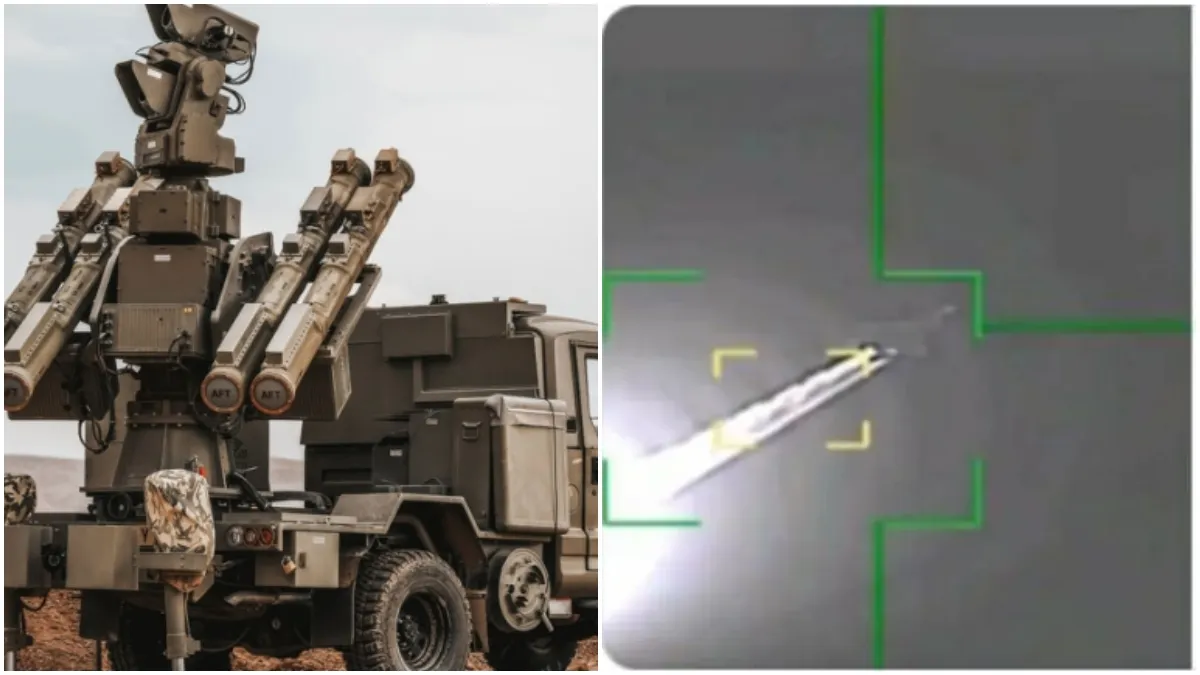
Although Alireza didn't specify how Iran specifically hit F-15 and A-10 Thunderbolt, several reports suggested the use of optical and infrared (IR) sensors rather than traditional radar-based tracking systems.
One such system, which the analysts attribute to, is the Majid infrared air defence system, a surface-to-air (SAM) platform. Iran has been using the system since 2021, which is a key system against low-flying aircraft.
The system does not rely on radars and uses passive infrared detection combined with a proximity fuse. This makes it undetectable for aircraft before a missile is fired at it. It ranges up to 6 km in altitude and 8 km in distance.