- By Priyanka Koul
- Wed, 02 Sep 2026 11:12 PM (IST)
- Source:JND
- India condemns demolition of century-old Hindu temple in Pakistan.
- Allegations of madrassa construction versus rain collapse claims.
- New Delhi urges transparent probe, protection for minority sites.
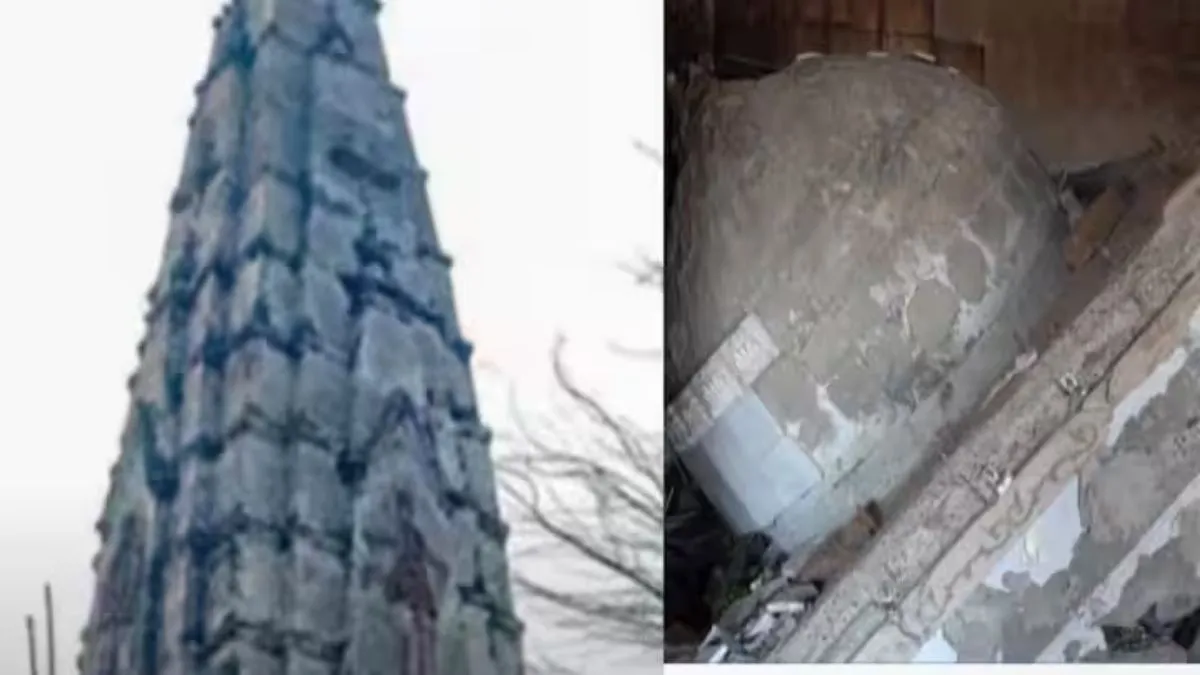
India has strongly condemned the reported destruction of a historic Hindu temple in Pakistan’s Punjab province. The temple, located in Siraj village near Narowal, was reportedly demolished on August 21. Local residents and minority groups allege that it was cleared to make way for a madrassa, while Pakistani authorities maintain that torrential rains caused the century-old structure to collapse.
India described the incident as a serious threat to minority religious sites and expressed concern over the protection of Hindu heritage in Pakistan.
Responding to the reports, Ministry of External Affairs spokesperson Randhir Jaiswal said New Delhi had taken note of the incident with "deep concern" and condemned the destruction.
"We have noted with deep concern the disturbing reports of the destruction of a historic Hindu temple in village Siraj, Narowal, Pakistan. We unequivocally condemn this reprehensible act of vandalism against a century-old minority place of worship," Jaiswal remarked.
India also questioned the alleged failure of Pakistani authorities to safeguard the site.
"The apparent apathy of authorities and failure to protect this century-old temple is alarming," he said.
Jaiswal called on the Pakistani government to launch a prompt and transparent investigation into the demolition and ensure that those responsible are held fully accountable. India also urged Islamabad to take immediate steps to restore the "desecrated" temple and fulfil its fundamental duty to protect the safety, security and well-being of minority communities, as well as their religious and cultural heritage.
Has the land really been grabbed for building a madrassa?
The Pakistan Masiha Millat Party (PMMP), Hindu representatives and local residents allege that the historic temple was deliberately demolished and that its adjoining land was targeted for a madrassa, reported PTI.
PMMP chairman Aslam Parvez Sahotra has sought government intervention, saying he met the Punjab Additional Home Secretary on August 28 and submitted a written complaint demanding action against those allegedly responsible.
Sahotra also alleged that members of the banned Tehreek-i-Labbaik Pakistan (TLP) were involved and that temple materials, including metal fittings, bricks and parts of the shikhar, were removed following the demolition.
He further claimed that the land adjoining the temple had previously been leased by the Evacuee Trust Property Board (ETPB) for a madrassa, but that the lease was later cancelled after rent allegedly went unpaid and the property was not used for its intended purpose.
Pakistani authorities, meanwhile, have maintained that the temple collapsed because of torrential rains. ETPB senior official Rana Iftikhar confirmed that the structure was more than a century old.
"The temple carries no name in our record books. However, it is a very old one... more than 100 to 125 years old," said Evacuee Trust Property Board (ETPB) senior official Rana Iftikhar.
Iftikhar maintained that although the adjoining land had been leased for a seminary, the temple’s own property had not been leased.
"The temple's land is not given to anyone for lease," he said, adding that senior ETPB officials would decide whether the historic structure should be restored.
The controversy extends beyond the competing explanations for the temple’s destruction. Sahotra has alleged that authorities had been warned about problems surrounding the site before the incident.
He pointed to an ETPB order issued on January 29, 2026, which reportedly cancelled the seminary’s lease rights and directed the eviction of illegal occupants and sealing of the property.
"This order was not implemented," Sahotra alleged.
You may also like to watch
He also cited an April 11 report attributed to the DSP Narowal, claiming that local police were aware of security concerns involving the temple and the possibility that it could be damaged.
The Hindu minority in Pakistan has long faced security threats to its religious sites and practices. Temple demolitions, encroachments, conversions and attacks on community members have been criticised by human rights activists and minority leaders, who argue that the Pakistani government has failed to provide adequate protection for minority communities and their places of worship.