
- By Ajeet Kumar
- Sun, 31 May 2026 11:01 AM (IST)
- Source:JND
- India, Israel planned strike on Kahuta in 1980s.
- Aimed to prevent Pakistan's "Islamic bomb" development.
- Plan halted due to retaliation fears, US pressure.
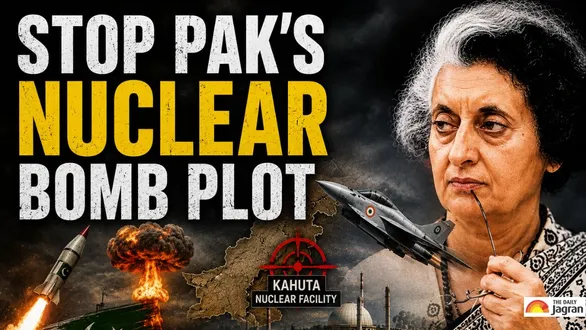
In the early 1980s, India and Israel reportedly came within touching distance of launching a covert military strike on Pakistan’s nuclear facility at Kahuta to stop Islamabad from developing what many then called an “Islamic bomb”. The secret operation, allegedly approved in principle by then Indian Prime Minister Indira Gandhi, was inspired by Israel's 1981 bombing of Iraq’s Osirak reactor. However, at the last moment, India backed off from the plan. Pakistan eventually went nuclear in 1998, permanently reshaping South Asia’s strategic balance. So, how did the events of the attack unfold, and was it suddenly halted? Read this article.
Bhutto's Nuclear Dream After India’s 1974 Test
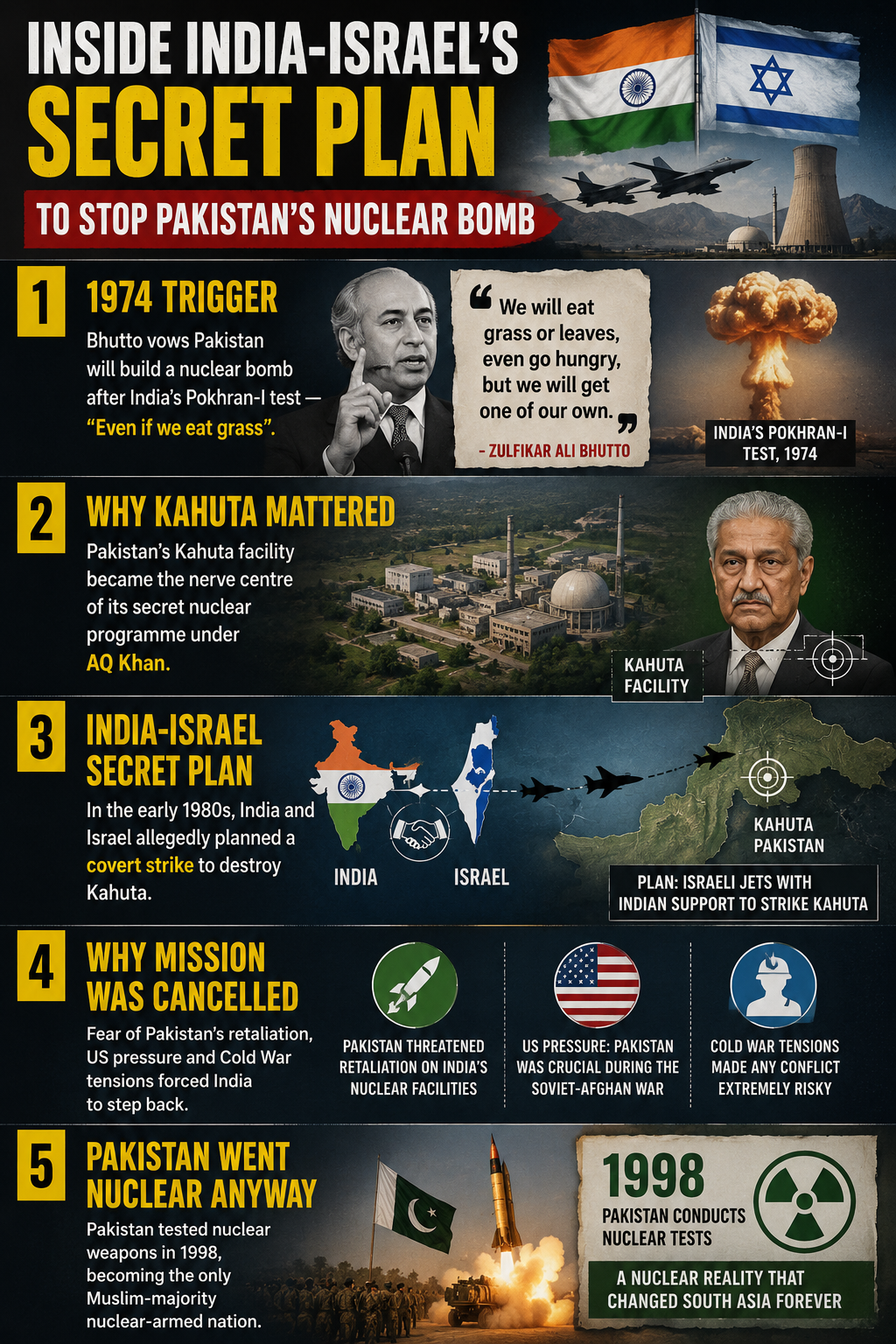
Pakistan’s nuclear ambition took shape after India conducted its first nuclear test in 1974 under Operation Smiling Buddha. Then Prime Minister Zulfikar Ali Bhutto declared that Pakistan would do whatever it took to develop nuclear weapons, famously saying the country would “eat grass or leaves” if necessary. Bhutto argued that after the Christian, Jewish and “Hindu” bomb, the Islamic world also needed a nuclear deterrent.
Why India And Israel Feared Pakistan's 'Islamic Bomb'
By the early 1980s, Pakistan’s nuclear programme under scientist AQ Khan had expanded rapidly. The Kahuta uranium enrichment facility became the centre of Islamabad’s covert nuclear project. Israel feared that once Pakistan acquired nuclear capability, the technology could spread to hostile Middle Eastern states. India, already scarred by wars with Pakistan in 1965 and 1971, also saw Islamabad’s growing nuclear ambitions as a major security threat.
ALSO READ: Pakistan-Backed Terror Funding Racket Busted in J-K; Dubai-Nepal Hawala Trail Leads To 3 Arrests
At the time, Israel had already demonstrated its willingness to launch pre-emptive strikes by bombing Iraq’s Osirak nuclear reactor in 1981. Similar concerns about Pakistan reportedly led India and Israel to quietly discuss a possible operation targeting Kahuta.
The Secret India-Israel Plan To Strike Kahuta
Despite lacking formal diplomatic ties, India and Israel allegedly coordinated through backchannels on a covert strike plan. According to accounts from former officials and security experts, Israeli fighter jets were expected to operate with Indian support, using Indian airbases to prepare for a bombing mission.
Reports suggest Indian Air Force Jaguar squadrons practised low-level bombing drills while operational planning intensified under Prime Minister Indira Gandhi’s approval. The mission aimed to destroy Pakistan’s nuclear infrastructure before it crossed the nuclear threshold.
However, the operation never materialised. Pakistan reportedly warned India of retaliation against sensitive nuclear facilities such as Trombay near Mumbai, raising fears of radioactive fallout and wider escalation.
Why Indira Gandhi Called Off The Mission
The Cold War geopolitics of the 1980s also played a major role in stopping the strike. Pakistan had become a crucial ally of the United States during the Soviet-Afghan war, with Washington relying heavily on General Zia-ul-Haq’s regime.
Experts and former intelligence officials believe the US strongly opposed any attack on Pakistan. Some reports suggest the CIA even warned Islamabad about the possibility of a strike. Faced with fears of retaliation, regional instability and international pressure, Indira Gandhi reportedly halted the operation at the final stage.
Pakistan eventually developed nuclear weapons and officially conducted nuclear tests in 1998 after India’s Pokhran-II tests, permanently reshaping South Asia’s security landscape.