

- By Ajeet Kumar
- Wed, 06 May 2026 03:41 PM (IST)
- Source:JND
- Younger workers embrace portfolio careers, balancing multiple jobs.
- Gen Z, Millennials change jobs more frequently than older generations.
- Lifestyle spending prioritized over traditional long-term savings.
As the labour market continues to be in flux, there has been a fascinating trend: Younger workers are rethinking the traditional career playbook. While past generations often sought decades of stability with a single employer, today’s professionals are leaning into portfolio careers – balancing freelance gigs, entrepreneurial side hustles and office jobs to mitigate risk in a challenging economy. Yes, artificial intelligence is part of the equation, disrupting the job market. But there are other factors shaping the world at work.
The reverse-career pivot
Younger workers are more likely than previous generations to change jobs. Indeed, the median tenure with an employer for workers ages 25 to 34 was 2.7 years in January 2024, compared with 9.6 years for workers ages 55 to 64, according to the US Bureau of Labour Statistics. And Pew Research Centre finds that younger workers are less satisfied with their jobs than older workers, even as overall job satisfaction rose in 2024.
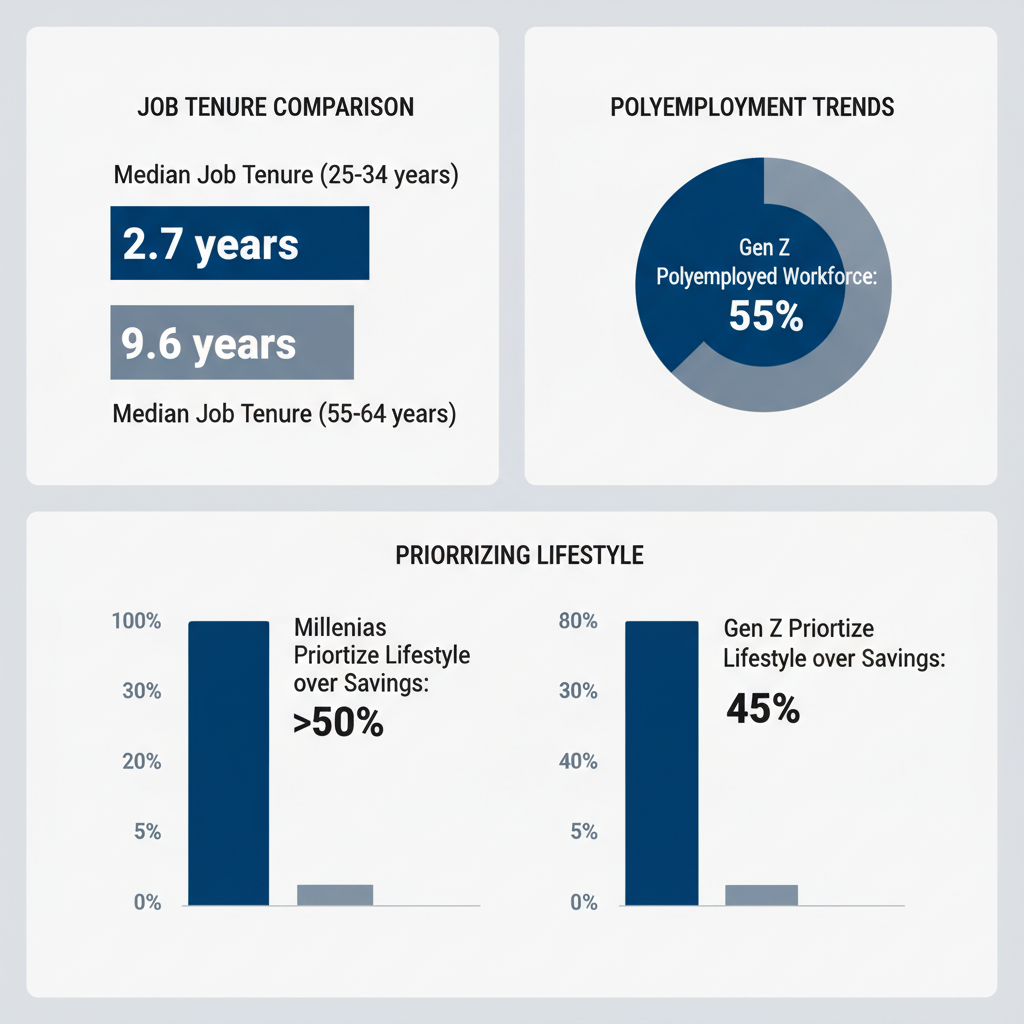
Polyemployment hit a decade high last year, with Gen Z making up 55 per cent of the polyemployed workforce in the US, according to a recent report by global workforce management platform Deputy. Polyemployment is defined as having multiple jobs.
But holding down several gigs at once comes with plenty of challenges.
ALSO READ: Why India's Gen Z 'Diet Coke Parties' Are Making Global Headlines And How They're Linked To Iran
Why does one job no longer cut it for millennials and Gen Z?
More than half of Gen Z and millennials say they view spending on their hobbies and interests as a necessity rather than a luxury, according to a recent study conducted by the Harris Poll on behalf of personal finance firm Intuit Credit Karma. Just over half of millennials and 45 per cent of Gen Z say they would rather reduce long-term savings than give up certain lifestyle experiences, such as going out to eat, travelling, and gym memberships.
As traditional milestones feel further out of reach, young people are expanding the definition of necessities to include convenience.
ALSO READ: 7 Reasons Why Gen Z Is So Anxious Today
You may also like to watch