
- By Ajeet Kumar
- Thu, 28 May 2026 03:40 PM (IST)
- Source:JND
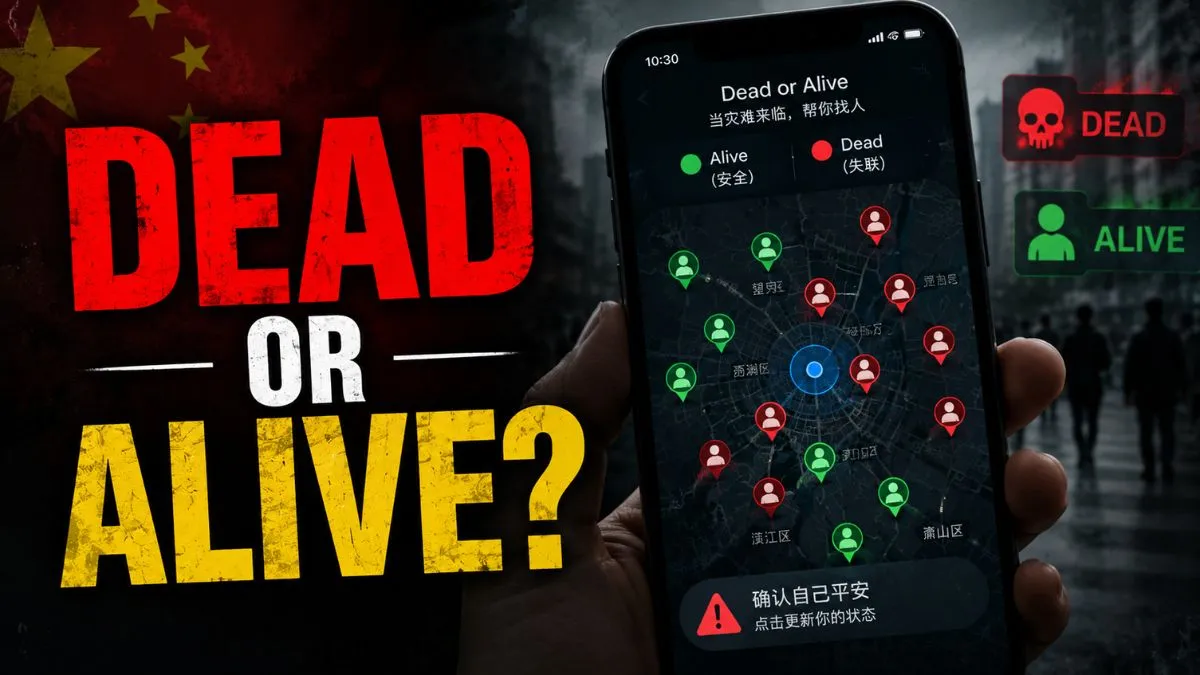
- App shows "alive" or "dead" status on a map.
- Originally designed for personal safety during emergencies.
- Sparks intense debate over privacy and surveillance ethics.
Imagine opening an app and seeing a map filled with dots showing whether nearby people are “alive” or “dead.” Sounds like a dystopian sci-fi film. In China, a controversial new mobile app is sparking heated debate after turning this unsettling idea into reality.
The app, called “Dead or Alive” (translated from Chinese), was originally designed as a personal safety tool. Its core purpose is simple: users can mark themselves as safe during emergencies, accidents, or disasters, helping family and friends know their status instantly. In a country frequently affected by floods, earthquakes, and public emergencies, the concept appears practical at first glance.
Why it marked controversial app
However, what has shocked many is how the platform presents the information. Users can reportedly view the status of strangers around them, creating an eerie digital map of people categorised as either “alive” or “dead.” Critics argue that this transforms a potentially life-saving innovation into something deeply intrusive and ethically troubling.
Mixed reaction on internet
The app quickly went viral on Chinese social media, drawing mixed reactions. Some users praised it as a powerful emergency response tool that could save lives during natural disasters or accidents when communication networks fail. Supporters say the ability to check nearby statuses could help rescuers identify people needing urgent assistance.
Privacy concerns
But others are alarmed by what they see as a serious invasion of privacy. Many questioned whether strangers should have access to such deeply personal information. Critics also fear misuse, warning that false reports, panic, or even harassment could emerge from publicly visible survival statuses.
ALSO READ: 'Are You Dead'? How This Crazy App Is Helping Millions Of China's Single Generation
Privacy experts have raised concerns about data security, asking what happens if sensitive personal information falls into the wrong hands. Questions are also being asked about consent, did users fully understand how visible their information would become?
The controversy reflects a larger global debate: how far should technology go in the name of safety? While apps tracking location, health, and emergencies are becoming increasingly common, the line between protection and surveillance remains blurry.
For now, China’s “Dead or Alive” app has become more than just a digital tool, it has turned into a flashpoint over privacy, ethics, and the unsettling power of technology in modern life.