
- By Raju Kumar
- Wed, 01 Apr 2026 07:12 PM (IST)
- Source:JND
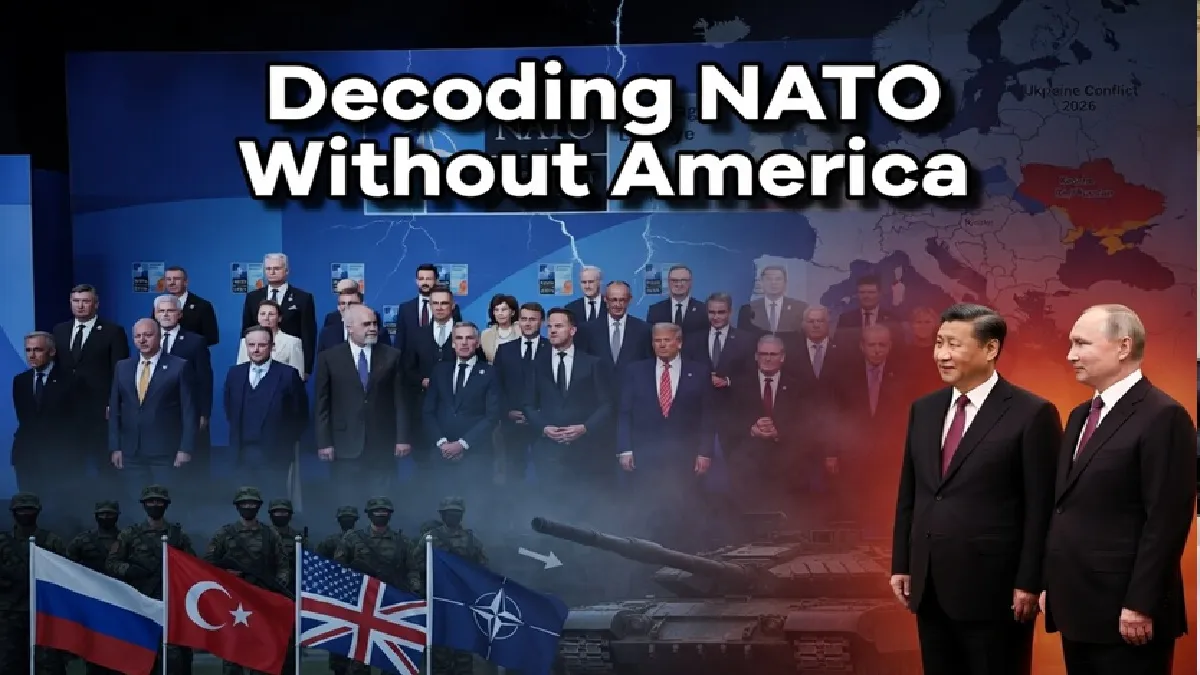
NATO Dispute: US President Donald Trump, who has been upset with its NATO (the North Atlantic Treaty Organisation) allies for refusing to help America in opening the Iran-controlled Strait of Hormuz, a critical global fuel chokepoint amid the ongoing war against Iran. On Wednesday, Trump hardened his stance against NATO, a 32-member intergovernmental military alliance formed in 1949, saying he is reconsidering US membership.
"I was never swayed by NATO. I always knew they were a paper tiger, and (Russian President Vladimir) Putin knows that too, by the way," Trump told Britain's Daily Telegraph, adding he had moved beyond merely reconsidering US membership.
🚨 HOLY CRAP! SecWar Pete Hegseth just dropped a truth nuke on NATO
— 🦋Simi🦋🇺🇸 (@Simi28_) March 31, 2026
“You don't have much of an ALLIANCE if you have countries that are not willing to STAND with you when you need them!”
NATO is officially on notice.
President Trump never forgets.
pic.twitter.com/w6EX7uu5fM
Dispute Over Budget Spent On NATO
Trump, since coming to power in his second term, has been critical of other allies of NATO over spending funds. On several occasions, he expressed his displeasure over the disproportionate spending of funds by the European countries. In 2024, the United States budgeted an estimated USD 967 billion on defence, representing about two-thirds (62%) of the total combined defence spending of all NATO allies, which equals approximately 3.4% of the US GDP.
NATO members in 2014 committed their defence spending to at least 2 per cent of GDP, and the alliance expected all members. At the 2025 Hague summit, under pressure from the Trump administration, the alliance agreed to go further and invest 3.5 per cent of GDP on core defence requirements and another 1.5 per cent on defence- and security-related spending by 2035.
In February, European allies at NATO brushed aside concerns that the United States stepped back from its leadership role of the world's biggest security organisation, leaving them and Canada to do the lion's share of defending Europe. US Defence Secretary Pete Hegseth did not attend a gathering of defence ministers at NATO headquarters in Brussels, displaying that all was not well before the US-Iran war. Now, the fresh disagreement over the Middle East crisis has fueled the dispute between the US and other NATO allies.
ALSO READ: Trump Rages Over Iran's Bold Threat To US Tech Lifelines: 'War Will End Soon Without Any Deal'
Now, the question arises, what would be the fallouts if the US withdrew its membership from the military alliance?
Here Are Five Possible Outcomes
1. Huge decline in NATO's military power: The US is the biggest funder, 62% of the total defence budget of NATO nations. The absence of the US in the alliance means a weak command structure, intelligence, nuclear umbrella and advanced weapons. NATO may see a reduction of 50-60% its defence prowess.
2. Strategic opportunities for Russia and China: A week of NATO means a strategic advantage for anti-Western forces like Russia, China, North Korea and Iran. China will also increase its influence in the Indo-Pacific.
3. Impact on the Russia-Ukraine war: NATO's guarantee of “all for one, one for all” (Article 5) mandates the US to support Ukraine as Russia poses a threat to Poland and other European countries. If the US backs out of the alliance, Ukraine will be solely dependent on Europe.
4. Economic impact: With no US in its fold, NATO would need more funds from the members. They will have to increase their defence spending to 3-5% of GDP from currently 2.3% on average. Countries like Germany, France, and Britain will have to spend more money on their defence industries.
5. Global chaos: The US will try to make a bilateral military relationship with the European countries, which will subsequently weaken NATO further. European nations may forge a new military alliance, like a European military. The world may be divided into multiple power axes.
(With Agencies inputs)