
- By Shubham Bajpai
- Mon, 25 May 2026 06:54 PM (IST)
- Source:JND
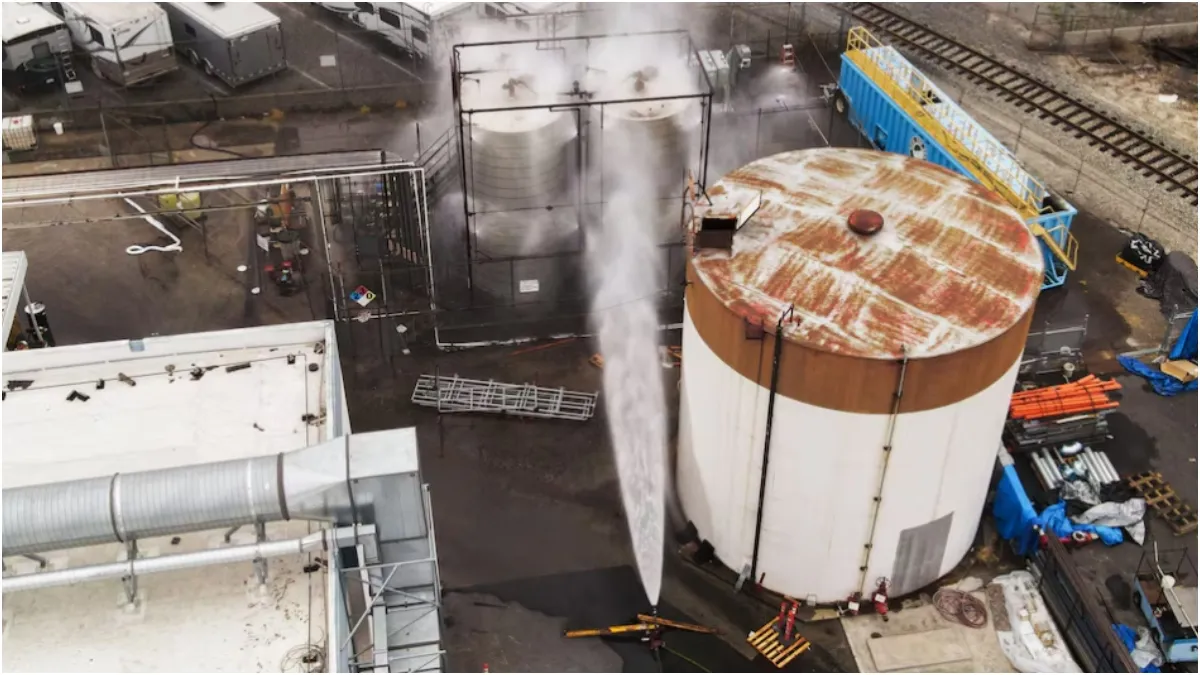
An aerospace plant in USA's California has apparently turned into a ticking bomb as concerns have been raised over a possible leak and explosion in a storage tank filled with a toxic chemical.
On Thursday, about 7,000 gallons (26,400 litres) of methyl methacrylate in the storage tank became too hot, prompting authorities to issue an evacuation order for tens of thousands of people the next day in an area of around 9 square miles, which is considered to be a potential blast radius in Orange County.
Initially, efforts were made to neutralise the reaction, but those failed due to damage to valves on the tank, fire officials have said.
As evacuation is on for days, about 50,000 people in Garden Grove are still being taken out to prevent a serious health crisis.
State Senator Tim Umberg said, "The tank was at 100 degrees, or at least that's as high as the thermometer would go."
Over the weekend, the authorities continued to monitor the situation and found what seemed to be a crack in a storage tank. The fire officials suggest that a 'potential crack' in a chemical storage tank may prevent an explosion, as it would likely release the pressure. However, it does not nullify the probabilities of an explosion, and danger still looms large.
Craig Covey, the incident commander at Orange County Fire, said, "In a weird world, that's the best case scenario, believe it or not. Because once it comes out, it is no longer an explosive hazard."
The officials and experts are working day and night to prevent the explosion that could rupture other tanks on the GKN Aerospace site.
Moreover, the explosion could send metal pieces of the ruptured facility flying into nearby homes, shops and other buildings.
California Governor Gavin Newsom has asked US President Donald Trump to declare the crisis as a state of emergency in Orange County.
The effects of the leak were reported from the nearby areas as residents reported health symptoms such as nausea, dizziness and irritation in the lungs and nose.
With Reuters Inputs