
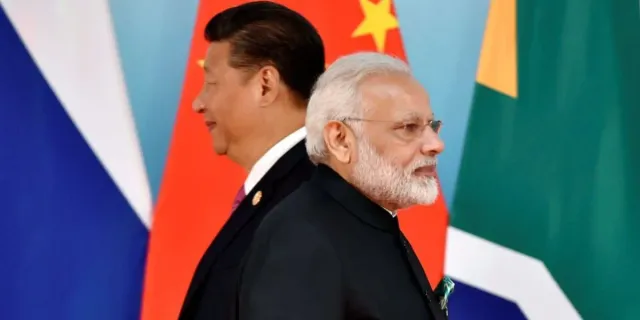
- Xi Jinping's first India visit since 2019.
- Crucial test for strained India-China relations.
- Nations aim for stable rivalry, managing disputes.
New Delhi: For years, India and China have shared a difficult relationship. The two Asian giants need each other economically, yet deep mistrust remains. The upcoming BRICS Summit in New Delhi from 11-13 September 2026 offers a key test. Chinese President Xi Jinping is expected to attend, marking his first visit to India since 2019. This will be the first time the two leaders meet in India after the deadly Galwan Valley clash in 2020 that damaged ties.
The relationship reached its lowest point after Galwan. Thousands of troops were deployed along the Line of Actual Control (LAC), and India tightened controls on Chinese investments and technology. New Delhi insisted that normal relations could not return without peace on the border. A cautious thaw began in October 2024. India and China agreed on patrolling arrangements in Depsang and Demchok in eastern Ladakh. This allowed Indian troops to resume patrols in areas blocked since 2020.
Leaders Modi and Xi then met on the sidelines of the BRICS Summit in Kazan. Since then, both sides have focused on managing their rivalry rather than solving every dispute. They aim to prevent small incidents from turning into major crises.
Recommended For You
Why is BRICS Summit crucial for India and China?
The New Delhi BRICS Summit is important because it is one of the few forums where PM Modi and Xi sit together as leaders of major emerging economies, not as rivals from opposing military groups. For India, BRICS supports strategic autonomy, it allows cooperation with China and Russia while keeping strong ties with the US, Europe and Japan.
ALSO READ: Putin To Visit India For BRICS Summit 2026 In September; Why Russia Remains Crucial For New Delhi
Goals overlap, but not the same
For China, BRICS helps build influence among Global South countries. Their goals overlap but are not the same. The border remains the biggest obstacle. The 2024 agreement helped in some areas, but the full boundary dispute is unresolved. Buffer zones exist, and military postures have changed.
Recent talks between India’s National Security Advisor Ajit Doval and Chinese Foreign Minister Wang Yi show efforts to keep dialogue open. Economic ties are also complicated. China remains a major supplier of machinery and electronics to India, but New Delhi continues to limit Chinese investment and technology for security reasons.
India's reluctance to give free hand to Chinese firms
Arecent delay in linking India's UPI with China’s Alipay highlights ongoing caution. True friendship is unlikely. The more realistic goal is competitive coexistence: keep the border peaceful, maintain regular communication, restore some economic links carefully, cooperate where interests match, and compete elsewhere.
Neither side expects the other to drop its key partnerships. The real test at BRICS is not a handshake or photo opportunity. It is whether India and China can create lasting mechanisms that survive future disagreements. For two nuclear-armed neighbours sharing a long disputed border, stable rivalry with clear red lines may be more valuable and achievable than full friendship.