
- By Prateek Levi
- Tue, 21 Apr 2026 02:26 PM (IST)
- Source:JND
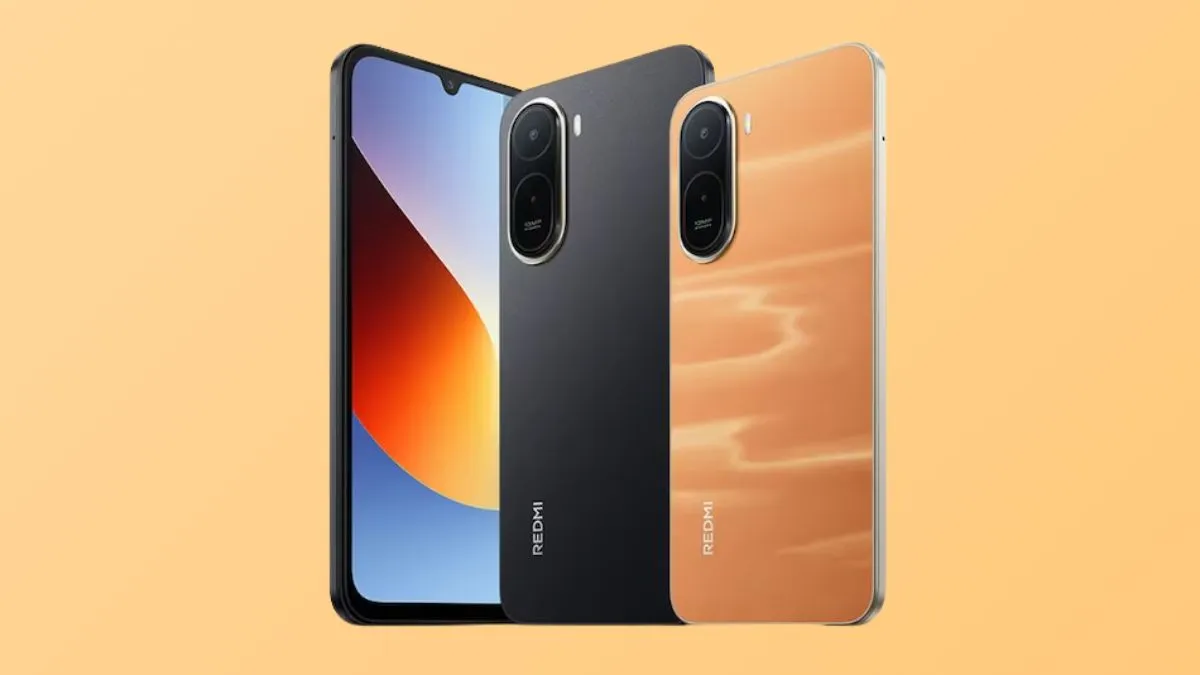
Xiaomi has quietly expanded its entry-level portfolio in India with the launch of the Redmi A7 Pro 4G and Redmi A7 4G. Arriving just days after the 5G variant, the new A7 duo targets budget users who prioritise screen size, battery life, and long-term usability over raw power.
Whereas these two devices have the same genetics, they differ slightly in some aspects when considering their compatibility and tuning.
ALSO READ: Who Is John Ternus? Meet The Man Set To Replace Tim Cook At Apple Inc
Pricing & Availability
Redmi A7 Pro 4G has only one model which features 4GB of RAM along with 64GB of internal storage, whereas Redmi A7 4G offers less storage space by having only 3GB of RAM.
Both devices will go on sale starting April 23 across Mi.com, Amazon India, Flipkart, and Xiaomi’s offline retail network.
Large Screens Take Centre Stage
The A7 family of smartphones focuses a lot on large screens, and this trend remains as popular as ever for budget devices.
The A7 Pro boasts a 6.9-inch HD+ LCD display, whereas the A7 model uses a somewhat smaller 6.88-inch display. Despite the resolution staying modest, Xiaomi is pushing smoother visuals with a 120Hz refresh rate across both devices, along with 240Hz touch sampling and up to 800 nits peak brightness.
A centred punch-hole design adds a more modern touch, something that’s still not very common at this price point.
Entry-Level Chip With Expandable Storage
Both smartphones are powered by the Unisoc T7250 chipset, paired with up to 4GB RAM on the Pro model. Storage remains capped at 64GB, but Xiaomi is offering flexibility with a dedicated microSD card slot that supports expansion up to 2TB.
This makes the devices more practical for users who rely heavily on offline content and media storage.
Software Is Where The Real Difference Lies
One of the biggest separations between the two phones comes down to software longevity.
The Redmi A7 Pro 4G runs on Android 16-based HyperOS 3 and is promised four years of Android updates along with six years of security patches. That’s unusually strong support for a budget device.
The Redmi A7 4G, on the other hand, ships with Android 15-based HyperOS 2 and gets a shorter update cycle with two years of OS updates and three years of security coverage.
Camera Setup Remains Simple
The same applies to their camera setup, where we see a 13-megapixel rear-facing sensor, as well as an 8-megapixel front camera.
It is apparent that Xiaomi has designed this for routine use and not much more, which is what we can expect from the A-series devices.
Battery
Speaking of battery life, Xiaomi is definitely making the most out of it. The Redmi A7 Pro 4G packs a large 6,300mAh battery, while the standard model also offers a sizable unit. Both devices support 15W wired charging and even include 7.5W reverse wired charging, a feature rarely seen in this segment.
Combined with the power-efficient chipset, these phones are clearly designed to last comfortably through a full day, if not more.
Connectivity and Build
On the connectivity side, both devices include Wi-Fi 5, Bluetooth 5.2, GPS support across multiple systems, and a USB Type-C port. An IP52 rating adds a layer of protection against dust and light splashes.
Design-wise, they stick to a practical build but offer fresh colour options to appeal to younger buyers.
ALSO READ: Anthropic Launches Claude Design With Prompt Based Visuals And Team Collaboration: Check It Out
The Bigger Picture
With the Redmi A7 Pro 4G and Redmi A7 4G, Xiaomi is doubling down on what matters most in the budget segment, big screens, dependable battery life, and long-term usability.
But the real question is whether software support and display smoothness alone are enough to stand out in an increasingly competitive entry-level market.