- By Prateek Levi
- Sat, 18 Apr 2026 10:00 AM (IST)
- Source:JND
Canva is clearly trying to change how people approach design, not just speed it up. At Canva Create 2026, the company introduced Canva AI 2.0, and the shift is more fundamental than it first sounds.
This is not just about generating templates faster. Canva is moving toward an AI that can actually follow through on a task from start to finish.
ALSO READ: Assassin’s Creed Black Flag Remake Tipped For July 9 Release With Reworked Gameplay And More
The rollout has not started yet, but it is expected to reach users globally in the coming weeks.
It Now Behaves More Like An Assistant Than A Feature
The biggest shift is what Canva calls its agentic system.
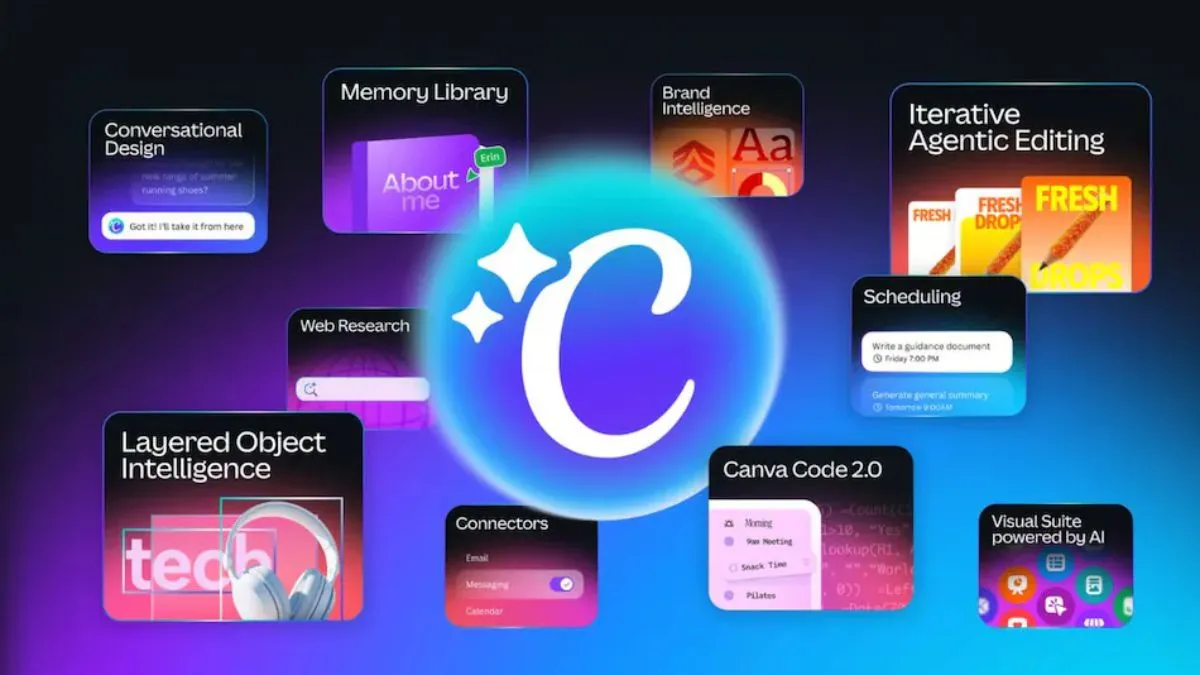
Earlier, the AI would respond to prompts. Now, it can take a broader instruction and figure out how to get there. You can describe what you want through text, voice, or even a rough idea, and it pieces together the output by itself.
What stands out is continuity. You can keep refining something without resetting the process each time. It remembers what you are trying to do and builds on it.
That alone makes it feel less mechanical.
One Prompt Can Now Turn Into A Full Campaign
A practical upgrade is multi-channel design.
Instead of creating separate assets for each platform, the AI can generate a full set in one go. Social posts, presentations, banners, all from a single instruction.
For anyone working on campaigns, this removes a lot of repetitive work that usually eats into time.
Magic Layers Finally Gives You Control Back
AI design tools often feel rigid once something is generated. Canva is trying to fix that with Magic Layers.
You can edit specific parts of a design without affecting everything else. Change the font, tweak lighting, adjust a single element, and the rest stays untouched.
It sounds simple, but this kind of control has been missing in most AI tools so far.
The AI Now Remembers You
The Memory Library is another important step.
The system can retain preferences, brand styles, and patterns over time. So instead of repeating instructions, the AI starts aligning itself with how you usually work.
It is subtle, but it reduces friction the more you use it.
Canva Is Expanding Beyond Its Own Ecosystem
The update also connects Canva to tools like Slack, Gmail, Google Calendar, Notion, Zoom, and HubSpot.
This means it can pull context from your existing workflow instead of working in isolation.
That is where things start to feel more connected.
It Can Work Even When You Are Not
Scheduling is now built into the AI.
You can set tasks, timelines, even recurring outputs, and the system continues working in the background. Alongside this, the web research feature lets it gather and organise information into usable formats.
So it is not just creating visuals anymore, it is helping assemble the thinking behind them.
ALSO READ: Vivo Y05 Launched In India: Features 6500mAh Battery, HD Plus 120Hz Display, 8MP Camera And More
Where This Is Heading
With improvements to its broader AI stack, Canva is clearly aiming to cover more of the creative process, not just the design layer.
The interesting part is not any one feature. It is how all of this starts to come together.
It feels like Canva is slowly turning into something that does not just help you design, but helps you finish the job.