
- By Prateek Levi
- Thu, 21 May 2026 06:41 PM (IST)
- Source:JND
Apple has introduced new health-focused features for its devices, bringing sleep apnea notifications to Apple Watch and a clinically validated Hearing Test feature to AirPods Pro 3.
The company says the new additions are aimed at helping users identify conditions that often go unnoticed, while also making health tracking more accessible through devices people already use daily.
“At Apple, we believe technology should empower people to take control of their health, and that starts with giving users tools to detect conditions they may not even know they have,” said Sumbul Desai, M.D., Apple’s vice president of Health and Fitness. “From sleep apnea notifications on Apple Watch to a hearing test with AirPods Pro, we’re excited to bring these meaningful capabilities to our users in India.”
Apple Watch Can Notify Users About Possible Sleep Apnea Signs
Apple says sleep apnea is a common condition where breathing repeatedly stops during sleep, preventing the body from getting enough oxygen. According to the Apple, the disorder affects more than one billion people globally, with many cases still remaining undiagnosed. If left untreated, it can increase the risk of hypertension, type 2 diabetes and heart-related complications over time.
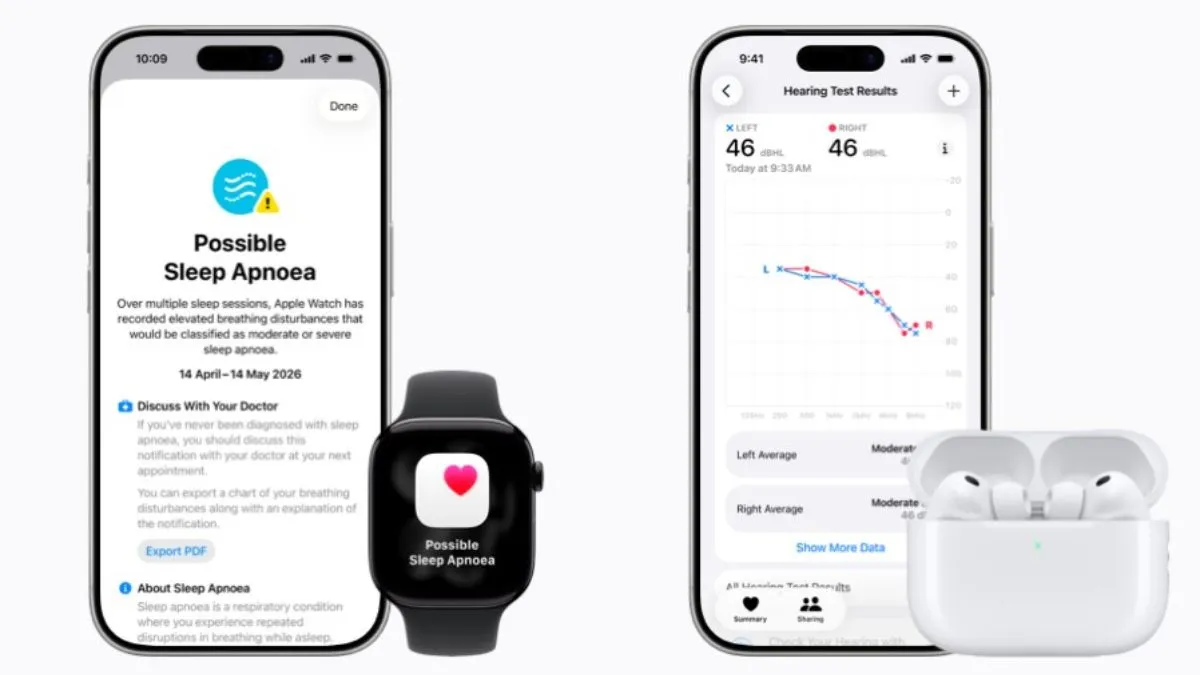
To help users spot possible warning signs, Apple Watch now includes a new metric called Breathing Disturbances. The feature uses the watch’s accelerometer to detect subtle wrist movements linked to interruptions in normal breathing patterns during sleep.
Apple says the watch analyses this data every 30 days and sends notifications if it detects consistent signs of moderate to severe sleep apnea. Users can then consult healthcare professionals for diagnosis or treatment.
The company has also added the option to export a PDF report through the Health app. The report includes breathing disturbance history from the past three months, possible sleep apnea events and additional information that may help during doctor consultations. Apple has also included educational resources within the Health app for users who want to learn more about the condition.
According to the company, the sleep apnea notification algorithm was developed using advanced machine learning and a large dataset of clinical-grade sleep apnea tests. Apple added that during clinical validation, every participant identified by the algorithm had at least mild sleep apnea.
Apple says Breathing Disturbances can also help users better understand their overall sleep quality, although factors such as alcohol, medications and sleeping position may influence the readings. Users can check the data across one-month, six-month and one-year timelines inside the Health app.
AirPods Pro 3 Get Clinical-Grade Hearing Test Feature
Apple has also introduced a Hearing Test feature for AirPods Pro 3, allowing users to test their hearing levels at home using a compatible iPhone or iPad.
The company says the feature is based on pure-tone audiometry, which is a standard clinical approach used for hearing assessments. Apple claims users can complete the hearing test in around five minutes from the comfort of their home.
Once the test is complete, users receive a detailed summary showing hearing levels in each ear, classifications and recommendations. The results, including an audiogram, are stored securely in the Health app and can also be shared with healthcare professionals for further consultation.
ALSO READ: BenQ Launches MOBIUZ EX321UZ 4K QD-OLED Gaming Monitor In India: Check Price And Specs
Apple says the Hearing Test feature was developed using real-world data and insights from the Apple Hearing Study.
Sleep apnea notifications are available in more than 150 countries and regions, including the US, Japan and parts of the European Union. Apple says the feature is intended for users aged 18 years or older who have not previously been diagnosed with sleep apnea. Meanwhile, the Hearing Test feature supports AirPods Pro 2 and later models running the latest firmware with compatible devices on iOS 18 or iPadOS 18 and later.