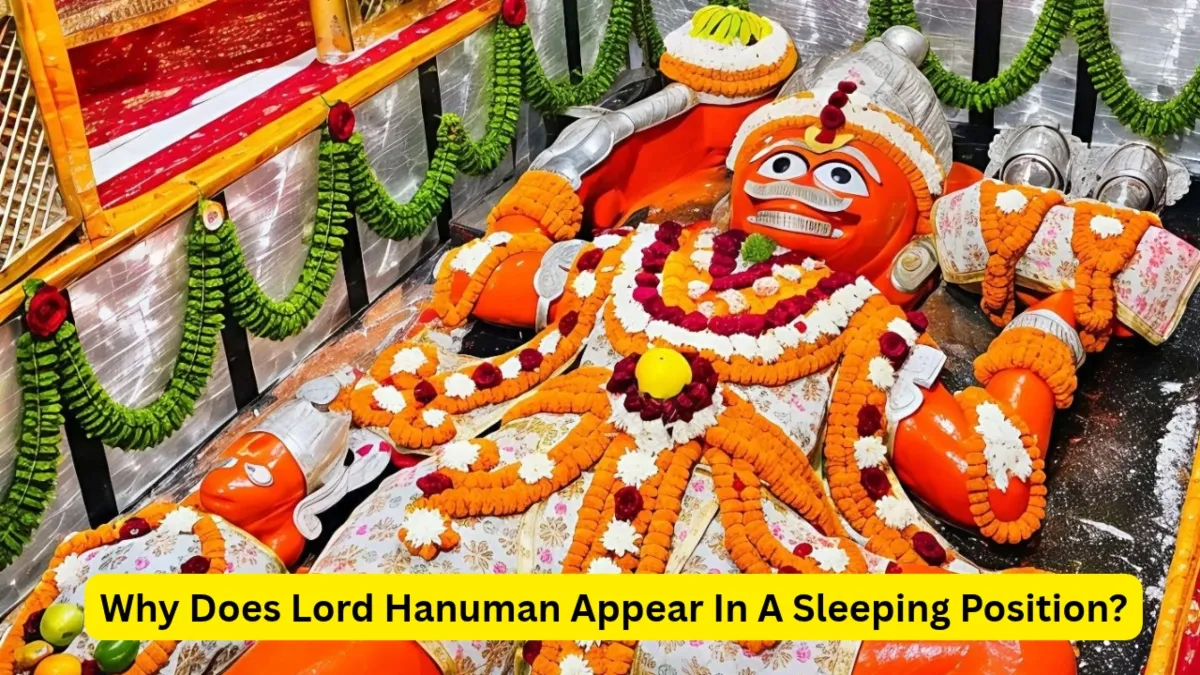
Lord Hanuman is depicted in a sleeping or reclining posture (Shayana Mudra) at the Lete Hanuman Ji temple in Prayagraj, primarily to symbolise his resting state after the gruelling battle of Lanka.
According to legend, after victory over Lanka, Lord Hanuman was returning, and he felt tired on the way. So, at the request of Goddess Sita, he lay down here on the banks of the Sangam. Keeping this in mind, a temple of Lord Hanuman was built here.
The Lete Hanuman Mandir is believed to be around 600-700 years old. Let's explore the spiritual symbolism, significance, and legend behind it.
Legend Behind The Lete Hanuman Ji Temple
There are two legends associated with the Lete Hanuman Ji Temple. According to one legend, after Lord Rama’s victory over Ravana, Lord Hanuman was extremely tired and injured from the supernatural weapons used during the war.
Upon arriving at the confluence of the Ganga, Yamuna, and Saraswati (Prayagraj), at Goddess Sita’s request, Lord Hanuman lay down here.
Another legend states that when Ahiravan dragged Lord Rama and Lord Lakshmana into the underworld, Lord Hanuman took the five-faced form (Panchamukhi) to defeat him. After saving the deities, Lord Hanuman was exhausted, so he rested to regain his divine energy.
Recommended For You
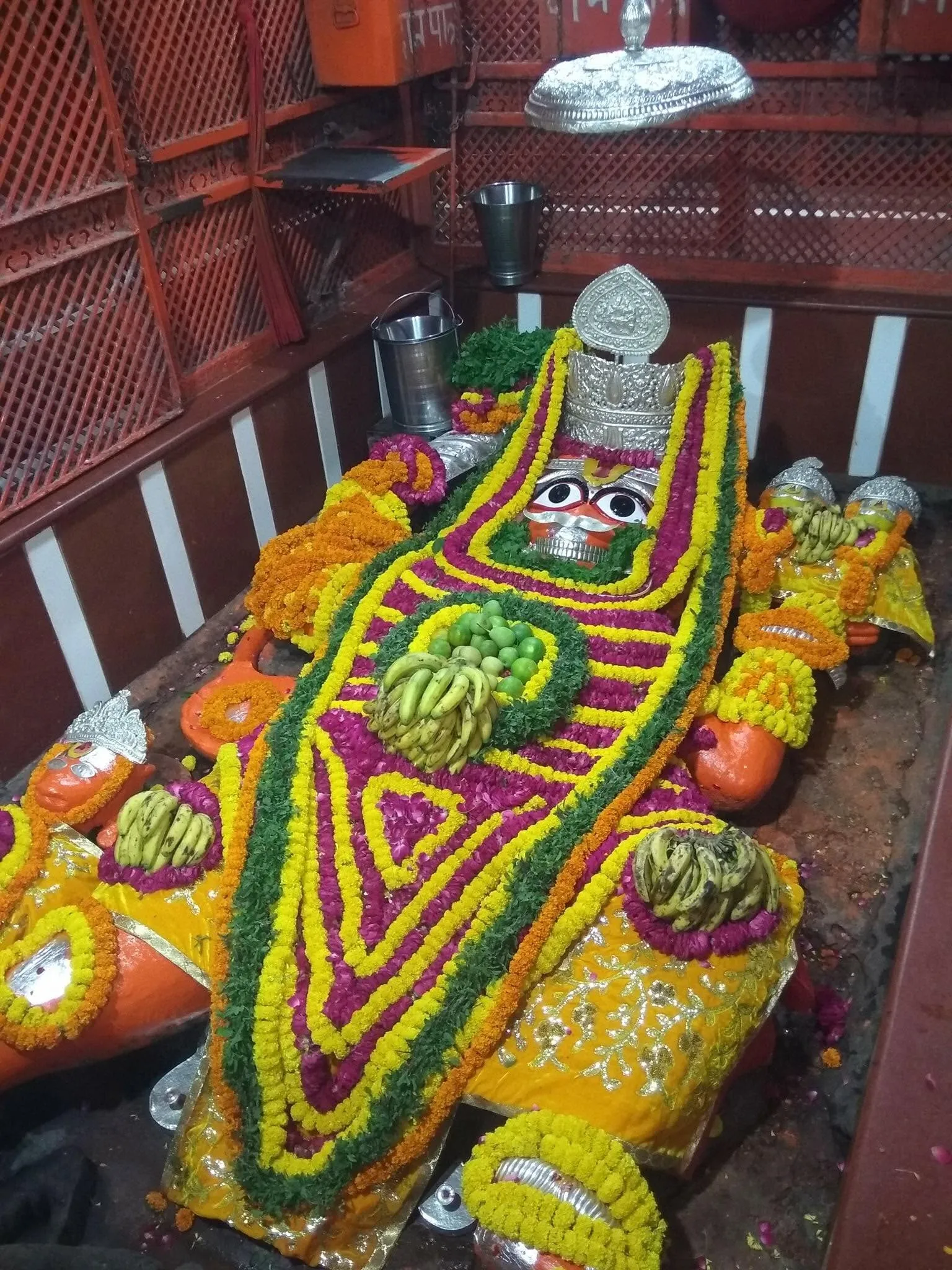
After saving the deities, Lord Hanuman was exhausted, so he decided to rest to regain his divine energy (Image/Facebook/PrayagrajSocial)
Who Constructed The Lete Hanuman Ji Temple?
This temple is believed to be at least 600-700 years old. It is said that there was a rich merchant who was childless. Then, on the advice of a guru, he made an idol of Hanuman from stones found in the Vindhyachal hills to fulfil his wish.
He decided to bathe the idol at several pilgrimage spots. His journey eventually arrived at the Sangam Kshetra of Prayag. While resting at night, the trader saw that if he left the statue here, then his wish would come true.
He did so and left for his city, Kannauj. Afterwards, the idol was submerged in the sand. As time passed, that rich trader's wife gave birth to a son. Years later, a saint named Balgiri found the idol and the temple was established at that very place.
Since then, devotees have revered this form of Lord Hanuman as Lete (lying down) Hanuman.
The Spiritual And Symbolic Meaning Of The Sleeping Mudra
While most Lord Hanuman idols represent power, strength, movement, and vigilance, the sleeping idol represents Shanti (peace), deep meditation, and divine recovery.
Seeing the idol in the resting form reminds devotees to control the mind, focus and build devotion. Devotees visit this temple for strength, focus, courage and spiritual discipline.
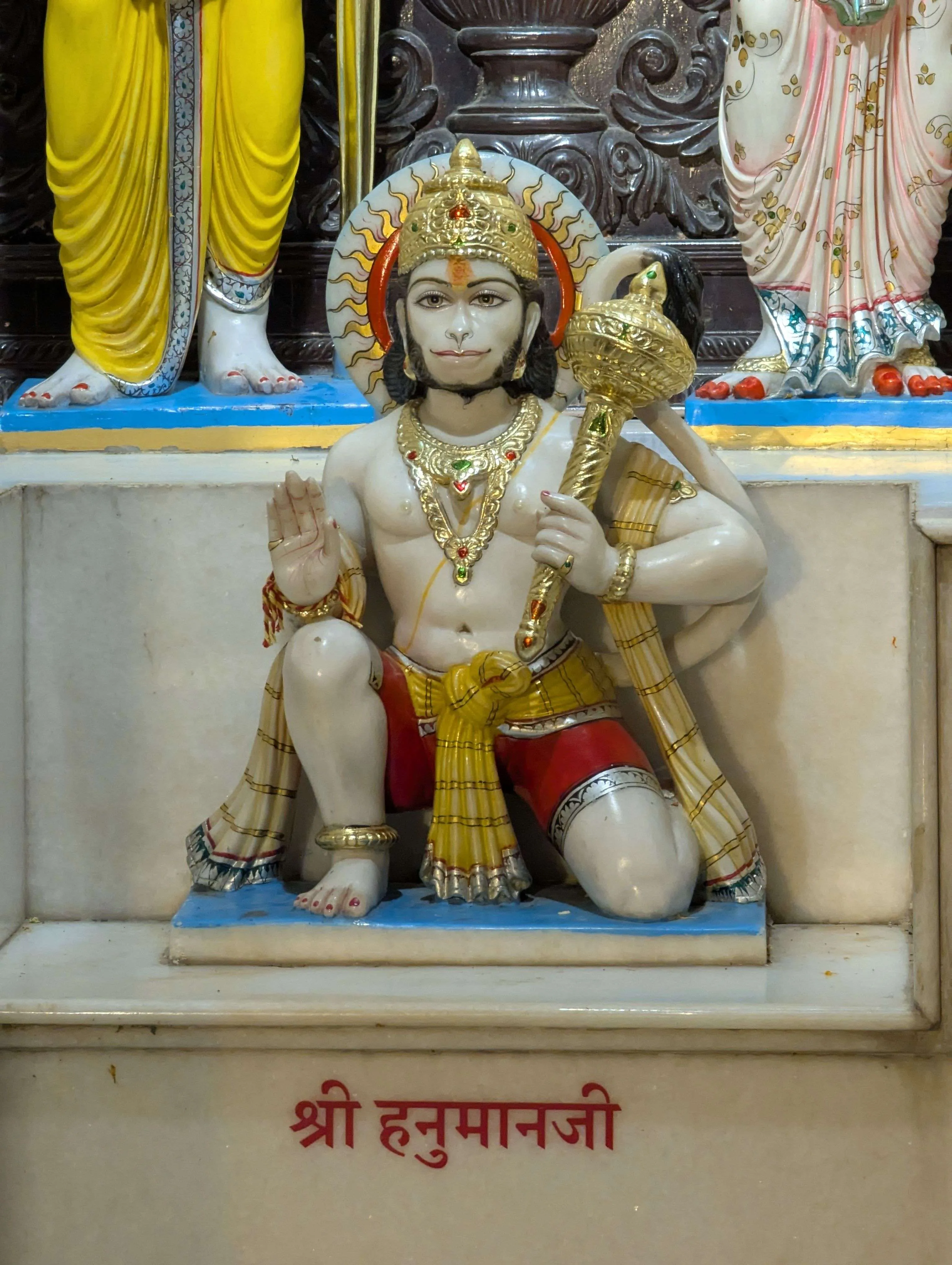
Lord Hanuman idols represent power, strength, movement, and vigilance (Image: Pexels)
ALSO READ: Looking For A Meaningful Baby Boy Name? 50+ Names Inspired By Lord Hanuman
Why the Idol Sits Below Ground Level?
The temple is built inside a pit-like structure because the massive 20-foot idol could not be lifted or straightened despite centuries of efforts. It is believed that the idol's legs face south.
Kamada Devi is buried under its left leg and Ahiravan under its right leg. In his right hand are the images of Rama and Lakshmana, and in his left is the image of Garuda.
Essential Visitor Guide: Timings, Darshan, and Travel Tips
Here are a few things that you, as a devotee, should know before visiting the temple:
Location: Near Fort Ghat, Sangam, Prayagraj, Uttar Pradesh.
Best Time to Visit: Morning Aarti (5:00 AM) or Tuesday/Saturday evenings (Expect crowds).
The Annual Miracle: July–August (Monsoon season when Ganga water enters the sanctum and bathes the idol.
ALSO READ: 5 Timeless Lessons From Lord Hanuman For The Modern World
Thus, the Lete Hanuman Temple in Prayagraj is the only temple in the world where Lord Hanuman Ji is in a resting position. This form of Lord Hanuman symbolises devotion, which is quiet, reflective, and full of wisdom.
FAQs
1. Why is the Hanuman idol in Prayagraj depicted in a lying position?
The idol represents Lord Hanuman resting after his service to Lord Rama.
2. Does the idol of Lete Hanuman Ji actually grow in size?
Yes, according to local belief and temple records, the idol grows a few inches each year. Many devotees visit regularly to witness this miraculous phenomenon.
3. What special offerings are recommended for Lete Hanuman Ji?
Red cloth, sindoor (vermilion), and sweets (especially laddoos) are traditional offerings.