
- By A Surya Prakash
- Fri, 29 May 2026 06:19 PM (IST)
- Source:JNM
The handling of the Twisha Death Case by the Madhya Pradesh government, the Bhopal police and the attitude of judicial officers in the state is indicative of the complete breakdown of all organs of the State – the elected government, the police and the lower judiciary. But for the media, the nexus between all these entities would have successfully destroyed the faith of citizens in the system of justice.
It is indeed a disgrace that even 80 years after independence, one is witness to the virtual collapse of the system. Twisha, daughter-in-law of an ex-judge and wife of an advocate, dies under suspicious circumstances on May 12 in Bhopal.
Still, despite specific and sharp provisions in law regarding such death about cruelty in the matrimonial home within seven years of marriage, the police do not register an FIR until May 15; meanwhile, a judge merrily grants anticipatory bail to the ex-judge Giribala Singh even as the FIR is being filed and allows her free access to the scene of the crime.
Such is the freedom given to her that she calls technicians to see what is on the CCTV cameras in her house and at the scene of the crime, and sends her lawyers to get the CCTV footage from a beauty parlour that Twisha visited some hours before her death.
Further, she makes 46 calls from her cell phone to important individuals in the police and judicial system, including the Lokayukta, a DG rank police officer and a district judge. One has not come across another case where a judge gives a potential accused such free access to tamper with evidence.
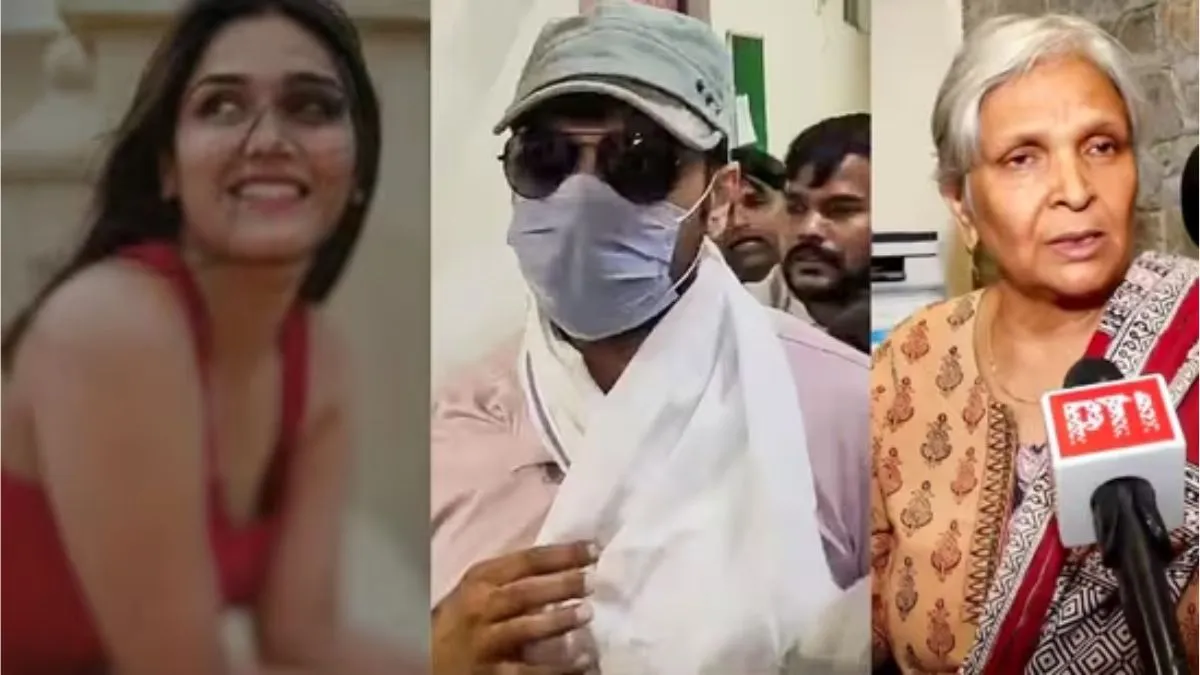
Meanwhile, Twisha’s husband -Samarth Singh - himself a lawyer, just disappears and goes underground for ten days. His mother keeps telling the media she does not know where he is.
Pained by this travesty of law and justice and criminal connivance with the perpetrators, Twisha’s parents desperately approach the Chief Minister on May 17 and even offer a dharna in front of his house, but he does not meet them.
He meets them on May 20 after Republic TV and other media houses raise a hue and cry. The chief minister, obviously on a nudge from the Union Home Ministry, meets Twisha’s family and agrees to hand over the case to the CBI, but the handover happens only on May 25.
The state also agrees to a second post-mortem, which happens on May 24, 12 days after her death and gets the Solicitor-General Tushar Mehta to represent the state before the High Court to get consent for the second autopsy.
The laxity of the police and the grant of anticipatory bail to the mother-in-law should shock the conscience of anyone who is aware of the existing law in regard to the cruelty of women and dowry demands within seven years of marriage in their matrimonial homes under Section 117 of the Bharatiya Sakhsya Adiniyam (earlier Section 113A of the Indian Evidence Act).
It says: Presumption as to abetment of suicide by a married woman: When the question is whether the commission of suicide by a woman had been abetted by her husband or any relative of her husband and it is shown that she had committed suicide within a period of seven years from the date of her marriage and that her husband or such relative of her husband had subjected her to cruelty, the Court may presume, having regard to all the other circumstances of the case, that such suicide had been abetted by her husband or by such relative of her husband.
The following Section 118 of BSA is even more emphatic. It says: When the question is whether a person has committed the dowry death of a woman and it is shown that soon before her death, such a woman had been subjected by such a person to cruelty or harassment for, or in connection with, any demand for dowry, the Court shall presume that such person had caused the dowry death.
Further, because of the rising cases of dowry deaths in the country, Parliament amended the law and made it more stringent in the 1980s. This is incorporated in the new Bharatiya Nyaya Samhita (BNS). Section 85 of BNS prescribes up to 3 years imprisonment for the husband or relative of the husband of a woman who subjects her to cruelty.
Next, Section 86 defines "cruelty": It says: "cruelty" means -- any wilful conduct which is of such a nature as is (a) likely to drive the woman to commit suicide or to cause grave injury or danger to life, limb or health (whether mental or physical) of the woman; or (b) harassment of the woman (for dowry).
Further, since dowry harassment is being alleged, Section 80(1) of BNS says that where the death of a woman is caused otherwise than under normal circumstances within 7 years of marriage, and it is shown that she was subjected to cruelty by her husband or any relative of her husband for dowry, such husband or relative shall be deemed to have caused her death. The punishment in this case is not less than 7 years imprisonment, which may extend to life.
The mother-in-law in this case has repeatedly incriminated herself by giving media interviews and accusing Twisha of having multiple partners, of consuming marijuana and other drugs, of being treated for mental illness, and being maladjusted to the family.
Were not the Bhopal police aware of these provisions, which were incorporated in the anti-Dowry law by parliament in the 1980s? Was the judge who gave Ms Giribala Singh anticipatory bail not aware of these provisions?
Equally disappointing were the observations of the Supreme Court advising the media not to create a narrative. In other words, it was saying do not resort to a media trial. But, it had nothing to say either about the conduct of the Ex-judge Giribala Singh, the Bhopal police or the missing advocate-husband of Twisha for ten days.
Strangely, it said that the Bhopal police will deal with this case in “absolute fairness and impartiality”. Fortunately, the Solicitor General, Mr Tushar Mehta, stood up for the media. He has said significant progress has been made in the case due to media intervention.
Finally, this case and this monumental failure of the system should silence all those who talk of “Media Trial”. Where would we be in this case if the media had not taken it up? Would the Supreme Court have known all the murky details of the shameful cover-up in this case if the media had not stepped in? Therefore, at least in this case, we must say: Media Trial Jai Ho!
(Disclaimer: The author is an expert on democratic issues and a senior columnist. The views expressed are his own and are not endorsed by The Daily Jagran.)