
- By GN Bajpai
- Fri, 30 Jan 2026 01:50 PM (IST)
- Source:JND
Economic growth is driven by increases in productive capacity, architected by the accumulation of capital, technological advancements and the contribution of the labour force. Labour is an active component, which sweats out other resources. Without the optimal contribution of the labour force, other resources like capital and technology remain unutilised and/or underutilised, leading to sub-optimal value creation.
According to data published by the International Labour Organisation (ILO), India's labour productivity is estimated to be USD 8 GDP per working hour of labour as against Luxembourg's 146 (top globally), Ireland's 143, Norway's 93, and Singapore's 74. It is the lowest amongst G20 countries. Even middle-income emerging economies like Mexico, Brazil, etc., generate many more times the output per hour worked than India.
India ranks amongst the top countries globally for hours worked per week, 46-48 hours, higher than even China and Japan. Consequently, even with very low wages, the Indian economy stands to lose on account of extremely stunted per-worker output. India is less competitive against rivals like Bangladesh, Vietnam and China. In November 2025, the Modi Government ushered in the most-needed labour reforms.
India's earlier regulatory framework, saddled with 29 fragmented labour laws, was extremely complex and obsolete, dating back to the British Raj and the early decades of independence. There were 1436 provisions, 181 forms, eight separate registrations and 31 reporting requirements, which were very cumbersome and, in some cases, inconsistent. The complexity led to unease in doing business, limited formalisation, and large sections of the workforce were deprived of a safety net.
The array of fragmented labour laws has been consolidated into four modern and simplified Labour Codes: Code on Wages (2019), Industrial Relations Code (2020), Code on Social Security (2020) and Occupational Safety, Health and Working Conditions Code (2020) and made effective from 21st November 2025.
These reforms bring a structural shift by simplifying compliance, standardising definitions, expanding coverage and aligning regulations with the realities of the modern workforce, inclusive of the gig economy. The new codes will transform the way labour regulations function and are expected to create a balance between enhancing workers' protections and boosting productivity.
The new Labour codes will step up productivity in multiple ways. The consolidated codes will encourage formal employment via clear employment terms. The issue of employment contracts has been made compulsory, single registration, licenses and returns, leading to ease of doing business and contracting bureaucratic delays. The reduction of compliance burden will help companies to focus on business activities and bring down costs. Formalisation of employment facilitates manpower planning and better utilisation.
The extension of benefits of medical care, sickness cash benefits, maternity cover and disability support under the Employees State Insurance Corporation (ESIC) and the Provident Fund to unorganised, gig and platform workers under the Code of Social Security is a landmark shift.
Mandatory health checkups, regulated working hours, protective facilities and gender equality norms under Workplace Safety & Health Standard will improve working conditions, boost morale and productivity of the workforce. The reforms permit women working on the night shift, of course, with safety protocols. Fixed-term employees will be treated on par with permanent employees.
The Industrial Relations Code allows, particularly in manufacturing, hospitality and MSMEs, flexibility in hiring and adjusting their workforce according to need without navigating decades-old complex rules. Flexibility will help enterprises to respond swiftly to market dynamics, increase or reduce workforce and run operations profitably. However, this rule can be used only if the number of employees in the enterprise is 300 or fewer.
The states have the authority to alter this rule both on a smaller and larger scale. Industrial scale-large manufacturing, processing and logistics leverage high volume production, automation and advanced technology to achieve economies of scale. Due to restrictions under the old regime, key sectors such as textiles, leather, food processing, etc., of India could not compete in the global markets.
States like UP, Bihar, Bengal and Orissa, which are seeking to industrialise and have a large number of job seekers, should enhance this number rule of 300 to 30000 or even 300000 so that companies with scale can be established. Thousands of unemployed people are forced to migrate to other states in search of economic engagement. Currently, most of the employed, whether in the state or in the migrated city, remain engaged in informal enterprises with zero certainty of job, low wages, no safety net and 'hire and fire' is practised with impunity.
Trade Unions, despite the potential benefits, have criticised the reforms, arguing that these will weaken job security and collective bargaining rights, making employees vulnerable to employer discretion. In fact, formalisation of labour engagement and improved job security will enhance workers' and consumer confidence, and discretionary spending is likely to contribute a Rs 75,000 crore boost in consumption.
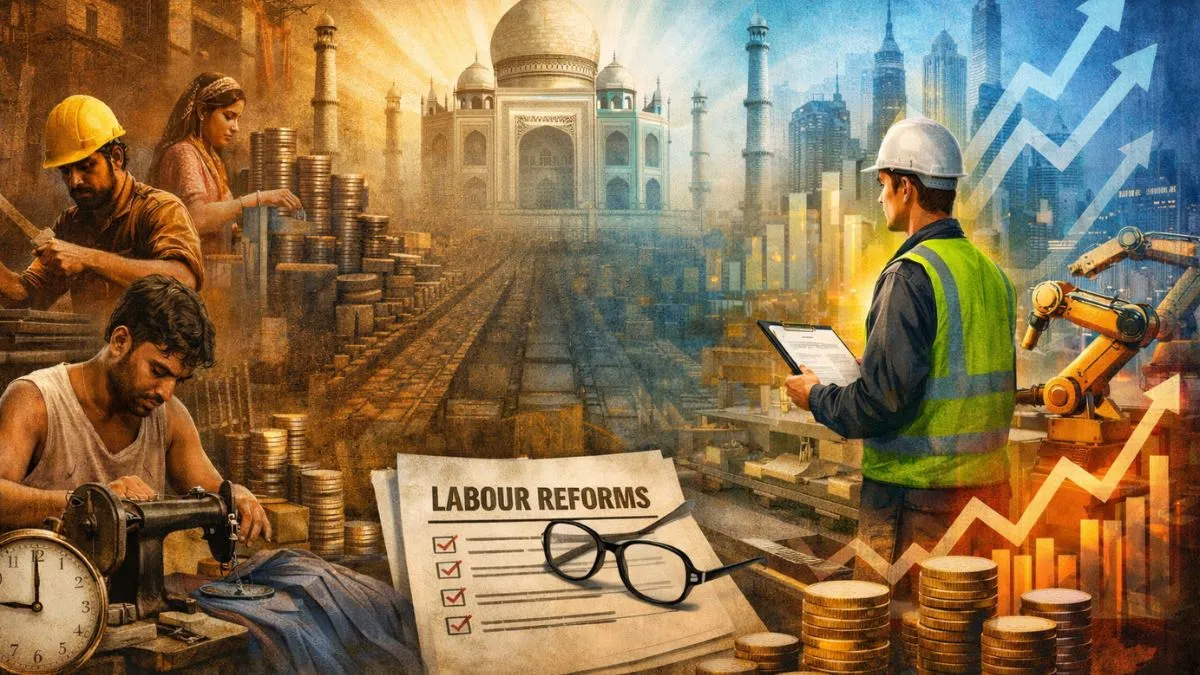
These reforms represent a pivotal shift towards a simplified, flexible and inclusive labour market and, if implemented rigorously, will undeniably enhance the formalisation of jobs, improve productivity and create large, globally competitive enterprises and safety nets for employees, eventually raising the contribution of the manufacturing sector in the growth of GDP.
(Note: The author is Former Chairman, SEBI, and LIC Author & Columnist)