
- By Taruun Gupta
- Tue, 10 Mar 2026 08:36 PM (IST)
- Source:JND
Cricket writers in India today deal with a welcome quandary. As our cricketers push the envelope, the writers are pouring into the thesaurus in search of unused epithets, fresh expressions, apt turns of phrase to eulogise our triumph and the historic consistency. In the last three years, the Indian white-ball cricket team has attained stratospheric heights. Since the heartbreak in the 2023 ODI World Cup final, the trajectory has been inexorable.
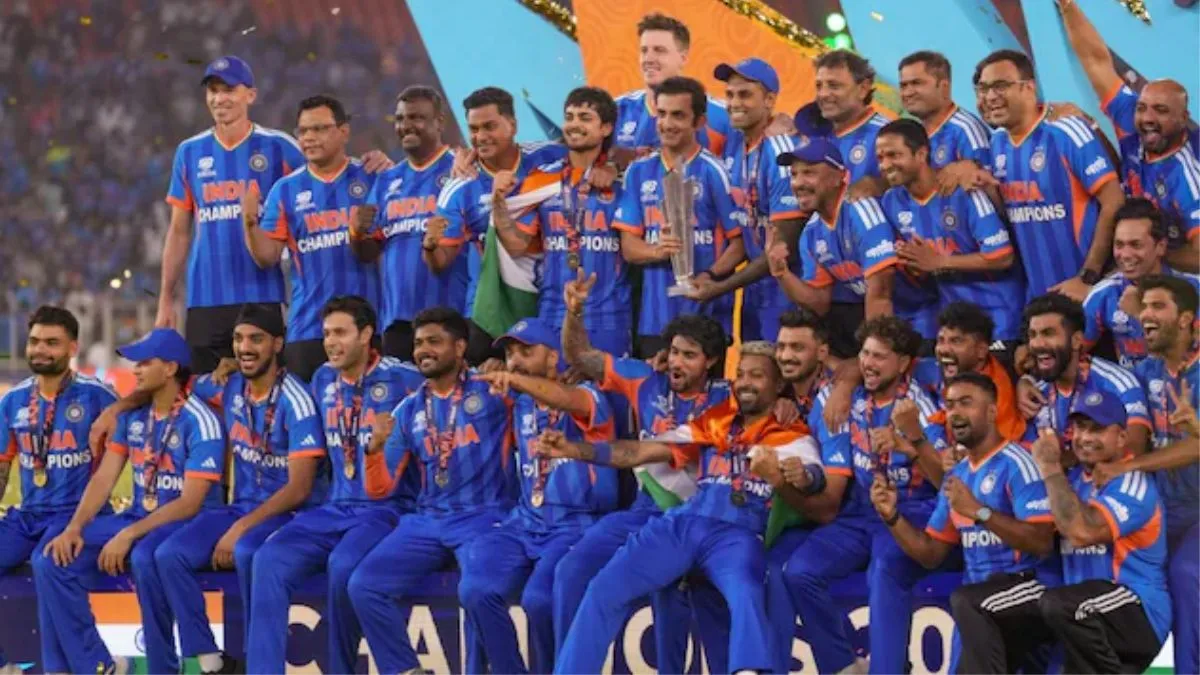
We won the 2024 T-20 World Cup, the Champions Trophy in March 2025, the Asia Cup in October 2025 and have now successfully defended our T-20 trophy. A lot of firsts in this latest victory. It was a record-breaking third T20 World Cup title, and we became the first team to defend it and the first host nation to clinch the trophy.
In the last four ICC limited-overs tournaments, we have won three and were runners-up in one. Delving further, in the last five multi-nation white ball competitions, our win-loss record is 37-2. A conclusive testimony indeed of the Indian cricket team's consistency and dominance.
ALSO READ: BCCI Announces Staggering 131 Crores Cash Reward For T20 World Cup 2026 Winning India Squad
Every success brings to the fore some heroics. What is heartening is that contributions are so many that it becomes difficult to recall all or glorify a few. Again, a pleasant situation to be in, cricket after all is a team sport, where team success matters more than individual milestones - a philosophy that coach Gambhir leaves no opportunity to emphasise.
The volatility associated with sport was on display throughout the tournament. Sanju Sampson, who wasn't a part of the original squad, emerged player of the tournament. Abhishek Sharma, our premier batsman going into the tournament, had a wretched run and just when his place was being questioned, delivered a master class in the final.
Ishan Kishan was instrumental against arch-rivals Pakistan and battled personal grief to build up on the momentum provided by our openers in the summit clash. That we could win without a substantive contribution from our skipper - except in the first game against the USA - underscores the relevance of finishers like Shivam Dubey, who stood out for his consistency and Tilak Verma and Pandya, who did their bit by rising to the occasion when needed.
Bumrah, of course, remains a phenomenal performer, the best all-format bowler in the world. Fortunately for India, batsmen across the globe haven't yet unravelled him. There was Axar Patel, who contributed with the ball and also with his presence of mind and athleticism in the field.
Commendations require mentioning almost the entire team. This is proof of our collective prowess, deep penetration of the game and bench strength. It ensures that players remain mindful of continuous hard work and consistent performance. There is never a time to rest on laurels, for too much eager talent is waiting in the wings to fill in. This might result in some insecurity or pressure, but it also keeps the cricketers hungry and alert, an essential ingredient for longevity.
Victory calls for celebration, but to be sustainable, success must also invite introspection. We have been a runaway hit in limited-overs cricket, but what about the original long-form version? Except for the English summer in 2025, our performance in the test format over the last year and a half has been subpar. We lost in Australia and suffered the ignominy of a whitewash at home against New Zealand. That perhaps was the lowest point for the Indian test team.
The leading teams of the past - West Indies from the late seventies to the eighties, Australia of the 2000's dominated all formats across conditions! It is for the administrators to ponder that while IPL is a remarkable training ground for nurturing and churning limited over talent, to replicate the same in five-day cricket, we will need to focus more on domestic cricket - good old Ranji Trophy, Duleep Trophy, Irani Cup and ilk. While there is tremendous depth in batting, our bowling needs to be sharpened. We are overly reliant on Bumrah; Ashwin's retirement left a difficult-to-fill void.
Moving beyond the twenty-two yards, the emergence of India as a sporting nation remains a work in progress. Given our population and economy, we punch well below our weight at the international level. Excellence in one sport, where we are the largest financial power, sporadic success in a few others, cannot compensate for an overall underwhelming outcome.
A comprehensive strategic plan is necessary to ensure effective progress and consistent success over a period of time. What our demography may lack in terms of genetics will have to be overcome by training, conditioning and nutrition. It takes generations to metamorphose; there is no substitute for persistent concerted effort.
Journey of a thousand miles, as they say, begins with a small step. Before we embark, it is essential to develop a sporting culture. A society cannot have a utilitarian attitude towards sport.
Not everyone will become a career sportsman, not everyone will excel to secure academic or employment placement, yet play for the joy of playing, the intrinsic, inherent benefits of partaking in sport have to be internalised. As they say, use whatever talents you have; woods would be silent if only those birds sang that sang the best.