
- By Dr Sadhana Kala
- Sun, 05 Jul 2026 12:29 PM (IST)
- Source:JND
If India had to choose a single dish to embody its essence, biryani would likely emerge as the top contender. It’s the one thing that can unite a table of sworn food rivals: vegetarians arguing with meat lovers, spice fiends sparring with the mildly inclined, the North versus the South, and coastal versus hinterland. Everyone has an opinion, but almost everyone agrees on one thing: biryani is special.
World Biryani Day, marked every year on July 5, is a relatively recent entrant in the calendar of food "days," but its rapid rise reflects something deeper. This isn’t just about a dish. It’s about memory, migration, class, comfort, and the evolving story of India on a plate.
More than a meal, a moment
Biryani is rarely an everyday, casual affair. It’s what arrives at life’s turning points: weddings, festivals, farewells, promotions, late-night hostel celebrations, that first salary treat, and that midnight delivery after a brutal workday.
In Indian homes, biryani still carries the aura of a big day. It is planned, not improvised. Rice is washed and soaked just so. Meat is marinated hours in advance. Spices are ground, and onions are browned to the precise shade between gold and deep amber where sweetness and smokiness collide. The whole process is a choreography of patience and anticipation.
World Biryani Day, then, is less a marketing gimmick and more a global acknowledgement of what many Indians already know: biryani is not just food; it’s an event. And increasingly, it is an event that sits at the heart of India’s booming digital food culture.
A history stirred by empire and migration
Biryani’s origin story is hotly debated, like everything else about it. Did it travel with Persian invaders and evolve in the royal kitchens of the Mughals? Was it already taking shape in the Deccan before the Mughals arrived, drawing from older rice-and-meat traditions? Or did it spread through maritime trade routes from West Asia, picking up local flavours at every port?
What we do know is that biryani flourished wherever power, trade, and migration intersected. In Lucknow, it became dum pukht, a slow-cooked, perfumed expression of Awadhi refinement. In Hyderabad, it turned into a heady, robust, spice-forward star of the Nizam’s table. In Kolkata, it took an unexpected turn with the addition of potatoes—perhaps the most famous austerity measure in Indian culinary history—when meat was scarce during the mid-19th century.
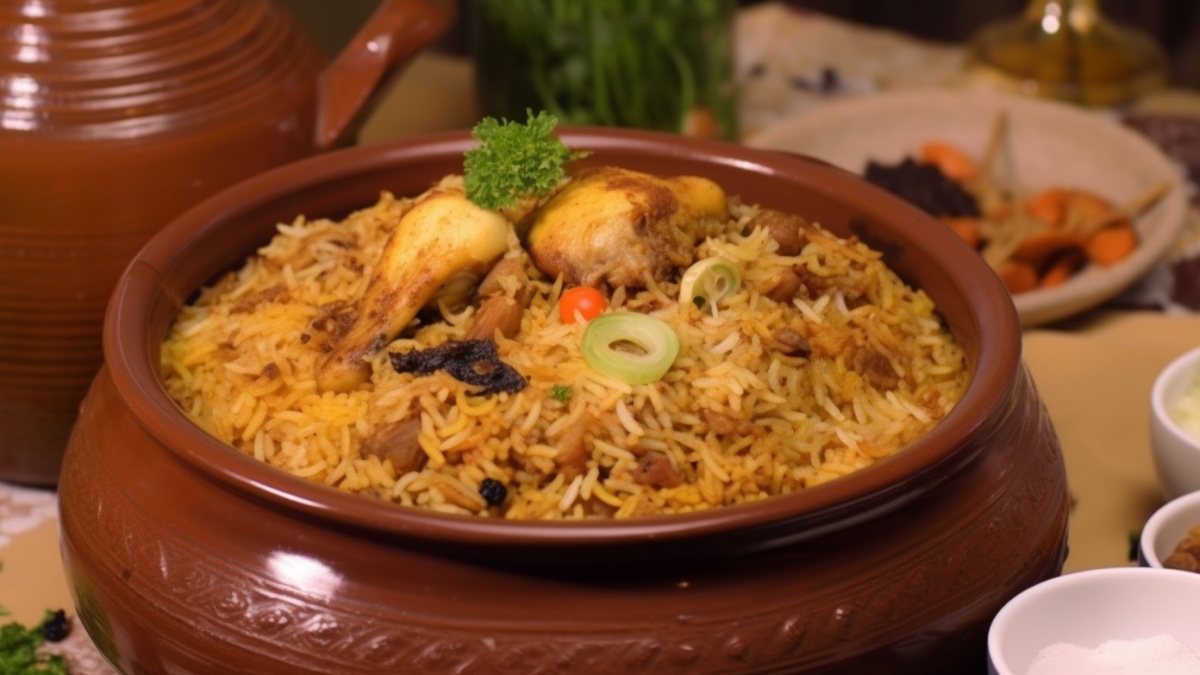
In Indian homes, biryani still carries the aura of a big day. (Image:Magnific)
In the coastal regions, seafood walked into the pot. In the south, short-grain rice such as seeraga samba in Tamil Nadu and kaima rice in Kerala lends biryani an entirely different texture and aroma. Each region took the same basic grammar—rice, protein, spice, and slow cooking—and wrote a new dialect.
World Biryani Day, in that sense, invites us to read this dish like a map of conquests and compromises, luxury and jugaad, royal kitchens and street-side carts.
The epic regional biryani battle, which no one really wants to end, continues to unfold. No one really wants to end it.
Ask ten Indians where to find the “best” biryani, and you’ll likely trigger a debate that lasts longer than the cooking time of the dish itself.
Hyderabadi Biryani: Perhaps the most internationally famous, it has two major styles—kacchi (raw, marinated meat cooked with rice) and pakki (pre-cooked meat layered with rice)—both of which rely heavily on aromatic basmati, fried onions, ghee, and a tight dum seal. Hyderabadi biryani is bold, layered, and unapologetically regal.
Lucknowi (Awadhi) Biryani: More subtle, more delicate, and often described as “polite” compared to its Hyderabadi cousin. The meat is slow-cooked separately, the rice is parboiled with whole spices, and the final assembly is like a quiet, controlled symphony where no single note overwhelms.
Kolkata Biryani: This version is lighter on spice, aromatic, and features the famous aloo as a key ingredient. Influenced by Awadhi techniques and shaped by Calcutta’s own history of scarcity and innovation, it has a loyal following that will happily defend the potato's presence as essential, not optional.
Malabar Biryani: From Kerala’s northern coast, it is often made with small-grain rice, ghee-fried onions, raisins, and cashews. It leans towards sweetness and warmth, reflecting the region’s deep links with the Arab world and the spice trade.
Ambur and Dindigul Biryani (Tamil Nadu): Distinctly spiced, often sharper and tangier thanks to the use of curd and whole chilies, and traditionally cooked with seeraga samba rice, which clings differently to flavor than basmati.
There are countless more: Thalassery, Sindhi, Bohri, Kalyani, Donne, Bamboo, and regional “tawa biryanis” that are arguably pulaos but are too loved for anyone to nitpick definitions.
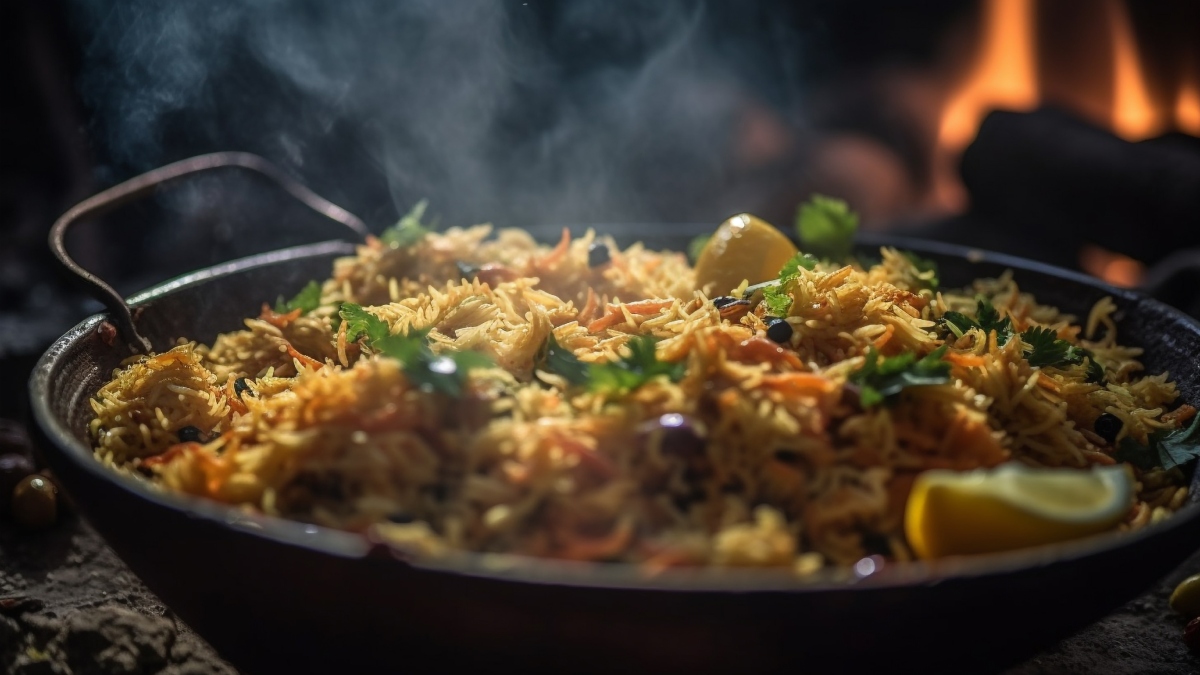
World Biryani Day is a day to celebrate and pass the pot. (Image:Magnific)
On World Biryani Day, these debates resurface with fresh intensity online. But beneath the friendly rivalry is a shared pride: every region wants to claim biryani because it has become a proxy for local identity itself.
The digital generation’s comfort food
If the 1990s gave India satellite TV, the 2010s gave India the delivery app. Few dishes have ridden this revolution as effortlessly as biryani.
By the late 2010s, multiple food delivery platforms were consistently naming biryani as one of India’s most-ordered dishes. Cloud kitchens mushroomed, specialising in biryani and optimising everything from marination times to container design to ensure the biryani survived a 45-minute bike ride and still arrived with its layers and aroma intact.
For young urban Indians, biryani became the default group order: a safe, filling, relatively affordable choice that pleases most palates. For students and single professionals living away from home, it became an emotional substitute for festive meals they could no longer attend.
On social media, “biryani reels” are their own genre: from slow-motion steam rising as the lid is lifted to debates over “real vs fake” biryani to recipe creators experimenting with pressure cookers, Instant Pots, and even air fryers. World Biryani Day, unsurprisingly, trends with food bloggers posting “ultimate biryani hacks” and nostalgic threads about the best biryani they’ve ever eaten.
Veg biryani, pulao wars, and changing tastes
Any serious biryani conversation in India eventually runs into two recurring controversies:
Is veg biryani really biryani?
Is that thing you’re calling biryani just pulao?
Purists argue that biryani, by definition, must involve meat and the technique of layering and dum cooking. But India’s food culture has never stayed still. Many households, particularly vegetarian ones, have long made layered vegetable biryanis with the same care and method as non-vegetarian versions. Paneer, jackfruit (kathal), soya chunks, and even mushrooms have all taken turns as the “main” in biryanis.
The pulao-biryani line is equally blurred. Technically, pulao cooks rice and meat/vegetables together; biryani cooks them separately and then layers them. In practice, busy urban cooks and commercial kitchens often compress these steps. Yet the emotional label remains: if it feels like biryani, is served like biryani, and brings that same sense of indulgence, few diners are pulling out culinary textbooks mid-meal.
World Biryani Day amplifies these discussions, but it also reveals something about change: as dietary preferences evolve—more vegetarians, more health-conscious eaters, more experiments with millets and brown rice—biryani is adapting rather than retreating.
Biryani as economic and social glue
Behind every fragrant handi lies an ecosystem: farmers growing rice and spices, traders moving ingredients across states, small eateries, biryani carts parked outside offices and stations, and home chefs building micro-businesses around family recipes.
In many Indian cities, the neighbourhood biryani joint is also a social equaliser. Office-goers, gig workers, families, students, and night-shift staff stand in the same queue, clutching the same foil packets. In an often-fragmented urban landscape, biryani remains one of the few shared indulgences.
On World Biryani Day, some restaurants run special offers, while community groups organize biryani potlucks and tastings. It’s also a moment to acknowledge how much of India’s food culture is sustained not by celebrity chefs but by nameless ustadts at small shops, highway dhabas, and home kitchens.
World Biryani Day is a day to celebrate and pass the pot.
Marking a single day for biryani might seem odd in a country where a plate of it is never too far away. But the value of World Biryani Day lies in the pause it offers: a chance to think about why this dish, among thousands, sits so firmly in our collective imagination.
It is, at its core, a story of layering: of cultures, techniques, spices, histories, and personal memories. Every family has a “best biryani” that no restaurant can beat. Every city has a legendary joint, best navigated by landmarks rather than street names. With landmarks, not street names. Every person who has left home remembers at least one biryani that tasted like home, if only for an evening.
As India scrolls, swipes, and orders its way through another World Biryani Day, one thing is clear. Whether in a copper handi on a wedding buffet, a steel dabba from home, or a cardboard box on a work desk, biryani continues to do what it has always done: bring people to the same table, if only for the duration of a perfectly spiced mouthful.
In a world that is noisier and more divided than ever, that is reason enough to celebrate it—not just today, but every time the lid lifts and the first wave of aroma announces that biryani has arrived.
(Note: Dr (Prof) Sadhana Kala is a USA-trained robotic & laparoscopic surgeon, Uppsala University, Sweden, trained fertility specialist, Icon Endoscopic Surgeon of North India, and National Icon Endoscopic Surgeon of India. She is rated as India's Best Gynecologist by Google.)
(Disclaimer: The views expressed in this article are the personal opinions of the author.)