
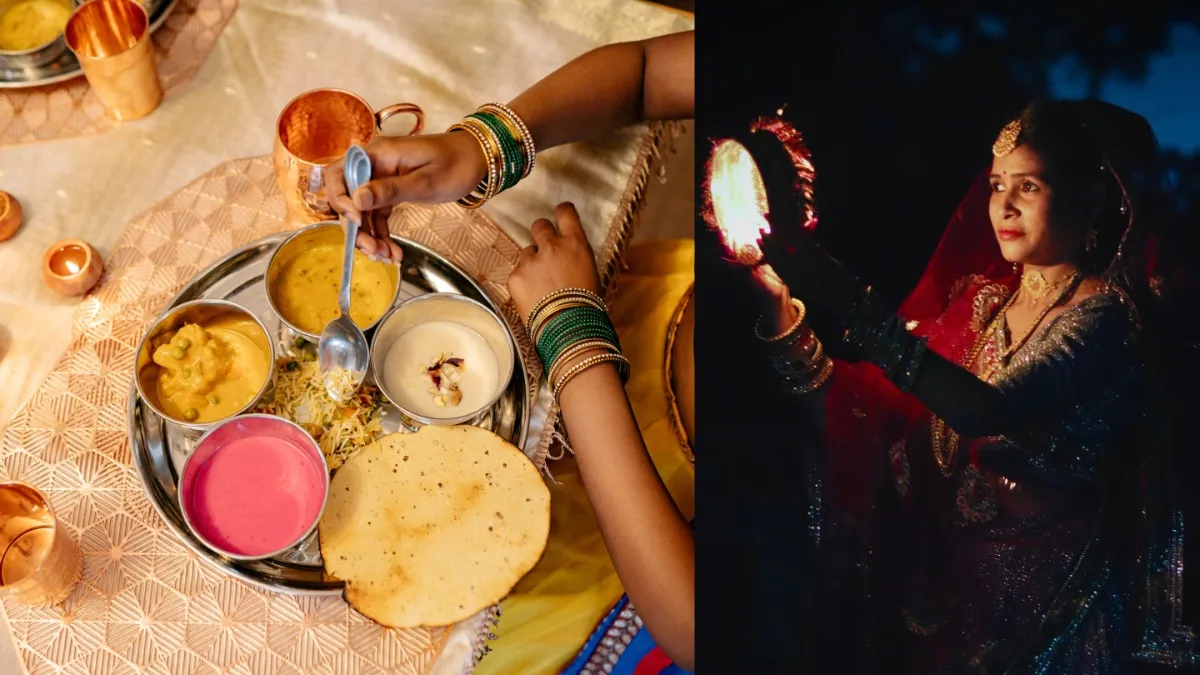
On Karwa Chauth, fasting for long hours without food and water can be dehydrating and tiring. Nutritionist Puja Nayyar recommends a special diet plan that will not just keep you hydrated but also nourished. Know what to eat during Sargi and after you break your fast.
Step-by-Step Guide For Karwa Chauth Diet Plan
Fasting shouldn’t mean compromising on your health. Puja Nayyar suggests eating less salty and fried foods a day before the fast and include hydrating drinks during Sargi. Check out her complete guide here.
Night Before
Prep: Soak 1 tbsp chia seeds, 5 almonds, 2 walnuts, and 2 figs overnight for the next day.
Dinner: Eat an early, light meal with reduced salt.
Sargi (4:00 AM – 5:00 AM)
Hydration: Drink 2 glasses of lukewarm water, followed by lemon chia water.
Start: Eat the pre-soaked nuts and figs first.
Main Meal: Eat 1 stuffed paratha (paneer, gobhi, or methi) with dry veggies and a bowl of curd.
Pheni: Consume 2–3 tbsp soaked in warm milk without added sugar.
Traditionally Eaten: 1 mathri or 1 small sweet item (optional).
Refreshment: Have 1 fruit accompanied by coconut water or kesar milk.
Avoid: Tea, pickles, and salty snacks.
Through the Day
What To Do: Rest well, stay in a cool environment, and avoid direct sun exposure.
Moonrise (Post-Puja)
Initial Break: Take sips of water, then drink coconut water or lemon water.
Snack: Eat 2 dates with 4 soaked almonds.
Dinner (20-30 Minutes Later)
Start: Begin with a cucumber, carrot, and onion salad.
Main Item: Eat 2 phulkas (flatbread) with lentils and seasonal vegetables.
Before Bed
Mild Exercise: Take a gentle 10-minute post-dinner walk.
Drink: Have warm haldi (turmeric) milk with a pinch of black pepper.
If Thirsty: Sip 2 to 3 glasses of water gradually; avoid gulping it all at once.
Pro Tip:
- You can include a paneer dish or a bowl of curd raita for a protein boost.
- Eat at a slower pace and stop once you are comfortably full.
- You can end the meal with one small mithai (sweet) or 3 tbsp of kheer.
- Avoid Pakoras (fritters) and fried snacks on an empty stomach.
View this post on Instagram
ALSO READ: What To Do On Karwa Chauth Day If Moon Is Not Seen Due To Rain Or Dark Clouds?
Recommended For You
Time/Phase | Eat and Drink | Avoid |
Night Before | Light, low-salt dinner; soak chia seeds, almonds, walnuts & figs | High salt |
Sargi (4–5 AM) | Water & lemon chia water; soaked nuts; 1 stuffed paratha + veggies + curd; pheni in milk; 1 fruit + coconut water | Tea, pickle, namkeen |
Daytime | Rest in shade; keep cool | Sun, exertion |
Moonrise | Sip coconut/lemon water; 2 dates + 4 soaked almonds | Gulping water |
Dinner | Salad; 2 phulkas, dal, sabzi and paneer/raita; 1 small sweet | Fried snacks, pakoras |
Bedtime | 10-min slow walk; warm haldi milk; sip 2–3 glasses of water | Chugging water |
ALSO READ: Karwa Chauth 2026: Gifts For Women You Can Get Under ₹5000
FAQs
Why should I avoid tea or coffee during Sargi?
Caffeine present in coffee and tea can cause headaches, acidity and dehydration later in the day as it speeds up fluid loss in the body. Instead, choose coconut or lemon water or milk.
Why shouldn't I break my fast with fried foods like pakoras?
Stomach acid production is low in the body due to fasting all day. Consuming fried food on an empty stomach can trigger indigestion, acidity, bloating, etc.
Why is a low-salt dinner recommended the night before?
Eating sodium-rich food can cause intense thirst as it draws water from your cells. Keeping a fast in that condition can be much harder to manage.