

Open shoe racks are a trap. Unless you enjoy staring at muddy sneaker soles, scuffed heels, and a wall of visual noise the second you step through your front door. That is why closed shoe cabinets are the only real fix for entryway chaos. They keep your shoes organised and aesthetic.
Top Closed Cabinet Shoe Rack Styles for Your Home
Cabinet Style | Best For | Footprint | Max Shoe Size Limit | Key Feature |
1. Slim Tilt-Out Credenza | Narrow hallways & micro-apartments | Super Shallow (5”–9”) | Men’s 12 (vertical tilt) | Space-saving flip drawers |
2. Louvred Door Cabinet | High-humidity areas & workout shoes | Standard (13”–15”) | Men’s 14+ | Passive airflow/ventilation |
3. Upholstered Storage Bench | High-traffic family drop zones | Medium (15”–18”) | Universal | Built-in seating |
4. Vertical Modular Tall-Boy | Max capacity & boot lovers | Medium (14”–16”) | Men’s 14+ | Adjustable/removable shelves |
5. Mirrored Front Cabinet | Dark or tight entryways | Shallow-Medium | Men’s 12–13 | Optical room expansion |
6. Sliding Barn-Door Console | Rustic & Farmhouse decor | Wide/Deep (16”–20”) | Universal | Zero door-swing clearance needed |
7. Floating Wall-Mounted | Robot vacuum owners & minimalist spaces | Customizable | Men’s 11–12 | Zero floor contact |
1. The Slim Tilt-Out Credenza
Best for Narrow Hallways
If your front door opens directly into a hallway so tight you have to slide in sideways, tilt-out cabinets are your lifesaver. Instead of resting flat on horizontal shelves, shoes sit vertically inside shallow drop-down drawers.
Depth Footprint: Unbeatable, often under 9 inches deep.
Pro Tip for Buyers: Look for models with adjustable internal dividers. If you wear high-top sneakers or ankle boots, you'll need to remove the centre divider inside the tilt drawer to close it without crushing the collar.
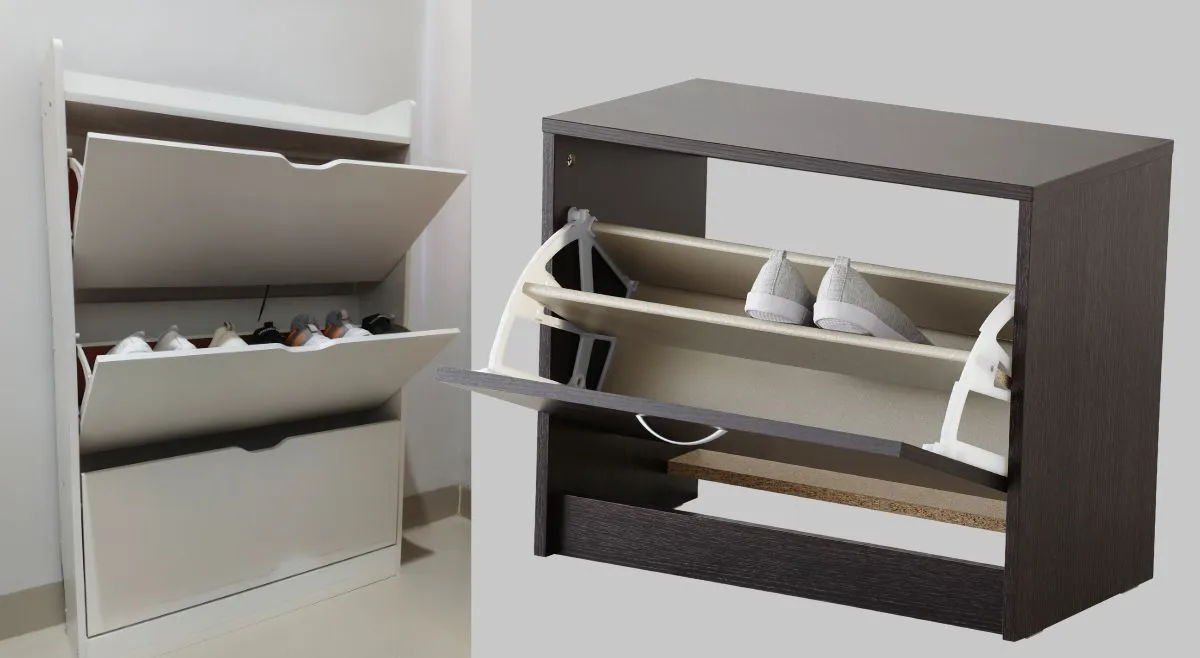
The Slim Tilt-Out Credenza (Image Credit: Canva)
2. The Louvred Door Cabinet
Best for Odour Control and Breathability
The dirty secret of totally sealed shoe cabinets? Moisture build-up. Trapping damp, worn shoes inside an airtight box leads to mildew and lingering smells.
Louvred cabinets feature slatted wooden doors that allow continuous passive airflow while keeping footwear completely out of sight.
Ideal Placement: Mudrooms, warm climates, or near gym zones.
Design Match: Coastal, Mid-Century Modern, and Scandinavian interiors.
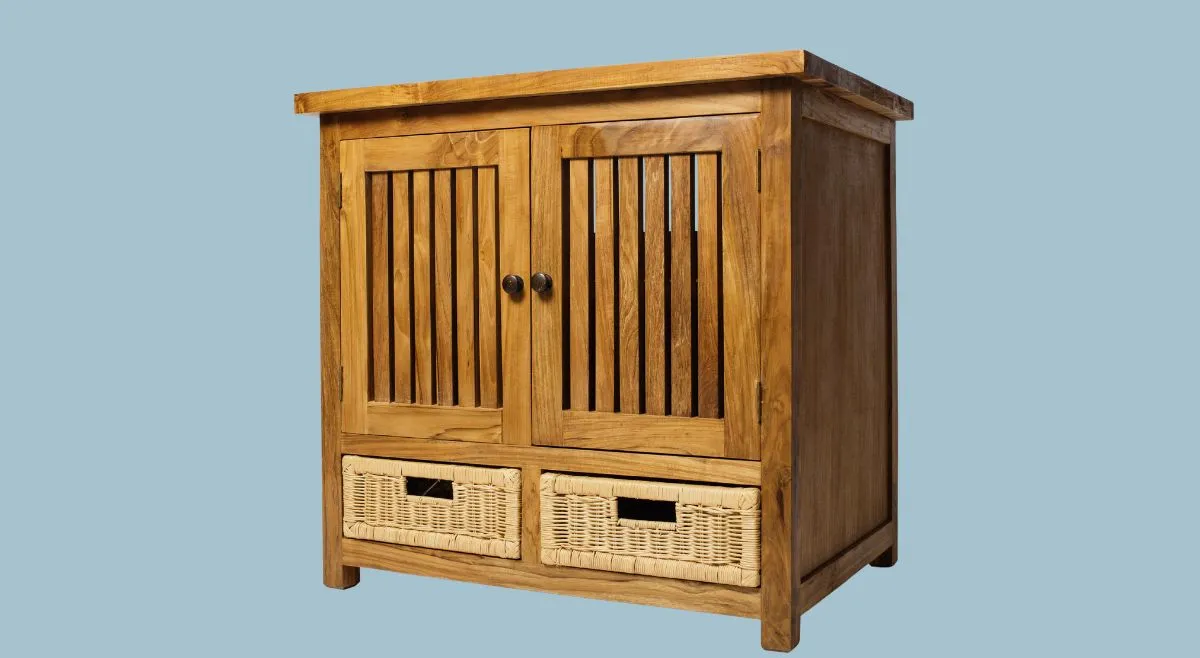
The Louvred Door Cabinet (Image Credit: TDJ Graphics)
3. The Upholstered Storage Bench Cabinet
Best for Crowded Entryways
Combining seating with concealed storage solves two problems at once: it gives guests a place to sit while tying lace-ups and tucks daily wear out of the walkway.
Storage Setup: Look for flip-down front panels or sliding cabinet doors beneath the cushion, rather than a top-hinged lid. Top-hinged boxes require you to stand up and remove whatever is on top of the bench just to grab a pair of flats.
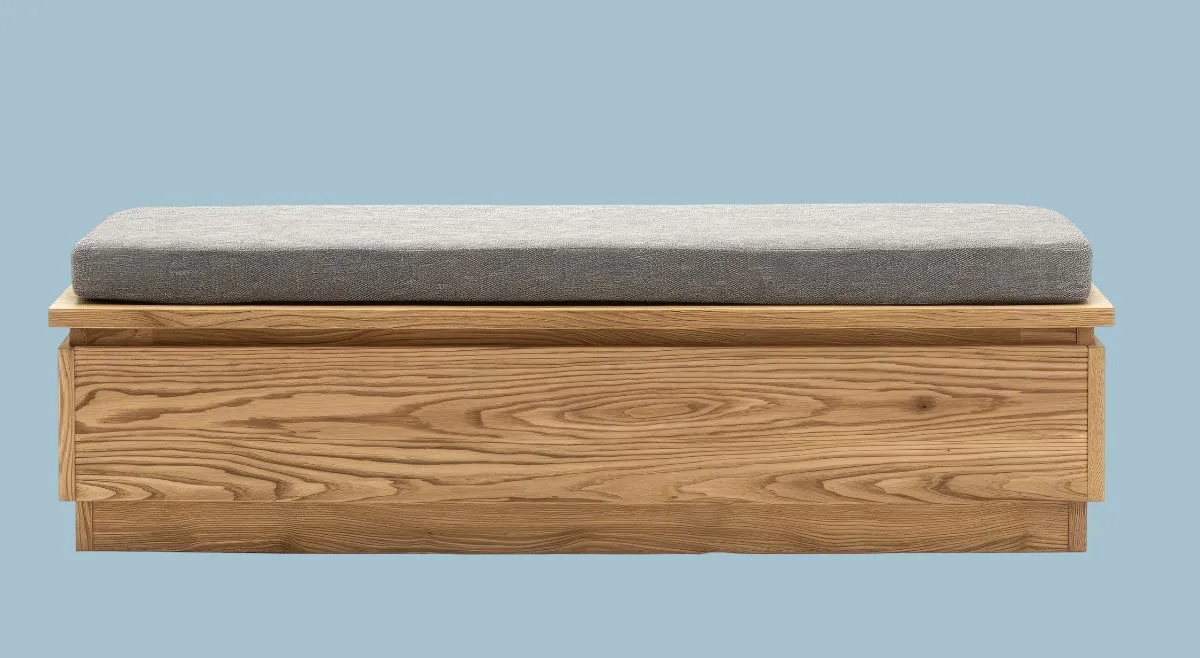
Upholstered Storage Bench (Image Credit: TDJ Graphics)
4. The Vertical Modular ‘Tall-Boy'
Best for Large Collections and Boots
When square footage is limited, build up. Vertical shoe cabinets stack 5 to 8 shelves vertically while keeping a compact footprint.
Standard shoe shelves are spaced 6 to 7 inches apart, perfect for flats and running shoes, but impossible for knee-high boots or work boots.
Pro Tip: Ensure your tall cabinet has removable or height-adjustable peg shelves so you can customise row heights.
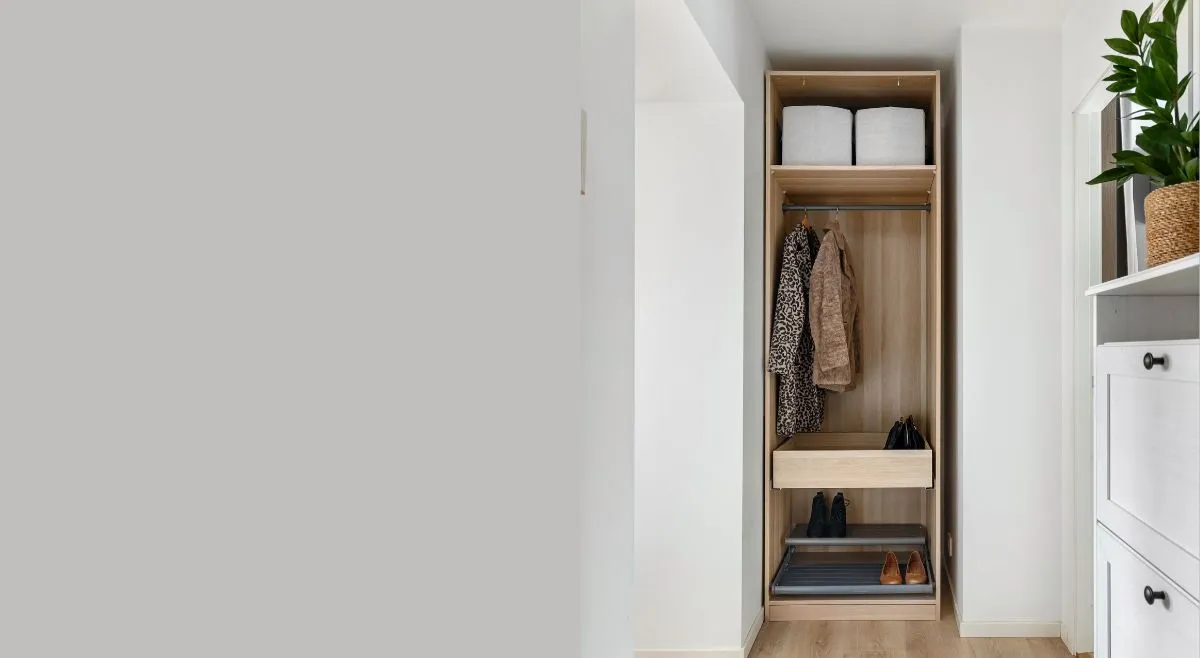
The Vertical Modular ‘Tall-Boy' (Image Credit: Canva)
5. The Mirrored Front Cabinet
Best for Dark or Small Foyers
Full-length or panelled mirrored cabinet doors do double duty. Externally, they reflect light and trick the eye into making small corridors feel twice as wide. Internally, they hide up to 20 pairs of shoes. Plus, you get an automatic outfit-check station right at the exit.
Maintenance Note: Opt for touch-latch hardware or recessed side handles to keep fingerprint smudges off the glass.
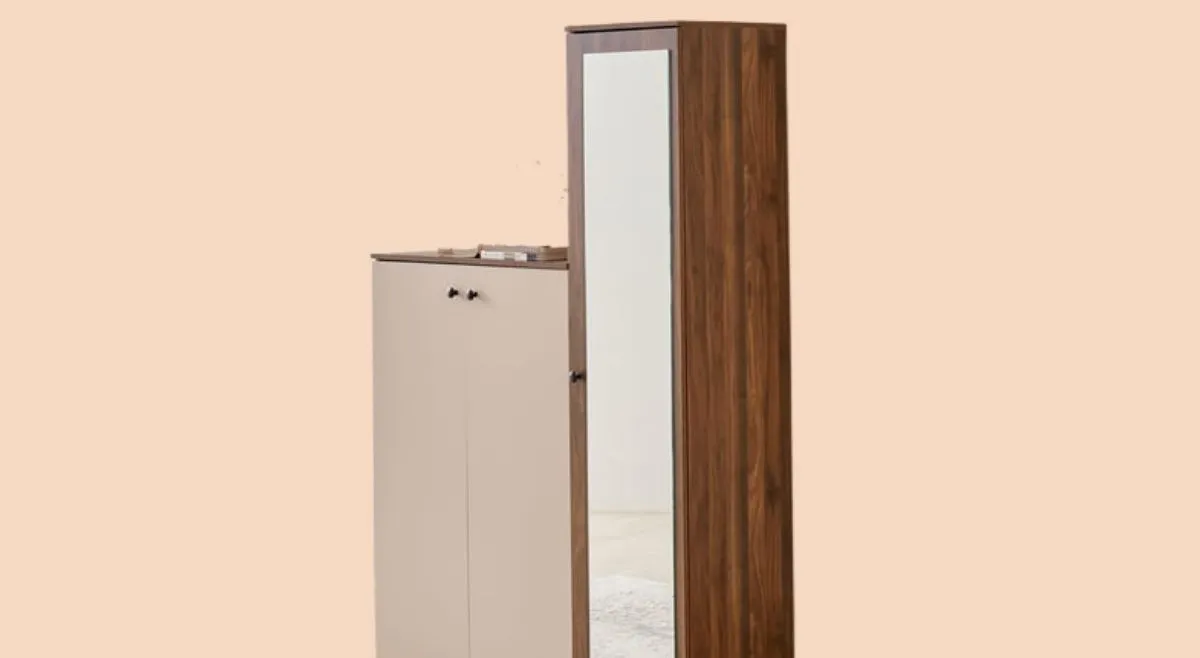
The Mirrored Front Cabinet (Image Credit: Canva)
6. Modern Farmhouse Sliding Barn-Door Cabinet
Best for Tight Door-Swing Spaces
Swinging cabinet doors require at least 12 to 15 inches of clearance in front of the unit to open fully. If your door swing conflicts with furniture or an entry door, a sliding door mechanism solves the spatial puzzle completely.
Aesthetic appeal: Perfect for industrial, rustic, or modern farmhouse aesthetics that need heavy-duty wood or metal accents.
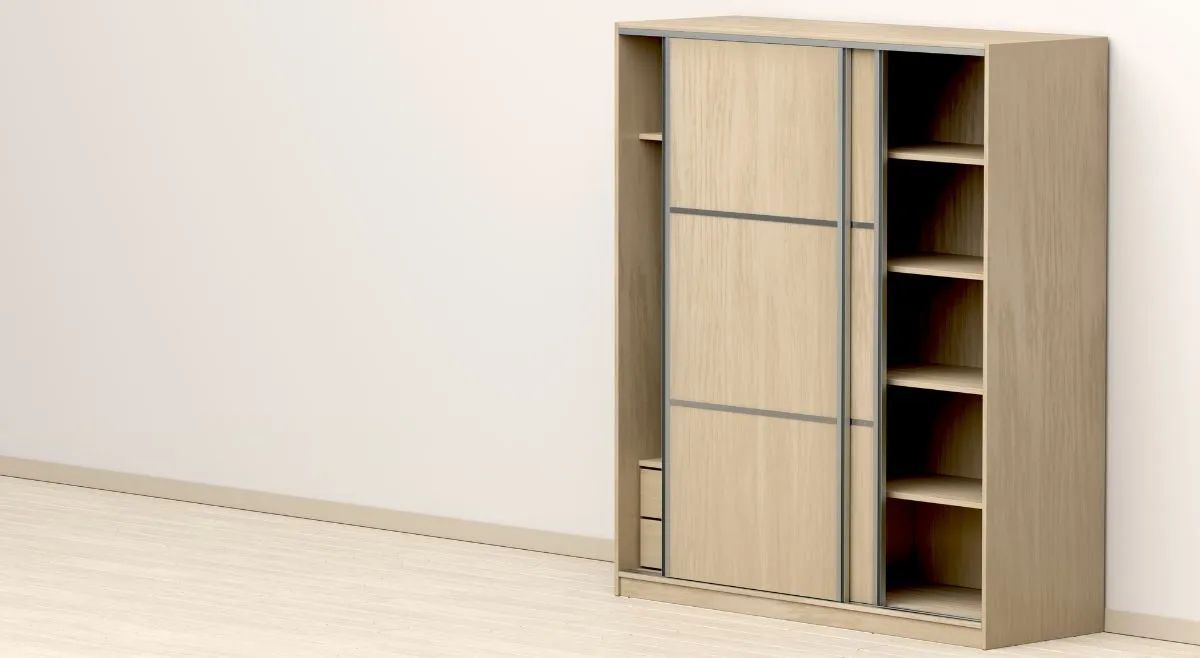
Modern Farmhouse Sliding Barn-Door Cabinet (Image Credit: Canva)
7. Floating Wall-Mounted Minimalist Cabinet
Best for Modern Homes and Easy Cleaning
Wall-mounted cabinets hover off the ground, leaving floor space entirely clear underneath.
Why designers love it: Beyond the sleek, futuristic aesthetic, it makes floor maintenance a breeze. Your robot vacuum can clean straight underneath it without snagging on cabinet legs, preventing dust-bunny buildup beneath your shoe storage.
Installation Warning: You must anchor these directly into wall studs. A unit holding 12 pairs of shoes plus heavy cabinetry can easily exceed 60 lbs.
ALSO READ: How To Organise Your Shoe Rack For Easy Access And Cleanliness
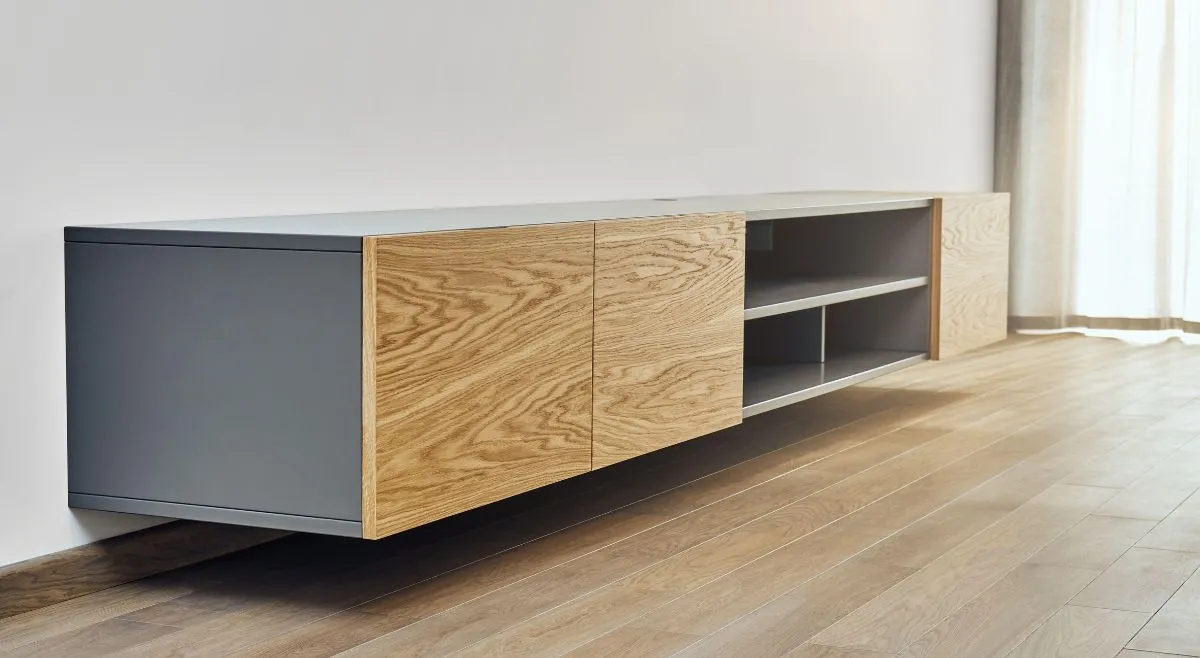
Floating Wall-Mounted Minimalist Cabinet (Image Credit: Canva)
Key Factors to Consider When Choosing a Closed Shoe Rack
Before hitting ‘add to cart,’ run your prospective cabinet through these real-world checks:
1. Calculate Shoe Length vs Cabinet Depth:
Standard cabinet interior depth is often 13 inches. If you wear Men’s size 13 or larger, your shoes will not fit flat on standard horizontal shelves. You’ll need a deeper unit, diagonal shoe racks, or tilt-out drawers.
ALSO READ: 5 Modern Bedroom Cabinet Designs For Organised Storage
2. Check for Backboard Ventilation Holes:
Sealed MDF off-gasses and traps dampness. Ensure the back of the cabinet features pre-cut cutouts or grommets for air exchange.
3. Baseboard Clearance:
If you want your cabinet flush against the wall, choose a model with a recessed back edge or tall legs that clear standard 4-inch baseboards.
FAQs
1. How do I keep a closed shoe cabinet from smelling?
Place an activated charcoal odour-absorber pouch or cedar blocks inside the cabinet. Never put damp shoes directly inside a closed cabinet; let them air-dry on a mat first.
2. How deep should a shoe cabinet be?
For standard shoes stored flat, look for an internal depth of at least 13 to 14 inches. For narrow spaces, select a tilt-out cabinet, which can sit as flush as 6 to 9 inches from the wall.
3. Can boots fit in standard shoe cabinets?
Only if the cabinet features adjustable or removable shelves. Standard fixed shelves typically offer only 6 to 7 inches of vertical clearance, which is insufficient for mid-calf or knee-high boots.