

- By Dr Sadhana Kala
- Wed, 22 Jul 2026 10:36 AM (IST)
- Source:JND
Mango is not a fruit; it is a feeling
From ancient orchards to Instagram-worthy desserts, the mango remains India's sweetest symbol of summer. Here's why National Mango Day is more than just an excuse to indulge.
A few things in mangoes support overall well-being. Nothing unites India quite like the arrival of mango season. Whether it is the buttery richness of Alphonso from Maharashtra, the fragrant sweetness of Dasheri from Uttar Pradesh, the juicy Langra from Varanasi, or the luscious Banganapalli from Andhra Pradesh, every region proudly claims its mango as the best.
National Mango Day, observed every year on July 22, celebrates not only one of the world's most beloved fruits but also India's deep cultural, historical, agricultural, and emotional connection with the mango. It is a day that honours farmers, celebrates biodiversity, and reminds us of why India remains the world's largest producer of mangoes.
For millions of Indians, the mango is far more than a fruit—it's nostalgia served in slices.
A fruit with a history spanning thousands of years
The mango's story began in the Indian subcontinent over 4,000 years ago. Ancient Sanskrit texts mention the fruit, while Buddhist literature recounts how Gautama Buddha meditated in mango groves. The Mauryan emperor Ashoka is believed to have planted mango trees across his kingdom.
The fruit travelled from India to Southeast Asia, the Middle East, Africa, and eventually the Americas through traders and explorers. Today, mangoes are cultivated in over 100 countries, yet India remains their undisputed spiritual home.
The scientific name Mangifera indica acknowledges its Indian origins.
India: The world's mango capital
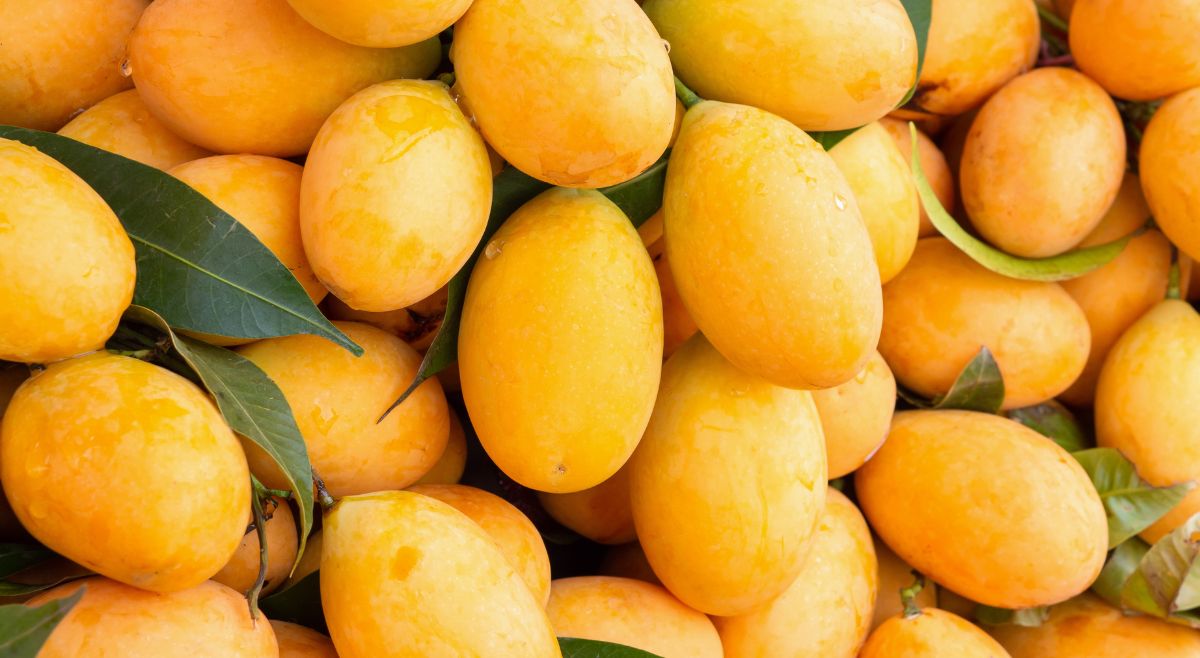
Mango is known as the 'King of Fruits.' (Image Credit: Canva)
India produces nearly half of the world's mangoes, harvesting well over 25 million tonnes annually, according to government and international agricultural estimates.
Major mango-producing states include:
• Uttar Pradesh
• Andhra Pradesh
• Telangana
• Karnataka
• Bihar
• Maharashtra
• Gujarat
• Tamil Nadu
• West Bengal
• Odisha
The mango industry supports millions of farmers, traders, exporters, transport workers, and food-processing businesses. India also exports premium varieties to the United States, the United Kingdom, the UAE, Europe, Japan, Australia, and several other countries, making mangoes an important contributor to agricultural exports.
More than 1,500 varieties—and every Indian has a favourite
India is home to an astonishing diversity of mangoes. More than 1,500 varieties are cultivated across the country, each with its own flavour, aroma, colour, texture, and personality.
Among the most popular are:
• Alphonso (Hapus): Rich, creamy, and often considered the premium mango.
• Dasheri: Sweet with a distinctive aroma.
• Langra: Green even when ripe, with a unique tangy sweetness.
• Kesar: Bright saffron-colored flesh and intensely fragrant.
• Banganapalli (Benishan): Large, firm, and perfect for slicing.
• Chausa: Extremely juicy and ideal for squeezing by hand.
• Totapuri: Slightly tangy and widely used in juices and processing.
• Himsagar: A prized variety from West Bengal known for its fiberless pulp.
Regional loyalties over mangoes often become spirited debates—much like arguments over cricket teams or biryani styles.
Mangoes in Indian culture
Many fruits occupy a prominent place in Indian traditions. Mango leaves are tied above doorways during weddings, festivals, and housewarming ceremonies as symbols of prosperity and favourable fortune.
The mango motif appears in Indian textiles, jewellery, architecture, and classical art. The famous paisley pattern, known locally as ambi or mankolam, is inspired by the shape of a mango.
In literature and poetry, the mango often symbolises love, fertility, abundance, and the arrival of spring.
Even India's culinary traditions celebrate every stage of the fruit's life—from raw mango pickles and chutneys to ripe mango desserts.
The science behind the sweetness
Besides their irresistible taste, mangoes are remarkably nutritious.
A serving of ripe mango provides:
• Vitamin C for immunity
• Vitamin A for eye health
• Dietary fibre for digestion
• Potassium for heart health
• Folate and antioxidants that support overall well-being
Raw mangoes are rich in vitamin C and are commonly consumed during the Indian summer to help replenish electrolytes through drinks like aam panna, a traditional cooler known for combating heat exhaustion.
Like all fruits, mangoes are best enjoyed as part of a balanced diet. People with diabetes need not avoid mangoes entirely but should consume moderate portions while keeping overall carbohydrate intake in mind.
Mangoes beyond the fruit bowl
Modern India's love affair with mangoes extends far beyond eating them fresh.
Every summer brings an explosion of mango-inspired creations:
• Mango ice creams
• Milkshakes
• Cheesecakes
• Smoothies
• Yoghurts
• Kulfis
• Cakes
• Bubble teas
• Artisan chocolates
• Gourmet salads
Restaurants and cafés introduce seasonal mango menus, while home chefs compete to invent new recipes on social media. At the same time, traditional favourites continue to hold their own—from aamras with puris in western India to spicy raw mango chutneys in the south and east.
Supporting farmers through sustainable cultivation
Climate change presents major obstacles to mango cultivation.
Erratic rainfall, rising temperatures, unseasonal storms, and changing flowering cycles can affect both yield and fruit quality.
Farmers are increasingly adopting modern irrigation techniques, integrated pest management, weather-based advisory services, and improved storage systems to reduce losses.
Researchers are also developing climate-resilient mango varieties capable of withstanding changing environmental conditions.
Consumers can contribute by purchasing locally grown seasonal mangoes and reducing food waste.
Mango tourism is growing.
Several Indian states now celebrate mango festivals that attract thousands of visitors.
These festivals showcase hundreds of mango varieties, culinary competitions, farmer exhibitions, and tasting sessions. Visitors get an opportunity to sample rare varieties that seldom reach commercial markets.
For tourists, mango season has become another reason to explore India's agricultural heritage and regional cuisines.
Why National Mango Day matters
National Mango Day is not merely a celebration of a delicious fruit.
It highlights:
• India's extraordinary agricultural biodiversity
• The livelihoods of millions of farmers
• Traditional farming knowledge
• Regional culinary heritage
• The importance of preserving indigenous fruit varieties
• Sustainable agriculture for future generations
In an era where food systems are becoming increasingly industrialised, the mango reminds us of the value of local produce and seasonal eating.
The enduring magic of the mango
Every Indian has a mango memory.
Perhaps it is climbing a tree in childhood, waiting impatiently for the first crate of Alphonsos to arrive, stealing slices before dinner, enjoying chilled aamras on a hot afternoon, or watching grandparents carefully prepare jars of pickle that would last all year.
These memories are as much a part of India's cultural identity as the fruit itself.
Even as modern supermarkets stock exotic fruits from across the world, the mango continues to occupy a place no imported delicacy can replace.
On National Mango Day, the celebration is ultimately about more than flavour. It is about heritage, family traditions, biodiversity, and the simple joy that arrives every Indian summer in shades of green, yellow, and gold.
Because long after the season ends, one thought lingers in every mango lover's mind: next summer cannot come soon enough.
(Note: Dr (Prof) Sadhana Kala is a USA-trained robotic & laparoscopic surgeon, Uppsala University, Sweden, trained fertility specialist, Icon Endoscopic Surgeon of North India, and National Icon Endoscopic Surgeon of India. She is rated as India's Best Gynecologist by Google.)
(Disclaimer: The views expressed in this article are the personal opinions of the author.)