

- By Dr Sadhana Kala
- Wed, 28 Jan 2026 03:14 PM (IST)
- Source:JND
This first International Day of Peaceful Coexistence, 28 January, is a call to raise awareness of diverse cultures, values, ways of life, and beliefs, and to highlight the role of education in promoting tolerance.
What Does Peaceful Coexistence Really Mean?
Peaceful coexistence is often misunderstood as passive tolerance—merely “putting up” with differences. In reality, it is an active, conscious process. It requires respect for diversity, protection of human dignity, and the willingness to engage with perspectives different from one’s own.
It does not demand uniformity of thought, belief, or culture. On the contrary, peaceful coexistence recognizes that pluralism is a strength. Societies that allow multiple identities to flourish tend to be more resilient, innovative, and socially stable. The challenge lies in managing diversity without letting fear or misinformation weaponize it.
A World Struggling With Difference
Across the globe, fault lines are becoming sharper. Conflicts driven by ethnicity, religion, ideology, and nationalism dominate headlines. Social media, while democratizing voices, has also amplified outrage, misinformation, and dehumanization. Algorithms reward extremity, not empathy.
Recommended For You

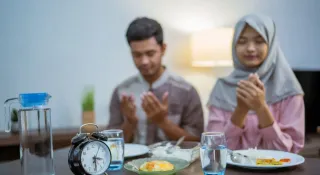
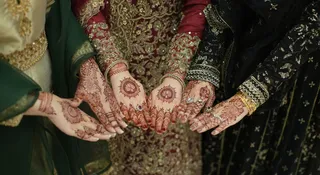


Migration and urbanization have made societies more diverse than ever before, but political narratives often frame diversity as a threat rather than an asset. The result is a paradox: humanity is more interconnected than at any point in history, yet also more polarized.
The International Day of Peaceful Coexistence poses a difficult question in this context: can we disagree without dehumanizing one another? Can we protect our identities without denying the humanity of others?
India’s Long, Uneasy, and Hopeful Tryst With Coexistence
Few countries illustrate the challenge—and promise—of peaceful coexistence as vividly as India. With its hundreds of languages, multiple religions, diverse ethnicities, and rich cultural traditions, India’s very existence is based on the idea that differences can be shared rather than erased.
India’s freedom movement was deeply rooted in pluralism. Leaders like Mahatma Gandhi articulated a moral vision where non-violence and mutual respect served not just as political strategies but as ethical imperatives. Gandhi’s belief that “different religions are beautiful flowers from the same garden” remains one of the most enduring metaphors for coexistence.
However, India’s journey has not been without its fractures. Communal tensions, caste-based discrimination, and regional divides serve as reminders that coexistence is not self-sustaining. It must be actively nurtured, defended, and reimagined with each new generation.
Peaceful Coexistence in the Digital Age
One of the defining arenas of coexistence today is the digital world. Social media platforms have both bridged distances and removed filters of accountability. The anonymity and virality of these platforms facilitate the caricaturing, insulting, and attacking of those with differing viewpoints.
Achieving peaceful coexistence online requires a new form of digital citizenship—one that emphasizes restraint, fact-checking, and empathy. This responsibility extends to technology companies, policymakers, and users alike. Freedom of expression should not justify ongoing harm or incitement.
The digital public square, like any shared space, must be governed by norms that prioritize human dignity over fleeting outrage.
Education as the Foundation of Coexistence
For peaceful coexistence to transcend mere symbolism, it must be ingrained from an early age. Education systems are important because they influence how young people perceive differences. Classrooms that encourage critical thinking, dialogue, and exposure to diverse histories foster citizens who are less vulnerable to simplistic "us versus them" narratives.
Peace education embraces difficult conversations, aiming to equip students with the skills needed for constructive disagreement—to debate without animosity and to listen without fear. In an era marked by information overload, the capacity to contextualize and empathise may be as essential as technical skills.
The Role of Institutions and Governance
Although coexistence starts at the individual level, institutions significantly influence its potential. Laws that safeguard minority rights, uphold freedom of belief, and prevent discrimination are vital protections. Equally important is the perception of fairness; when communities feel unheard or marginalised, resentment can grow.
Governments, media organisations, and civil society share this responsibility. Political rhetoric that normalises exclusion or suspicion undermines the social fabric. In contrast, leadership that exemplifies restraint, dialogue, and accountability can help lower the temperature of public discourse.
The International Day of Peaceful Coexistence serves as a reminder that peace is not merely the absence of war but the presence of justice.
From Tolerance to Solidarity
The most crucial evolution in thinking about coexistence is the shift from tolerance to solidarity. Tolerance implies endurance, while solidarity implies shared responsibility. In a world facing collective challenges—such as climate change, pandemics, and economic inequality—no group can insulate itself indefinitely.
Peaceful coexistence in the 21st century must, therefore, move beyond identity alone and recognize our interdependence. Environmental crises do not respect borders, and economic shocks ripple across societies. The question is no longer whether we can live together; it is whether we can survive without doing so.
Why This Day Matters
International observances are often criticised as mere symbolic gestures. However, symbols matter, especially when they help shape societal norms. The International Day of Peaceful Coexistence creates a global pause—a moment to reflect on how our everyday actions contribute to either harmony or hostility.
This day reminds us that peace is not a distant ideal negotiated solely by diplomats. It is practised daily in how we communicate, vote, teach, share information, and respond to differences.
In a fractured world, peaceful coexistence is not naïve optimism; it is pragmatic realism. Societies that fail to manage diversity peacefully incur high social, economic, and moral costs.
A Quiet, Radical Choice
Peaceful coexistence is not loud or easily trending. It requires patience, humility, and the courage to resist the urge to engage in easy outrage. Yet, it remains one of the most radical choices available to humanity today.
As we mark the International Day of Peaceful Coexistence, the question is not whether peace is possible in abstract terms. The more immediate question is, what does coexistence look like in our lives today, both offline and online?
The answer may determine the future we are collectively walking toward.
(Note: Dr (Prof) Sadhana Kala is a USA-trained robotic & laparoscopic surgeon, Uppsala University, Sweden, trained fertility specialist, Icon Endoscopic Surgeon of North India, and National Icon Endoscopic Surgeon of India. She is rated as India's Best Gynecologist by Google.)
(Disclaimer: The views expressed in this article are the personal opinions of the author.)