
- By Ridam Sharma
- Fri, 10 Apr 2026 12:00 PM (IST)
- Source:JND
Homoeopathy has been a part of India’s healthcare landscape for a long time, yet it continues to be misunderstood. From being dismissed as 'slow' to being labelled as unscientific, several myths prevent people from making informed choices. Some people are still curious, doubtful, and most of these ideas aren’t malicious. They’re simply repeated so often that they start sounding like facts.
Therefore, to know more about Homoeopathy, The Daily Jagran turned to Dr Ritula Talwar, Homoeopathic Physician and Senior Manager, PMT, Zeon Lifesciences, who shared the top myths and benefits about homoeopathy:
Homoeopathic Doctor Busts Common Myths About Homoeopathy:
Myth 1: Homoeopathic remedies are the same as herbal medicine and have no side effects
Dr Ritula Talwar stated, “This is where the confusion usually begins. People often assume that homoeopathy is just another form of herbal treatment. It is not.
Benefit: Herbal medicine relies on plant extracts and their active compounds. Homoeopathy, however, works on a very different principle: remedies are prepared through a process of serial dilution and potentisation, and they are selected based on how closely they match a patient’s symptoms, not because they contain active plant ingredients.
Another common add-on to this myth is that homoeopathic medicines have no side effects. The truth is more nuanced. When prescribed correctly, these medicines are gentle and well-tolerated. But that doesn’t mean the body doesn’t respond. Sometimes, there may be a brief intensification of symptoms before improvement begins. That’s a response, not a side effect in the conventional sense — and it’s something a trained physician anticipates and monitors.
Myth 2: Homoeopathy takes a long time to work
According to a Homoeopathic doctor, “Chronic illnesses that have been present for years do take time to resolve, regardless of the system of medicine. But in acute cases, fevers, allergies, anxiety episodes, and minor injuries, in such cases, homoeopathic remedies can act surprisingly fast and in some cases even within hours.”
Recommended For You




Benefit: The idea that homoeopathy is always slow comes from comparing it with medicines that suppress symptoms quickly. Homoeopathy works by nudging the body to correct the imbalance, and that timeline varies from case to case.
Myth 3: Homoeopathic remedies have no regulations
Many people are surprised to learn that homoeopathic medicines in India are governed by the Drugs and Cosmetics Act, with defined standards for manufacturing, labelling, and quality control.
ALSO READ: UP To Transform AYUSH Hospitals Into Research Hubs, Aims For Global Recognition
These remedies aren’t mixed casually in someone’s kitchen. They are produced under strict guidelines, by licensed manufacturers, and dispensed by qualified practitioners. Regulation exists; what’s often missing is public awareness about it.
Myth 4: Homoeopathy works only as a placebo
“This argument usually surfaces in conversations where people try to make sense of results they didn’t expect,” Dr Talwar claimed.
Belief plays a significant role in any form of healing. But to say that homoeopathy works only because patients believe in it doesn’t explain why children, infants, and even animals respond to it. Over the years, many patients have been treated with homoeopathy, who walked in deeply sceptical and walked out convinced, simply because their symptoms improved.
There is still ongoing research into how homoeopathy works at a molecular level. But dismissing patient outcomes as mere placebos oversimplifies what happens in real practice.
ALSO READ: Ayurveda Expert Reveals 5 Powerful Night Rituals For Deep, Restful Sleep Naturally
Myth 5: Homoeopathy is just sweet pills and slow to act
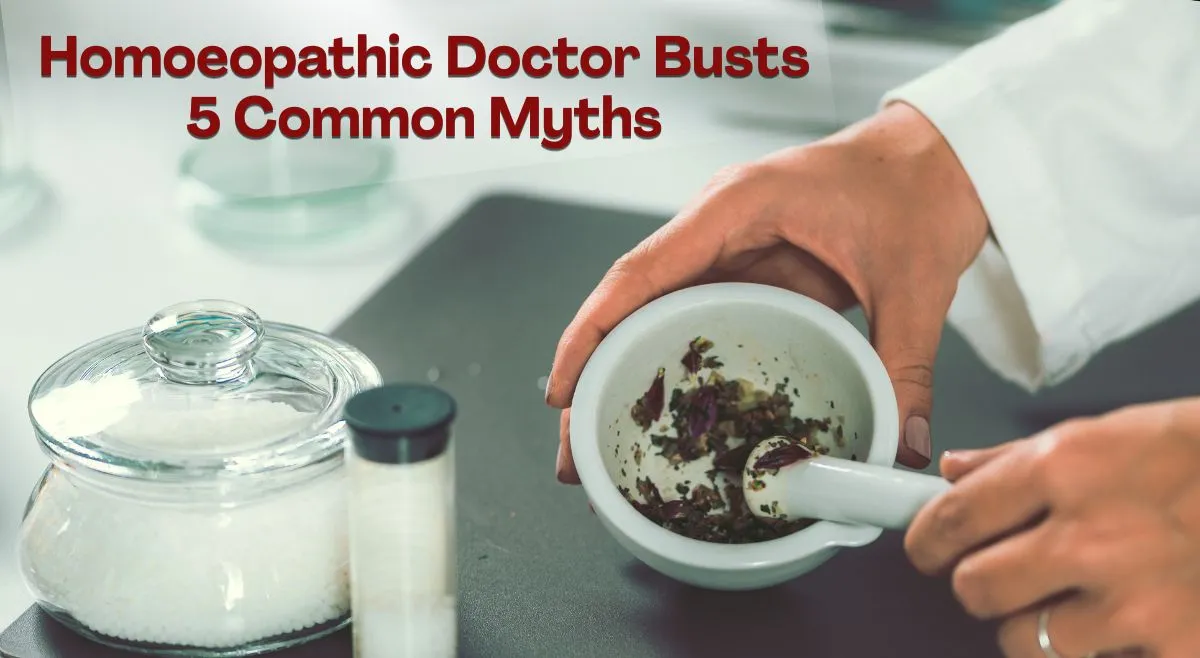
Those tiny white globules are simply a medium to deliver the remedy. They’re not the medicine themselves. The actual potency lies in the preparation that’s added to them.
According to the doctor, reducing homoeopathy to 'sweet pills' is like judging a book by its cover. What matters is the detailed case-taking, the matching of symptoms, and the precision of remedy selection. That’s where the science lies.
Benefits Of Homeopathy:
- Holistic and individualised approach
- Safe and non-toxic in most cases
- Suitable for all life stages
- It's cost-effective
- Complementary management of chronic conditions
Lastly, homoeopathy has been around for over two centuries, and yet, it continues to be misunderstood in the simplest ways. Perhaps the problem isn’t that people doubt it; it’s that they haven’t had the chance to understand how it truly works. And sometimes, all it takes to clear a myth is a conversation.